Aircraft & Propulsion | Aviation Week Network
Aviation Week Network's Aircraft & Propulsion coverage for the week of May 5–8, 2026 centers on two parallel narratives shaping the near-term future of flight: the accelerating maturation of alternative propulsion technologies, and the sustained pressure on conventional fuel and fleet infrastructure. Most prominently, Unither Bioelectronics conducted observed hydrogen-electric fuel cell flights aboard a modified Robinson R44 demonstrator in Quebec, while Joby Aviation completed piloted urban air mobility demonstrations over New York City. Taken together, these events mark a meaningful inflection point for the advanced air mobility sector — moving from laboratory certification milestones toward tangible operational demonstrations in dense airspace environments. For working pilots, the significance lies not only in the technology itself but in the pace of progression: both hydrogen-electric rotorcraft and eVTOL platforms are now being evaluated in conditions approximating real-world service.
EASA's concurrent preparations to introduce the Jet A fuel standard across Europe underscore the degree to which conventional aviation infrastructure remains under supply-side stress. European operators have historically relied on Jet A-1, and the regulatory acceleration toward Jet A compatibility signals that fuel availability concerns are serious enough to warrant standards harmonization on an expedited timeline. For corporate flight departments and Part 135 operators with European operations, this development carries immediate practical weight: fuel handling procedures, aircraft flight manual references, and fuel release documentation may require review and revision depending on aircraft type approvals and operator specifications. Operators should monitor guidance from their respective airframe manufacturers and fuel suppliers regarding any operational limitations or approval requirements tied to Jet A use in aircraft certified to Jet A-1 specifications.
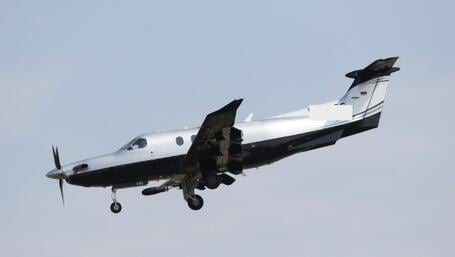
On the business aviation fleet side, NetJets' acceptance of three Cessna Citation Ascend jets reflects continued confidence in the mid-cabin turbofan segment despite broader economic uncertainty. The Ascend — the successor to the Citation XLS+ — represents Textron Aviation's effort to modernize its most commercially successful platform with updated avionics, improved fuel efficiency, and enhanced cabin standards. NetJets' fleet additions carry outsized market significance given the operator's scale; deliveries to the world's largest fractional provider often signal broader demand trends and serve as leading indicators for pre-owned market pricing in the mid-size jet category. The accompanying May 2026 program profile on the Pilatus PC-12 PRO similarly reflects sustained institutional interest in high-utility single-engine turboprops, which have become increasingly prominent in charter, medevac, and owner-flown corporate operations worldwide.
The broader arc of this week's coverage reflects an industry managing simultaneous transformation across propulsion, certification, and infrastructure domains. Air Charter Scotland's inauguration of a Public Service Obligation route between Aberdeen and Wick in January 2026 — a small but operationally significant development for remote community air service in the United Kingdom — illustrates that regulatory frameworks supporting thin-route connectivity remain relevant even as attention gravitates toward urban mobility platforms. The retrospective on Eclipse Aviation and the very light jet controversy serves as a useful counterpoint: disruptive aircraft programs have historically encountered severe execution risk even when the underlying technology proves sound. That institutional memory matters as operators, investors, and regulators evaluate the timelines and promises attached to today's hydrogen-electric and eVTOL demonstrators. The difference between a compelling flight demonstration and a certified, commercially viable aircraft type remains substantial, and the aviation industry's recent history provides ample reason for disciplined optimism rather than uncritical enthusiasm.








 Read original article