"It'll Mess Up Your Head Really Quick": What SR-71 Pilots Saw At The Edge Of Earth's Atmosphere
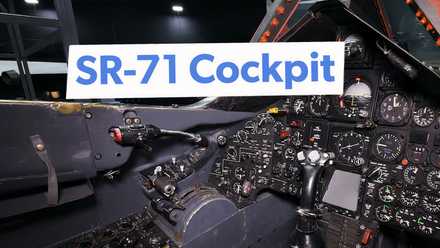
The SR-71 Blackbird's operational ceiling of 80,000 to 85,000 feet placed its crews at the boundary between Earth's atmosphere and the vacuum of space, and the psychological consequences of that environment were as significant as the technical demands of flying the aircraft. At those altitudes, 95 percent of the atmosphere lies below the aircraft, and the visual environment bears almost no resemblance to anything encountered in conventional flight operations. USAF Lt. Colonel David Peters, a veteran of three Vietnam combat tours in the F-4 Phantom II who transitioned to the SR-71 program in 1977, described the experience in vivid terms: flying over the Korean DMZ on a moonless, clear night, he reported visibility of 3.5 trillion more stars than ground observers could detect — a figure attributed to the Palomar Mountain Observatory. The perceptual overload was sufficient that Peters instinctively reverted to instrument scan, treating the overwhelming starfield as a spatial disorientation hazard equivalent to flying in instrument meteorological conditions.
What Peters experienced aligns with well-documented psychological phenomena at the extremes of altitude. Aerospace medicine identifies the condition as "awe," a cognitive state triggered when a stimulus exceeds an individual's normal frame of reference so substantially that it disrupts standard processing. A related concept, the "Overview Effect," has been reported consistently by orbital astronauts who describe sudden, intense feelings of Earth's fragility and an altered sense of perspective when viewing the planet from space. The SR-71 did not reach orbit, but its operational environment was sufficiently extreme that crews encountered the perceptual preconditions for both phenomena. The practical implication, as Peters himself noted, was immediate: the appropriate response was to disregard the visual environment and fly the instruments, applying the same discipline a pilot uses in actual IMC when visual cues become unreliable or misleading.
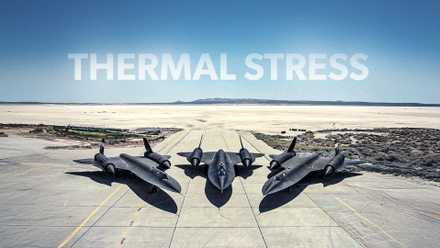
The SR-71 program emerged directly from the demonstrated vulnerability of its predecessor, the Lockheed U-2, which despite operating near 70,000 feet was successfully engaged by a Soviet SA-2 surface-to-air missile in May 1960 during Francis Gary Powers' overflight mission near Sverdlovsk. That shootdown exposed the strategic and intelligence community to a fundamental operational risk: altitude without speed was insufficient protection over denied territory with advanced integrated air defenses. The CIA and USAF responded by commissioning a new platform from Lockheed's Skunk Works division under Clarence "Kelly" Johnson, one that would combine extreme altitude with sustained speeds above Mach 3.2 — fast enough that even if a SAM was successfully launched, the aircraft could simply outrun it. The resulting aircraft was fired upon more than 4,000 times during its operational life without a single hit, validating the design concept decisively.
For professional pilots operating in far more conventional environments, the SR-71 experience offers a clinically relevant case study in spatial disorientation and its triggers. The instinct of an experienced, highly trained aviator to jump to instruments when confronted with an overwhelming visual field is precisely the correct response — and the fact that a combat-proven, multi-thousand-hour pilot described that reaction as nearly reflexive underscores how powerful non-standard visual environments can be. Modern high-altitude operations, including long-haul oceanic flying at FL430 or above in clear conditions with reduced atmospheric scattering, can produce subtler versions of the same disorientation cues. The broader lesson from the SR-71 era remains operationally current: trust the instruments, maintain scan discipline, and recognize that the human visual system was not optimized for the environment in which high-performance aircraft routinely operate.







 Read original article