Falcon 2000EX returns to service with overhaul from VIP Completions | Corporate Jet Investor | CJI news
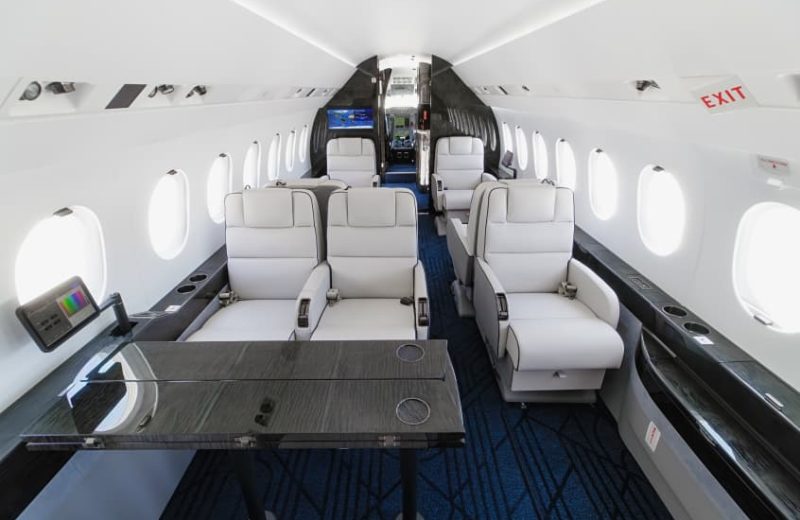
A Florida-based completion center has returned a Dassault Falcon 2000EX EASy to service following a comprehensive cabin overhaul that touches both the interior aesthetics and the aircraft's onboard technology infrastructure. VIP Completions of Fort Lauderdale executed the project, delivering handstitched Garrett contrasting leather seating, polished marble countertops, curly maple wood veneer, and Scott Group Modern Deco carpeting. The technology package is equally substantial, incorporating a Crestron cabin management system with integrated touch panels, MagSafe iPad mounts, a custom Alto audio system with eight speakers and dual subwoofers, upgraded HD monitors, Apple TV compatibility, dynamic RGB lighting, and a Plex media server — collectively representing a modern, passenger-facing technology suite that rivals new-delivery interiors.
The Falcon 2000EX EASy holds a meaningful place in the large-cabin business jet segment. The aircraft carries up to 10 passengers with a published range exceeding 4,000 nautical miles, sufficient for transcontinental operations without a fuel stop — a capability that remains operationally relevant for Part 91 and Part 135 operators running high-utilization domestic and transatlantic schedules. With approximately 103 airframes still in active service worldwide, the type maintains a viable fleet footprint, and refurbishment projects of this scope serve as direct evidence that operators continue to view the platform as worth significant capital reinvestment rather than replacement. For flight departments evaluating asset strategy, a deep-refit like this one can extend an airframe's charter or private utility by a decade or more at a fraction of new-aircraft acquisition cost.
The cabin management and entertainment technology specified in this refit reflects a broader industry push to bring consumer-grade technology expectations into the business aviation cabin. Crestron has become a standard reference for high-end cabin integration, and the inclusion of Apple TV compatibility, MagSafe mounting, and a Plex media server signals that operators increasingly expect seamless continuity between passengers' personal device ecosystems and aircraft systems. For pilots and crew, Crestron-based systems also simplify preflight cabin configuration, reducing setup time and minimizing the likelihood of in-flight service interruptions attributable to legacy or proprietary cabin management hardware.
The refurbishment market for mid- to large-cabin business jets has gained momentum as supply chain pressures and long lead times on new aircraft deliveries — stretching well into the late 2020s across most OEM order books — push Part 91K and Part 135 operators toward maximizing existing asset value. Projects like this Falcon 2000EX refit underscore the role that MRO and completion centers play not just in maintenance but in preserving an aircraft's competitive positioning on the charter or fractional market. For operators managing aging but structurally sound airframes, a well-executed interior modernization can meaningfully affect both charter revenue yield and passenger satisfaction scores, making completion center partnerships an increasingly strategic element of fleet management rather than a purely maintenance-driven consideration.