Whisper Aero reveals ‘stall-proof wing,’ Mach Industries partnership
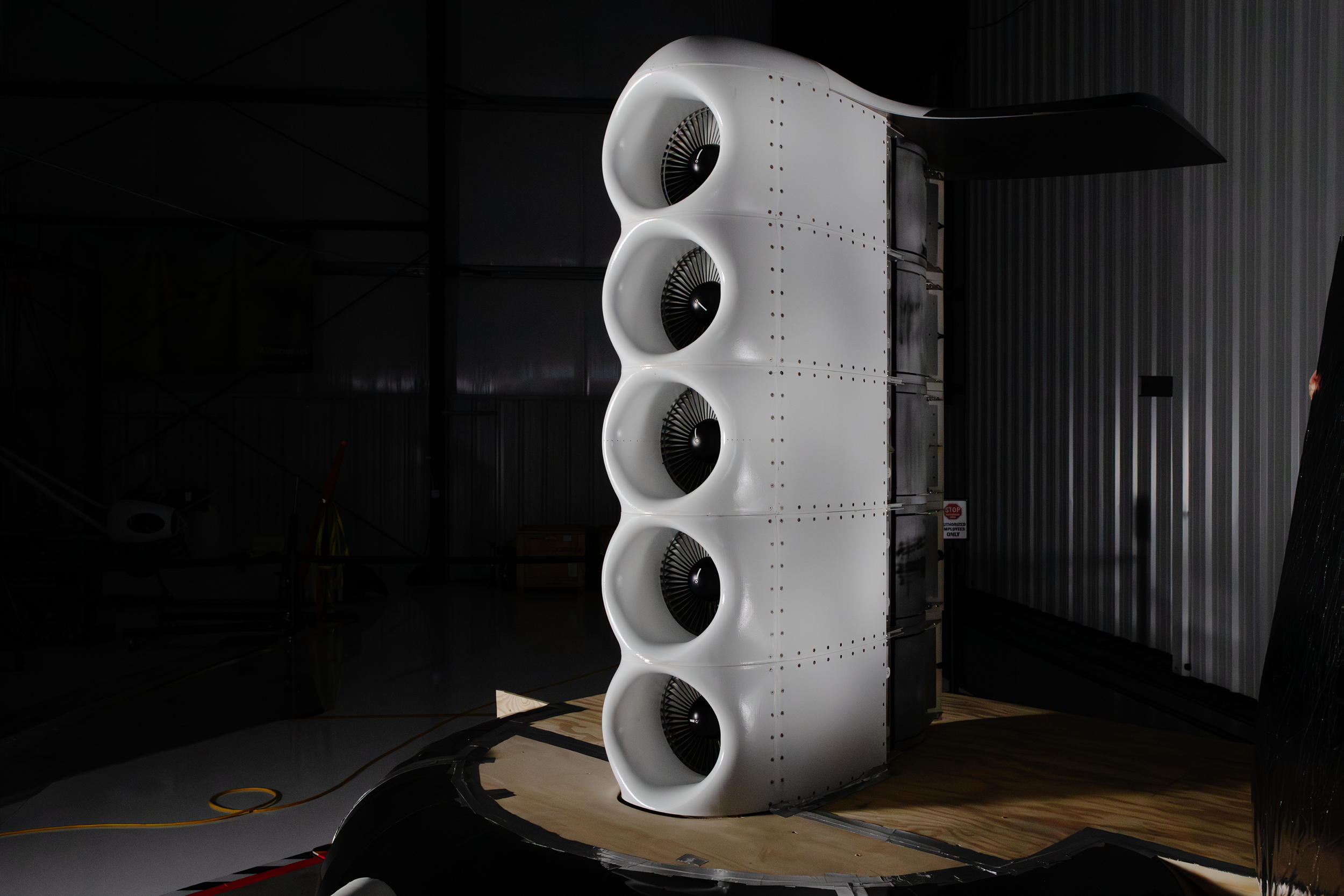
Whisper Aero, the Tennessee-based startup co-founded by former NASA aeronautics researcher Mark Moore and Ian Villa, has disclosed significant experimental results for its JetFoil distributed electric propulsion system, claiming laboratory testing has produced what Moore describes as a "stall-proof wing" — one that maintains near-constant lift as airspeed approaches zero. The JetFoil architecture arrays electric ducted fans along a wing's leading edge, using powered airflow across the upper wing surface to sustain lift coefficients that would be aerodynamically impossible through conventional means. The company's underlying fan technology, first unveiled in 2023, uses an unusually high blade count to push tonal noise into the ultrasonic range, rendering it inaudible to humans. These results were disclosed ahead of a formal presentation at SAE International's AeroTech conference in West Palm Beach on June 2, coinciding with Moore's receipt of the F.E. Newbold V/STOL Award from the American Institute of Aeronautics and Astronautics.
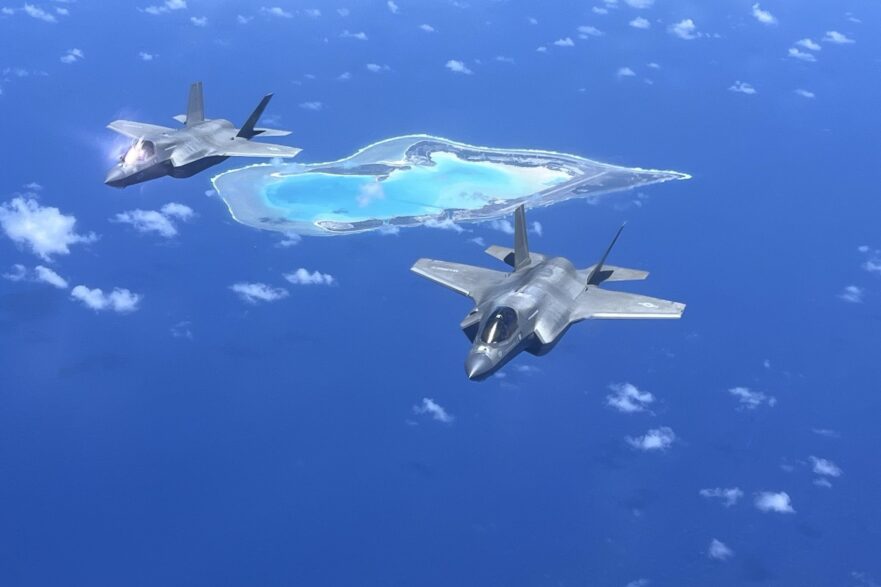
The immediate operational application for the JetFoil is military. Whisper Aero is partnering with California-based Mach Industries to pursue the Defense Innovation Unit's Runway Independent Maritime and Expeditionary Strike (RIMES) program, which specifically seeks unmanned systems capable of operating from destroyers and other warships that lack conventional flight decks. Carrying fighter-class munitions from small-deck vessels requires extreme short-field or near-VTOL performance that existing fixed-wing platforms cannot achieve without massive aerodynamic penalty. The JetFoil's claimed ability to sustain lift at very low airspeeds — without the weight, mechanical complexity, or downwash problems associated with rotary-wing systems — makes it a credible candidate for that mission profile. Defense programs of this character have historically served as proving grounds for propulsion and aerodynamic concepts that subsequently migrate into commercial and business aviation certification pathways.
For working pilots, the stall characteristics of any aircraft are foundational to every phase of flight from departure to final approach, and stall-related loss of control remains among the most persistent fatal accident categories across Part 91, Part 135, and airline operations alike. A wing architecture that maintains attached flow at arbitrarily low airspeeds — through active, electrically driven boundary layer control rather than passive high-lift devices — would represent a qualitative shift in how approach and departure speed margins are defined and trained. Whether this translates directly into reduced Vref buffers, altered upset recovery doctrine, or reconsideration of angle-of-attack envelope protections in future type designs would depend entirely on how certification authorities characterize the failure modes of the powered lift system itself. The critical regulatory question is not whether the wing stalls in normal operation, but what happens when fan power is lost asymmetrically or entirely at low airspeed.
The broader context for Whisper Aero's work is the distributed electric propulsion (DEP) research lineage Moore helped advance at NASA Langley, most visibly through the X-57 Maxwell experimental aircraft, which demonstrated that leading-edge electric motors could dramatically augment cruise wing lift coefficients. Whisper's JetFoil appears to push that concept further by integrating it with an acoustically optimized fan design, potentially addressing two of the most persistent barriers to urban and regional electric aircraft adoption simultaneously: community noise acceptance and airfield independence. The eVTOL sector has largely pursued multirotor and tiltrotor configurations to achieve runway independence, at significant efficiency cost in cruise. A fixed-wing aircraft with genuine near-VTOL short-field performance and ultrasonic-quiet propulsion would occupy a category for which no current regulatory framework, operational procedure, or infrastructure model is fully prepared — which is precisely why the defense procurement pathway, with its tolerance for technical risk and accelerated development timelines, represents the most viable near-term route to flight demonstration.