How Many Miles Per Gallon Does A B-52 Stratofortress Get?
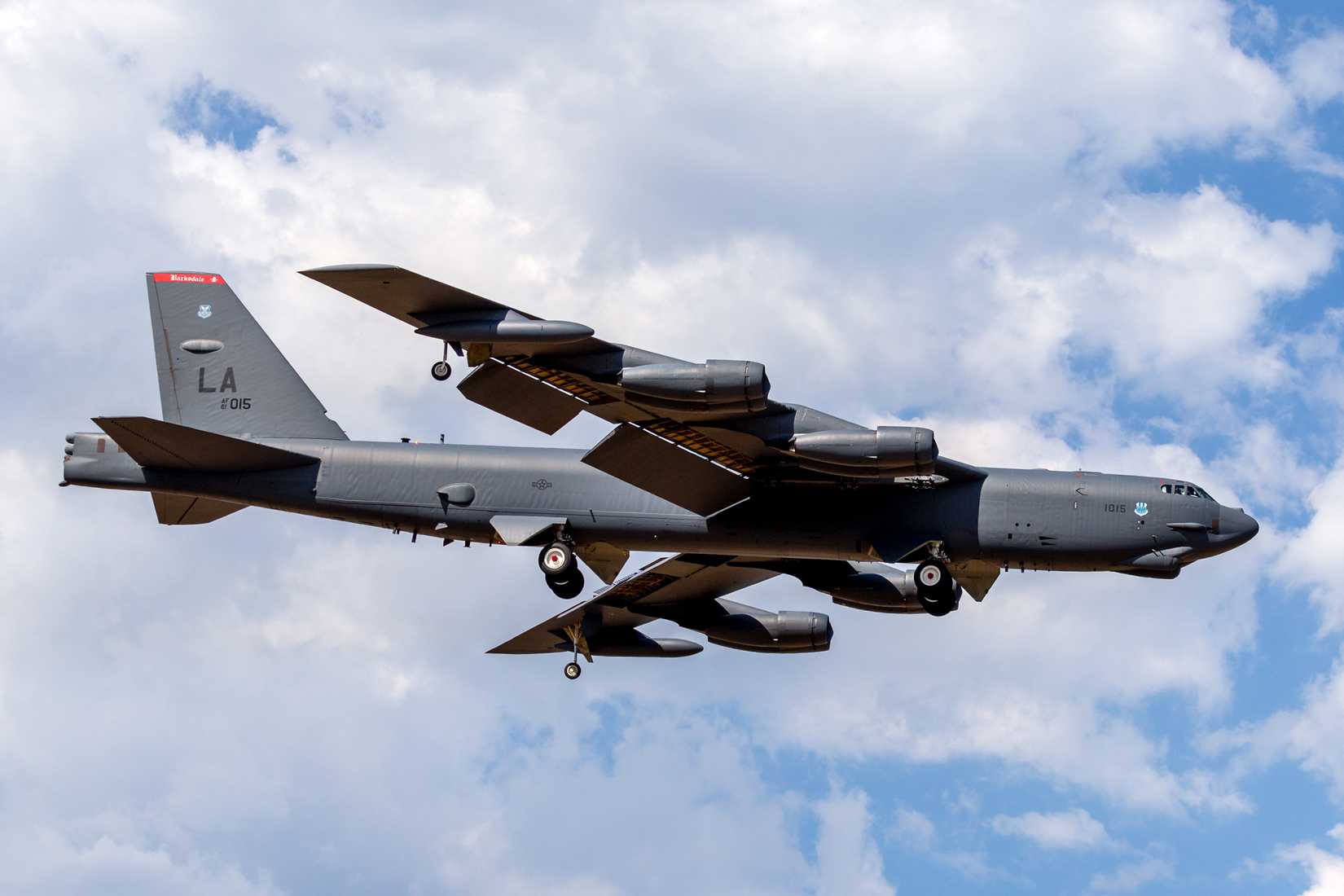
The Boeing B-52H Stratofortress operates at approximately 0.22 miles per gallon under cruise conditions, a figure derived from dividing its 509-mph cruise speed against the eight Pratt & Whitney TF33 turbofans' combined burn rate of roughly 2,400 US gallons per hour. A secondary calculation based on the aircraft's 8,800-mile unrefueled combat range divided by its 48,000-gallon fuel capacity yields a slightly lower 0.18 mpg, which reflects the additional fuel demands of takeoff, climb, and reserve margins. At peak thrust during the takeoff roll, that burn rate spikes to approximately 3,300 gallons per hour — roughly 55 gallons per minute — before settling into the more manageable cruise figure. With 76 aircraft in the active inventory each flying roughly 250 hours annually, the B-52 fleet collectively consumes on the order of 45 million gallons of JP-8 per year, making fuel logistics a primary planning variable for Air Force Global Strike Command.
The raw efficiency numbers, while striking in isolation, are best understood against the aircraft's mission parameters. The B-52H was designed to carry 70,000 pounds of ordnance across intercontinental distances, and when evaluated on a payload-range basis rather than simple fuel economy, the aircraft performs far more competitively than the headline mpg figure suggests. The variables that move that number in practice — weapons load, altitude regime, engine condition, and mission profile — are the same variables that define operational sortie planning. Fully armed combat profiles burn substantially more fuel than ferry configurations due to increased induced drag and higher required thrust, while lower-altitude flight through denser air further degrades efficiency. Extended loiter missions characteristic of Bomber Task Force deployments, where B-52s orbit for hours near theaters of interest, compress the effective miles-per-gallon ratio even further by logging engine hours against a fixed fuel load rather than distance traveled.
The TF33 engine's age and out-of-production status represent an increasingly significant operational factor. Decades-old powerplants that have not been recently overhauled introduce measurable efficiency losses above and beyond their baseline performance, creating variability across individual airframes within the fleet. This is precisely the operational problem the upcoming Rolls-Royce F130 engine upgrade is designed to address. The F130 replacement program, currently in development, is expected to deliver meaningful improvements in specific fuel consumption, which at the fleet scale translates directly into reduced tanker dependency, extended unrefueled range, and lower per-flight-hour operating costs. For an aircraft the Air Force plans to operate into the 2050s, the engine modernization represents one of the most consequential lifecycle investments in the current USAF recapitalization portfolio.
For professional aviators operating large-cabin, long-range business jets or wide-body commercial equipment, the B-52's fuel arithmetic offers a useful reference point for understanding how payload-range tradeoffs and powerplant age interact with operating economics. The same physics that force a B-52 crew to plan around a 2,400-gallon-per-hour cruise burn govern the dispatch decisions on any heavy aircraft: weight, altitude, and engine condition all cascade directly into fuel consumption, and aging powerplants consistently underperform their type-certificate specifications by meaningful margins. The broader lesson from the B-52's longevity and its ongoing engine upgrade program is that airframe life extension is achievable at scale, but its economic justification depends heavily on the ability to modernize the propulsion system as original engines age past their efficiency envelope. That principle applies with equal force to turbine operators across Part 91, 135, and airline operations managing aging fleet assets.










 Read original article