The Aircraft Lockheed Built That Was So Fast Even The Pilots Who Flew It Don't Fully Understand How It Worked
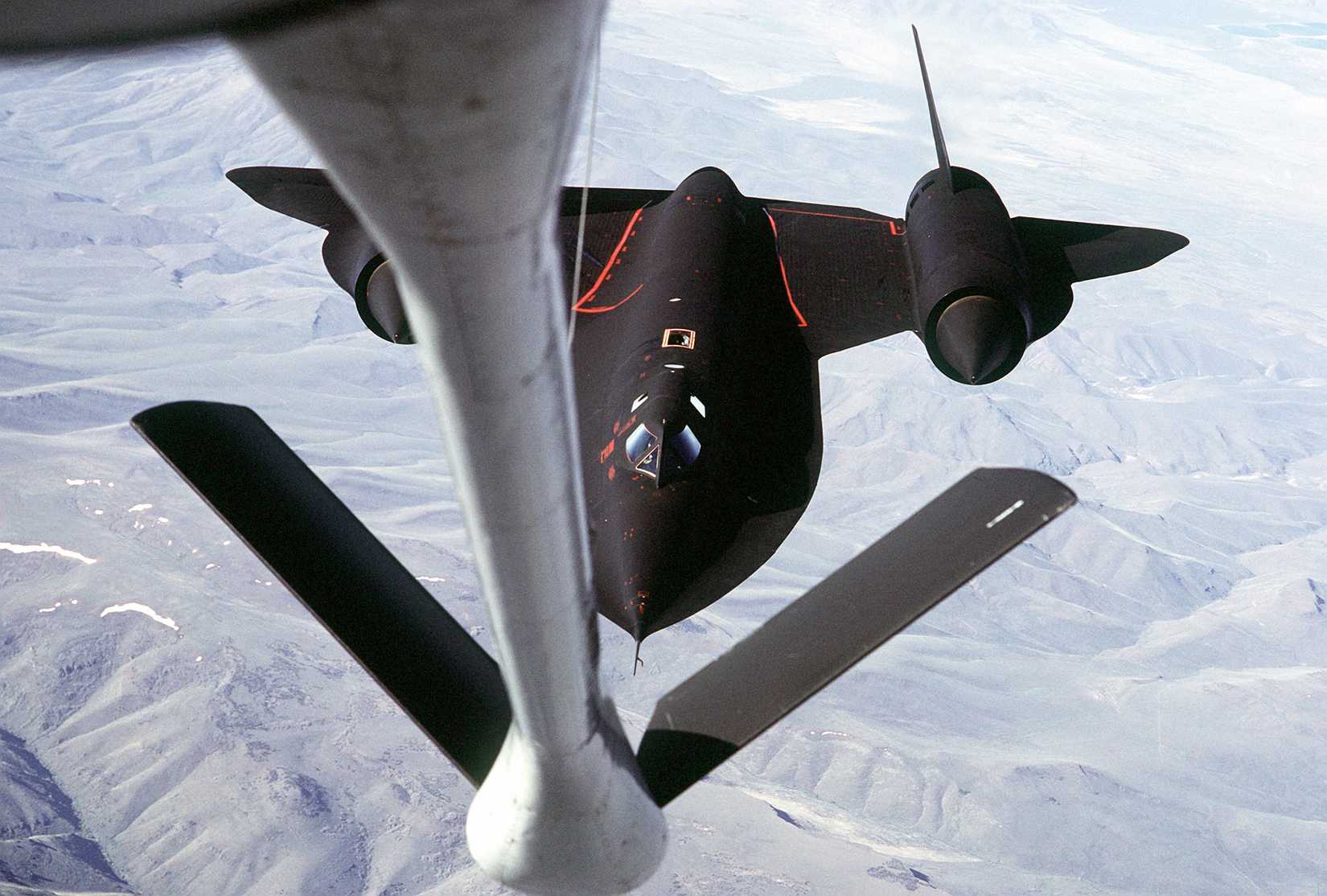
The Pratt & Whitney J58 engine that powered the Lockheed SR-71 Blackbird represents one of the most deliberately misunderstood propulsion systems in the history of manned flight, occupying a technical classification so unusual that aerospace engineers continue to debate its correct designation decades after the aircraft's retirement. Formally described by its own engineers as a "Recovered Bleed-Air Turbojet," the J58 operated on a principle that inverted almost every assumption governing conventional jet engine design. At cruise speed of Mach 3.2, the engine's own turbomachinery contributed only 17 percent of the aircraft's total thrust; the remaining 83 percent was generated entirely by the aerodynamic pressure dynamics within the variable inlet nacelle, with the forward-facing inlet spikes alone responsible for 80 percent of total propulsive force through pure ram compression. Six large bypass tubes routed bleed air around the engine core, cooling it before dumping oxygen-rich air directly into the afterburner, where it mixed with JP-7 fuel and ignited — effectively transforming the entire nacelle into a functioning ramjet at high speed. The result was a propulsion system that became more fuel efficient as speed increased, consuming less fuel per mile at Mach 3.2 than at Mach 2, a relationship that is precisely opposite to the performance curves of every conventional turbojet in service.
For working pilots, the operational implications of this design were radical departures from established doctrine. Every pilot trained in conventional military or commercial jet aircraft learns that afterburner is a brief, fuel-intensive emergency measure — a resource to be used in seconds, not hours. The SR-71 demanded continuous afterburner operation for the duration of every mission, not as a performance exceedance but as the designed normal operating condition. The aircraft's inlet spike system, which controlled the precise positioning of supersonic shockwaves within the nacelle, was equally unforgiving. A positional error of a fraction of an inch in the spike geometry could cause an "unstart" — a violent expulsion of the shockwave from the intake that instantly starved the engine of air and caused an immediate compressor stall. Because so much of the propulsion system's function depended on invisible fluid dynamic interactions rather than on discrete mechanical components, maintainers and pilots alike found it resistant to the conventional diagnostic frameworks that govern troubleshooting in normal jet aircraft. The J58 was not simply an engine that sat inside an airframe; it was a propulsion system inseparable from the inlet geometry, the shockwave environment, and the aerodynamic state of the nacelle around it.
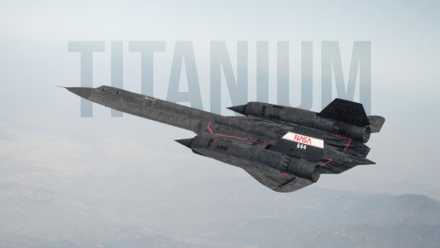
The ground handling characteristics of the SR-71 further illustrate how completely the aircraft operated outside standard aviation norms. The thermal expansion tolerances of the titanium airframe were designed around the aircraft's operational temperature — the skin glowing at temperatures exceeding 600 degrees Fahrenheit during sustained Mach 3 cruise — meaning the aircraft fit together properly only when hot. On the ground, at ambient temperature, the fuel tanks and structural components contracted enough that JP-7 visibly leaked onto the tarmac as a matter of course. JP-7 itself was a fuel developed specifically for the program, possessing a flashpoint so high that ground crews famously demonstrated its safety by dropping lit matches directly into open buckets of it without ignition occurring. Igniting the fuel required the injection of triethylborane into the combustion chamber, which produced the characteristic bright green flame associated with SR-71 engine starts. These properties were not incidental; JP-7 simultaneously served as a heat sink and as a pressurization medium for mechanical components operating in an environment where conventional hydraulic fluids and lubricants would have vaporized.
The broader significance of the J58 development for aviation professionals lies in what the program revealed about the limits of incremental engineering and the necessity of purpose-built solutions when performance requirements exceed the envelope of existing technology. The Skunk Works team under Kelly Johnson was compelled to invent an entirely new branch of metallurgy to fabricate the titanium alloy airframe, develop a novel fuel system, and create a propulsion concept that had no precedent in operational aviation. The collaboration between Johnson's small, flat-structured Skunk Works team and Pratt & Whitney's engineering organization — conducted under extreme secrecy and sustained by Johnson's direct, bureaucracy-bypassing management philosophy — produced breakthroughs that later influenced inlet design, high-temperature materials science, and propulsion integration across both military and commercial programs. The inlet spike and variable geometry inlet concepts pioneered on the SR-71 directly informed the understanding of supersonic intake aerodynamics that underpins modern high-speed aircraft design. For operators of modern business jets and commercial airliners, the SR-71 program is a foundational case study in how propulsion and airframe must be conceived as a single integrated system rather than as separately optimized components — a principle that continues to shape the design philosophy of everything from high-bypass turbofan installation on widebody airliners to the inlet geometry of supersonic business jet concepts currently in development.










 Read original article