SAS' First Flight To India In 17 Years Turns Back Over Azerbaijan After Paperwork Blunder
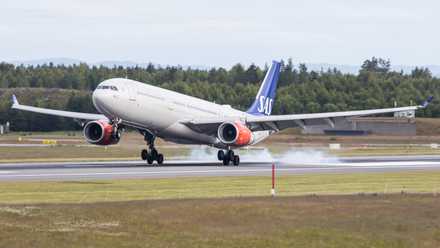
Scandinavian Airlines suffered a significant operational and reputational setback on June 3, 2026, when its inaugural Copenhagen-to-Mumbai service was aborted mid-flight over Azerbaijan after Indian civil aviation authorities failed to grant final route approval. Flight SK969, operated by an Airbus A330-300, departed Copenhagen roughly four hours late and turned back approximately four hours into the journey, leaving 266 passengers aboard for a fruitless 12-hour round trip that returned them to their origin. The route itself — Copenhagen (CPH) to Mumbai (BOM) — had never previously been operated by any carrier, and a water cannon salute in Mumbai was standing by to mark the occasion. Neither India's Directorate General of Civil Aviation nor the Ministry of Aviation issued a public statement explaining why final authorization was withheld, and SAS acknowledged it "had every expectation that the remaining formal approval would be finalized while the flight was en route," suggesting the airline proceeded on the assumption that a bureaucratic formality would be resolved in flight — a gamble that failed.
For airline operations professionals and Part 135 operators alike, the incident is a textbook illustration of the consequences of launching international service without airtight regulatory clearance in hand. Flying widebody equipment into a new bilateral market requires not merely code-share agreements and IATA coordination but explicit government-to-government route authorization and, in some jurisdictions, operations specifications acknowledgments that can be slow-moving or politically sensitive. SAS's decision to dispatch the aircraft before receiving confirmed approval from Indian authorities — apparently anticipating that clearance would arrive while airborne — exposed the carrier to cascading liability. Passengers holding pre-purchased domestic connections, hotel reservations, and time-sensitive business commitments faced losses well beyond the face value of their tickets, losses that SAS's standard contract of carriage does not fully indemnify. The airline was additionally compelled to rebook hundreds of passengers onto competing carriers at last-minute fares, and total direct costs for the aborted operation — fuel burn, crew duty, compensation obligations, and rebooking — are estimated in excess of half a million dollars.
The choice of the A330-300 as the launch aircraft reflects sound capacity management strategy for a route building from zero traffic base, but the airframe's relatively higher fuel burn compared to newer generation widebodies amplified the financial sting of the misfire. SAS's fleet transition is actively underway, with A350 aircraft absorbing premium long-haul flying to North America, positioning the A330-300 as a secondary widebody appropriate for demand-building on developing markets. The Mumbai route is geographically well-suited to the A330's range and offers a meaningful advantage in the current geopolitical environment: overflying the Caucasus and routing south of Russian airspace allows SAS to serve India without the penalties imposed on carriers that must fly around Russian airspace entirely — a factor that has materially reshaped European long-haul economics since 2022 and made some routes commercially viable that were previously marginal.
The broader context of SAS's relaunch to India is inseparable from its recent corporate restructuring. The airline emerged from bankruptcy protection, exited Star Alliance, and joined SkyTeam, fundamentally repositioning its network strategy. India, now the world's fastest-growing major aviation market, represents an obvious target for any European carrier seeking long-haul growth, and SAS's 17-year absence from the subcontinent — a retreat forced by the 2008-2009 financial crisis — left it without an established foothold as competitor carriers built frequency and brand loyalty. The Mumbai route, planned at five weekly frequencies, was designed to signal that the restructured SAS is capable of ambitious expansion. Instead, the aborted inaugural has handed competitors a narrative advantage and placed regulatory scrutiny on the airline's pre-launch compliance processes at exactly the moment it needs to project operational credibility to investors, alliance partners, and travelers alike. SAS has indicated it expects to resolve the outstanding authorization within days, but the damage to passenger confidence on a brand-new route — where first impressions carry disproportionate weight — will take longer to repair.








 Read original article