The Aircraft Set To Replace The Iconic C‑17 Globemaster In US Air Force Service
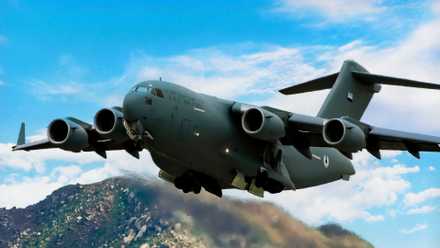
Air Mobility Command is actively pursuing a single next-generation platform to eventually replace both the Boeing C-17 Globemaster III and the Lockheed Martin C-5M Super Galaxy, consolidating two distinct airlifter roles into one aircraft under a program concept known as the Next-Generation Airlifter (NGAL). General John Lamontagne, head of Air Mobility Command, has publicly framed the 2040s as the target window for beginning a transition, citing the C-17 fleet's advancing age — production ceased in 2015, and the average airframe now exceeds two decades of service — as a key driver. The C-5M, with its dramatically improved reliability following the Re-engining Program, carries projected service life into the mid-2040s, while the C-17's roughly 222 remaining aircraft are currently projected to serve into the mid-2070s with sustained life-extension investment. The convergence of those timelines, combined with emerging threats from advanced air defense systems and long-range precision missiles, is compelling planners to define a survivable, agile replacement well before fleet degradation forces the issue.
The strategic logic behind a single NGAL platform replacing two different airlifters is significant and reflects hard lessons from decades of parallel fleet sustainment. The C-17's defining capability — short-field and austere-strip operations down to approximately 3,500 feet — enabled a generation of rapid-deployment and humanitarian missions that long-range jets like the C-141 Starlifter and C-5 could not execute without prepared infrastructure. The C-5M, by contrast, offers unmatched outsized payload capacity, capable of airlifting multiple Apache helicopters or two M1 Abrams tanks in a single sortie. Merging those two mission profiles into one airframe would reduce lifecycle maintenance complexity, simplify aircrew qualification and training pipelines, and theoretically allow a smaller fleet to cover a broader range of contingency scenarios. For military aviators and mobility planners, the trade-off centers on whether a single design can genuinely deliver at both ends of the spectrum without compromising either role.
For professional pilots operating in Part 135 cargo, charter, and business aviation environments, the NGAL program signals broader shifts in how the aerospace industry is approaching large-aircraft design, particularly around contested-environment survivability and operational flexibility. The requirement that a next-generation airlifter operate in higher-threat environments with enhanced agility points toward emerging design priorities — reduced radar cross-section, advanced electronic systems, potential hybrid or alternative propulsion concepts — that are already influencing commercial and business aviation platform development. The pressure to build a platform that can operate from semi-prepared or damaged runways while still hauling outsized strategic cargo also mirrors the kind of multi-role thinking driving next-generation turboprop and large-cabin bizjet design, where operators increasingly demand a single platform capable of serving both short, austere strips and transcontinental routes.
The broader historical arc from the C-141 Starlifter through the C-17 to the NGAL concept illustrates a consistent pattern in military aviation: each generational replacement demands a wider capability envelope than its predecessor, driven by the evolution of threats and logistics doctrine. The C-141 brought jet speed and global range to replace piston-era transports; the C-17 added tactical flexibility and rough-field performance the Starlifter lacked; the NGAL must now add survivability in contested airspace to the established requirements for both strategic payload and austere operations. This pattern has direct commercial parallels, as airlines and cargo operators have similarly moved toward fewer, more capable platform types — widebody jets replacing mixed narrowbody and freighter fleets — to reduce complexity and cost. The NGAL program, while still conceptual, will drive significant Boeing, Lockheed Martin, and likely new-entrant competition through the late 2020s and 2030s, with contract and design decisions that will shape the aerospace manufacturing supply chain well beyond military aviation circles.











 Read original article