Air Charter Service opens 43rd global office in Monaco | Corporate Jet Investor | CJI news
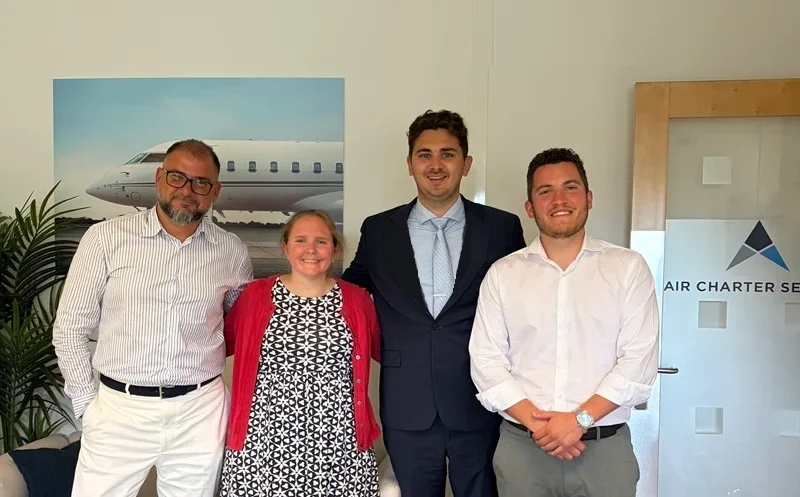
Air Charter Service has expanded its global brokerage footprint to 43 offices with the opening of a new location in Monaco's Boulevard d'Italie, a move authorized directly by Monaco's Minister of State. The principality's selection reflects deliberate market positioning rather than opportunistic expansion, with regional director Alexandre Busila citing the dense concentration of existing ACS private jet clients already residing in or operating through Monaco. Staff relocated from the company's Paris office form the initial team, with additional hiring anticipated as the operation scales.
The geographic rationale is significant for operators and charter clients alike. Monaco sits within approximately 20 miles of Nice Côte d'Azur Airport (LFMN), which serves as the primary jet gateway for the French Riviera and handles substantial private and business aviation traffic, particularly during the Formula 1 Grand Prix, MIPIM, and Cannes Film Festival periods. The office also positions ACS within 100 miles of Cannes-Mandelieu (LFMD), St. Tropez La Mole (LFTZ), and Toulon-Hyères (LFTH), a corridor that consistently ranks among Europe's highest-density private aviation markets during the spring and summer season. For charter operators flying into this region, a locally embedded broker with established client relationships can meaningfully affect lift demand and trip coordination efficiency.
For professional pilots and flight departments, the ACS Monaco opening signals continued institutional confidence in the ultra-high-net-worth segment of European charter demand, even against a backdrop of post-pandemic normalization in business aviation activity. Monaco's resident population skews heavily toward the wealth demographic that drives fractional ownership, whole aircraft charter, and managed aircraft programs, making it an unusually concentrated market for its geographic size. A dedicated on-the-ground presence allows for faster client response times, more nuanced handling of last-minute requests, and stronger relationships with local fixed-base operators and handling agents—factors that directly influence the operational experience for flight crews serving those clients.
The broader trend underlying this expansion is the continued localization strategy among large charter brokers competing in European luxury markets. Rather than relying solely on centralized hubs like London or Paris, firms such as ACS are embedding offices in client-dense micro-markets where proximity and personal relationships carry outsized commercial weight. For corporate flight departments and Part 91 operators positioning aircraft in Southern Europe, particularly during the busy Mediterranean season, the growth of specialized local brokerage infrastructure generally translates into improved availability intelligence, more competitive positioning, and better coordination with the regional handling and FBO ecosystem.