Why Do Contrails Form Behind Some Aircraft But Not Others?
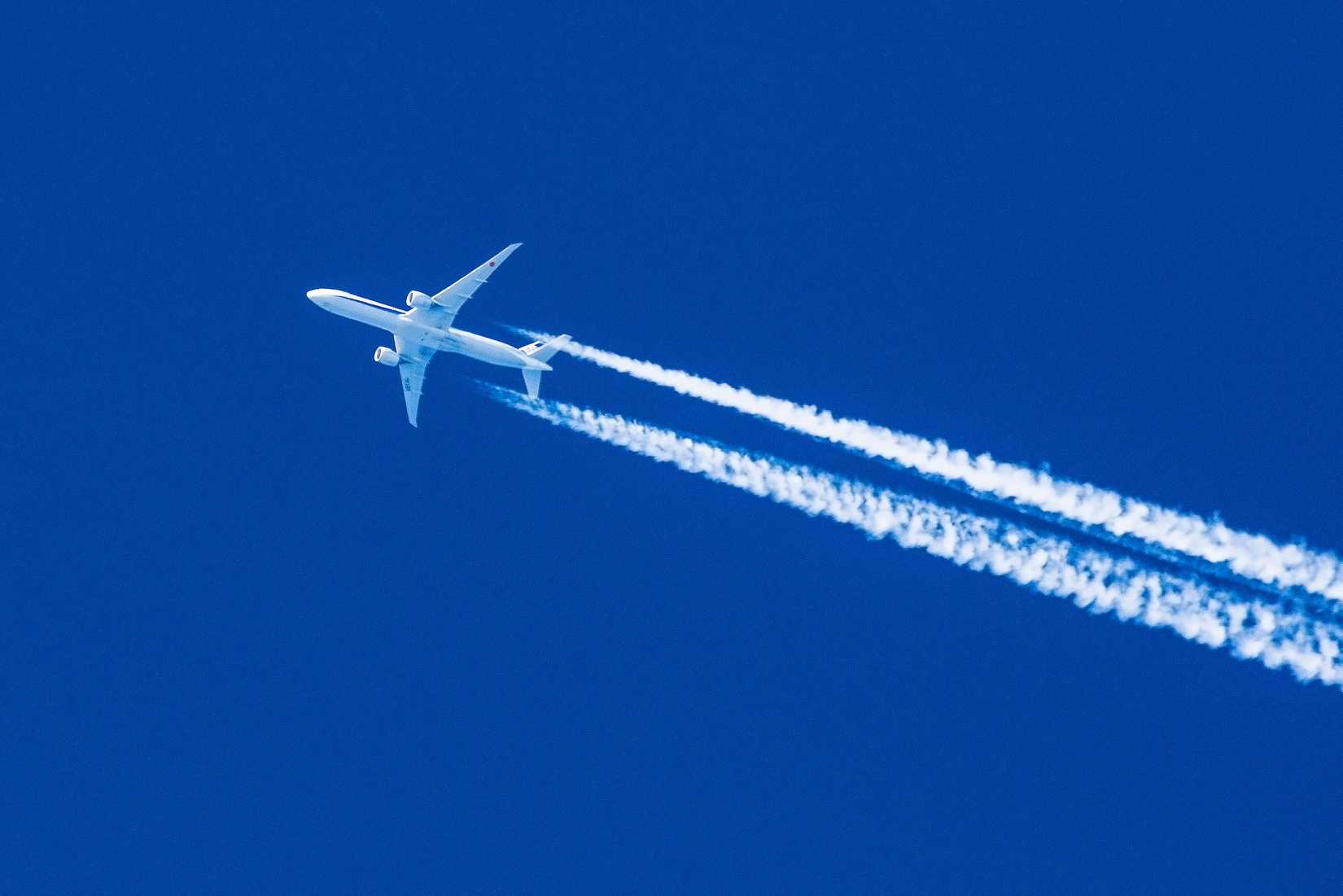
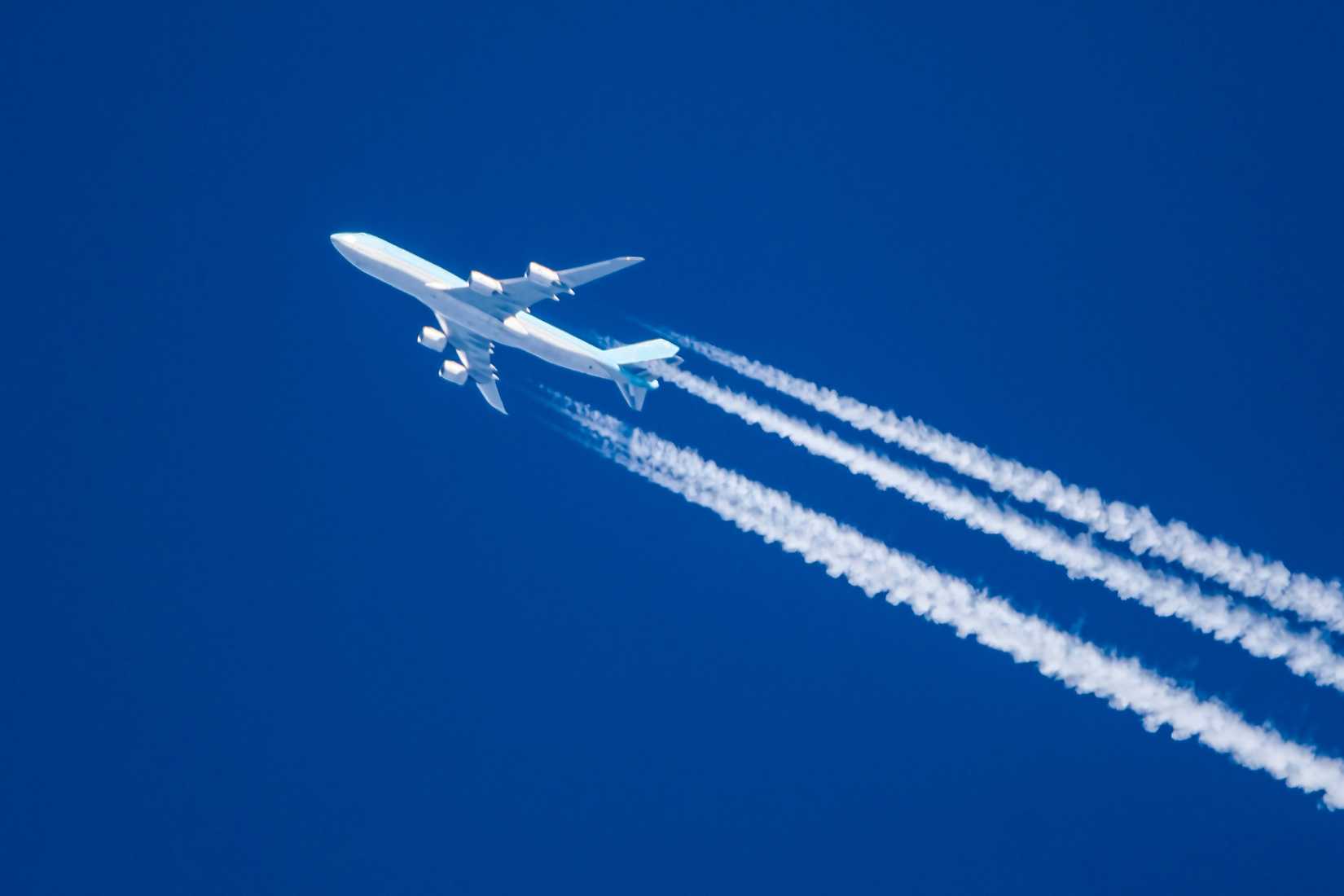
Contrail formation is governed almost entirely by localized atmospheric conditions rather than aircraft type, engine make, or airline operational practices — a distinction that carries direct relevance for flight crews operating at high altitudes where atmospheric variability can change dramatically across a few hundred feet of altitude. The foundational physics involves two atmospheric thresholds: ambient temperature, which must generally fall below -40°F (-40°C) to trigger instantaneous freezing of engine exhaust water vapor, and relative humidity with respect to ice, which determines whether a formed contrail persists as a spreading cirrus-like structure or dissipates within milliseconds. The mathematical framework for predicting these thresholds dates to 1953, when military meteorologist Herbert Appleman developed a chart correlating ambient temperature, pressure, and humidity to contrail onset — a tool that remains embedded in modern atmospheric science and is now being integrated into AI-driven flight planning systems. The soot particles expelled by jet engines act as ideal cloud condensation nuclei, providing the crystallization seeds onto which ambient moisture locks, while a secondary mechanism — aerodynamic contrails produced by pressure drops over wing surfaces — can generate vapor trails entirely independent of combustion chemistry.
For working flight crews, the operational implication of this physics is that two aircraft flying what appears from the ground to be an identical track can produce dramatically different visual signatures based solely on a vertical separation of a few hundred feet. Standard ATC separation rules — 2,000 feet for same-direction traffic and 1,000 feet for opposing traffic — are sufficient to place one airframe inside an ice-supersaturated air mass producing thick, persistent trails while a preceding or following aircraft cruises through a dry pocket with no contrail at all. A moisture ribbon as narrow as 800 feet thick can produce a vivid, expanding white line for an aircraft transiting through it, then terminate abruptly once the flight levels off 1,000 feet higher in a drier band. This dynamic, hour-by-hour variability in atmospheric layering means that contrail production is not a stable or predictable characteristic of a given route or altitude band — it is a function of real-time meteorological conditions that crews and dispatchers cannot assess purely from standard ATIS or PIREP data without purpose-built atmospheric modeling.
The broader operational and regulatory significance of contrail science is accelerating rapidly as the aviation industry confronts the full scope of its climate impact. Carbon dioxide has historically dominated emissions reduction discussions, but research increasingly implicates persistent contrails and the cirrus clouds they seed — known collectively as aviation-induced cloudiness — as potentially significant contributors to net radiative forcing beyond CO₂ alone. This has prompted major carriers to begin integrating predictive AI tools into flight planning workflows specifically designed to identify and avoid ice-supersaturated regions, effectively treating contrail avoidance as an active operational objective rather than an atmospheric footnote. The article notes that modern ultra-high-bypass turbofan engines, while substantially more fuel-efficient, have inadvertently altered the contrail production envelope — a finding that reflects the complex, sometimes counterintuitive trade-offs between efficiency gains and atmospheric effects that regulators and operators are now being forced to quantify.
For Part 91, 91K, and 135 business aviation operators, this emerging focus on contrail management represents a shift in how altitude selection and routing decisions may eventually be evaluated by regulators and sustainability-minded clients. While current ICAO and FAA frameworks do not impose contrail avoidance requirements, the trajectory of environmental accountability in aviation — particularly in European airspace under CORSIA and EU Emissions Trading Scheme frameworks — suggests that voluntary adoption of contrail-aware routing tools could become a competitive differentiator and eventually a compliance matter. Operators with performance-based navigation capabilities and access to high-resolution atmospheric forecast data are best positioned to begin incorporating contrail probability into preflight planning, particularly on long transatlantic or transpacific routes where upper-level ice supersaturation is both common and well-documented in numerical weather prediction models. Understanding that contrail behavior is an atmospheric physics problem solved at the dispatch desk — not at the thrust lever — is the foundational mindset shift the industry is beginning to require of its professional flight crews.








 Read original article