Boeing Delivers Riyadh Air’s 1st Pair Of 787-9 Dreamliners After Being Completed 4 Months Ago
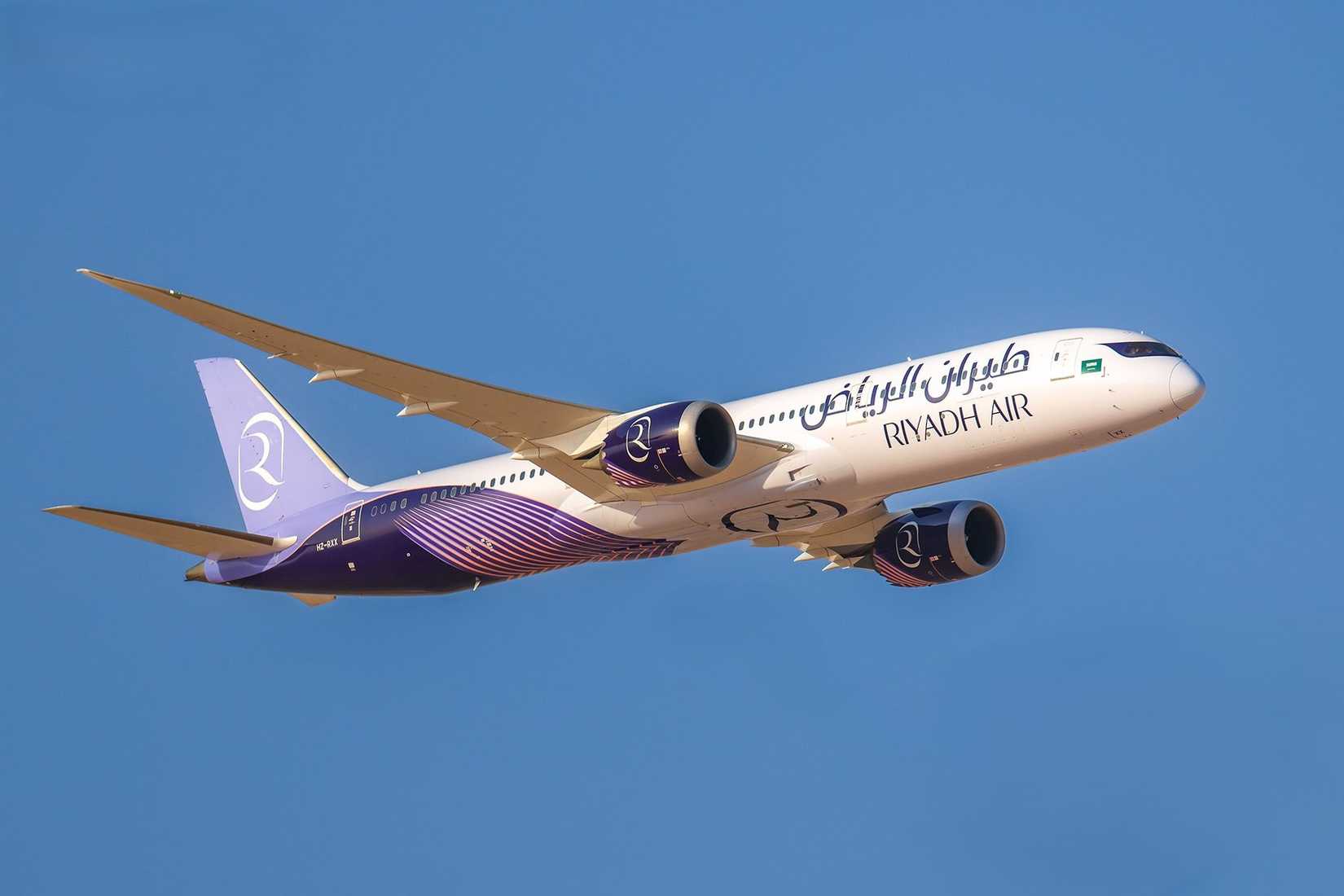
Riyadh Air has taken delivery of its first two purpose-built Boeing 787-9 Dreamliners, registered HZ-RXAA and HZ-RXAB, marking the operational beginning of one of the most closely watched airline startups in recent memory. Both aircraft departed the United States on June 4, 2026 — HZ-RXAB from Paine Field in Everett, Washington, and HZ-RXAA from Boeing's Charleston, South Carolina facility — before converging over Europe for a coordinated arrival into King Khalid International Airport in Riyadh. The deliveries arrive just weeks ahead of the airline's July 1 inaugural commercial flight to London Heathrow, a route that has been previewed under Riyadh Air's employee-and-stakeholder "Pathway to Perfect" proving program using a leased Oman Air 787-9. With economy fares starting around $220 and business class at approximately $2,575, the carrier is positioning itself competitively against established Gulf carriers on the Riyadh–London corridor from day one.
The delivery timeline itself is a story of Boeing's continued production difficulties. HZ-RXAA completed its first flight in December 2025, and HZ-RXAB flew in February 2026, yet both aircraft sat in various stages of pre-delivery work and customer acceptance testing for months before being formally handed over — a gap of roughly four to six months between first flight and delivery. This pattern reflects the broader 787 program's well-documented manufacturing and quality-assurance challenges that have constrained delivery rates and frustrated airline customers globally. For operators and fleet planners tracking 787 availability, the Riyadh Air situation underscores that even newly produced airframes can remain in Boeing's pre-delivery pipeline far longer than historical norms, with cabin configuration complexity — particularly premium interiors common in Gulf carrier orders — compounding the delays. Three additional Riyadh Air 787-9s (HZ-RXAC through HZ-RXAE) have already flown and are working through the same pipeline, making their near-term delivery tempo critical to the airline's ability to scale beyond its single launch route.
For professional pilots and aviation operators, Riyadh Air's entry into the market carries significant competitive implications, particularly for crews flying routes between Europe and the Gulf. The carrier holds firm orders for 39 Boeing 787-9s with options for 33 more, plus up to 60 Airbus A321neo family aircraft and up to 50 A350-1000s with 25 firm commitments. That fleet composition — widebody Dreamliners as the initial long-haul backbone, A321neos for regional and medium-haul density, and A350-1000s for higher-capacity trunk routes — mirrors the dual-fleet strategy employed by Emirates and Qatar Airways at their respective growth stages. The A350-1000 order in particular signals ambitions well beyond the thin-to-medium long-haul markets the 787-9 handles best, pointing toward future high-density operations on routes where seat-mile economics demand a larger airframe.
Riyadh Air's launch is inseparable from Saudi Arabia's Vision 2030 strategy, which explicitly targets positioning the Kingdom as a global aviation hub to rival Dubai and Doha. The airline is state-backed through the Public Investment Fund, giving it access to capital that few new entrants can match, and CEO Tony Douglas — formerly of Etihad — brings direct experience scaling a Gulf carrier with an aggressive international route map. For business aviation operators and Part 91 charter customers flying into the Arabian Peninsula, a well-capitalized new carrier competing on the Riyadh hub further diversifies connectivity options at King Khalid International and may influence slot availability and ground handling resources as the airline scales through 2026 and into 2027. The coming months, and specifically the pace at which HZ-RXAC, HZ-RXAD, and HZ-RXAE clear Boeing's delivery process, will determine whether Riyadh Air can back its July launch with the fleet depth needed to sustain any disruption while simultaneously opening additional destinations.








 Read original article