AeroVanti’s Britton-Harr convicted of $15m fraud targeting Private Jet Club members | Corporate Jet Investor | CJI news
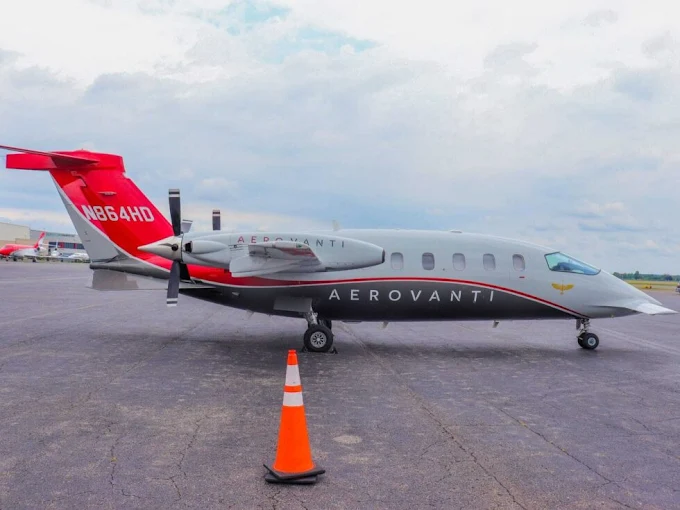
Patrick Britton-Harr, 43, founder and operator of AeroVanti, a Maryland-based private air club, has been convicted by a federal jury on six counts of wire fraud following an investigation by the FBI Baltimore Field Office and the Department of Transportation Office of Inspector General. Britton-Harr solicited what he marketed as "Top Gun" memberships at $150,000 per seat, representing to prospective members that their funds would be applied toward the purchase of specific aircraft, with titles held in escrow as a protective mechanism. Approximately 100 members collectively contributed around $15 million toward the acquisition of five aircraft. None of those aircraft were ever delivered to members as promised, and the contracted flight hours were never made available. Britton-Harr instead redirected the funds toward personal expenditures including yacht purchases, luxury jewelry, and a $10,000-per-month residential lease near Tampa, Florida. To obscure the misappropriation, he secured a $1.5 million third-party loan to purchase one of the aircraft he had already falsely represented as purchased with member funds, withholding material facts from that lender. Each of the six wire fraud counts carries a maximum sentence of 20 years. Sentencing has not yet been scheduled, and Britton-Harr faces a separate October 2026 trial on charges of Medicare fraud and money laundering.
The conviction carries direct operational relevance for pilots and flight departments evaluating fractional, club, and card-based private aviation programs. The AeroVanti model—upfront capital contributions in exchange for block flight hours on specific fleet assets—closely mirrors structures common across the private aviation membership market. The key fraud mechanism here was the escrow misrepresentation: members were told their funds were legally segregated and title-protected, a standard due-diligence assurance that proved entirely fabricated. For corporate flight departments advising their organizations on third-party aviation access, and for individual pilots considering employment with membership-model operators, this case illustrates that contractual escrow language and verbal assurances about fleet ownership must be independently verified through title search, UCC lien records, and direct confirmation with the escrow agent, not simply accepted as representations from the program operator.
The case also highlights a structural vulnerability inherent in pre-funded private aviation membership models, which require large capital outlays before any service is rendered. Unlike Part 135 on-demand charters where payment typically follows or coincides with the flight, club and fractional structures that demand five- and six-figure deposits create extended periods during which operator insolvency or malfeasance can strand member capital with limited immediate recourse. The Department of Transportation Office of Inspector General's involvement in this investigation is notable, as it signals that federal regulators view aviation-specific financial fraud—particularly schemes that exploit the regulatory complexity of civil aviation to lend legitimacy to fraudulent structures—as a priority enforcement area warranting interagency coordination with the FBI.
Britton-Harr's case arrives amid a broader period of consolidation and stress testing across the private aviation sector. Following the pandemic-era surge in private jet demand, several membership and card program operators have faced financial turbulence, contract disputes, and fleet delivery failures as supply chain constraints, elevated aircraft valuations, and softening demand have pressured business models. The AeroVanti conviction is distinguished from ordinary business failure by clear criminal intent and deliberate concealment, but it reinforces market-wide concerns about operator transparency and financial accountability. For pilots employed by or considering employment with membership-model operators, understanding the financial structure of the operating certificate holder—including fleet ownership, debt encumbrances, and the relationship between operating entity and aircraft title—is increasingly a matter of professional due diligence, not merely background knowledge. Flight crews whose employment is tied to aircraft assets held under fraudulent or highly leveraged structures face real professional and legal exposure when those structures collapse.