New Otto Aerospace CEO confirms ‘good progress’ on Phantom 3500 certification | Corporate Jet Investor | CJI news
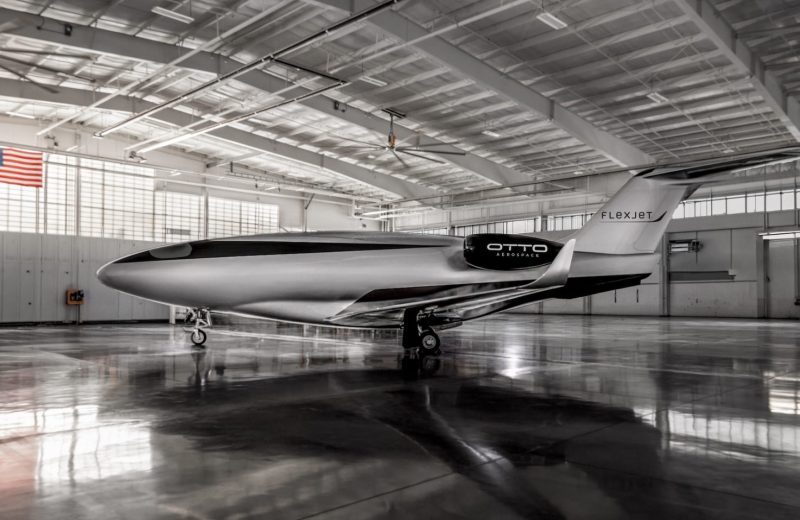
Otto Aerospace's new CEO Scott Drennan is signaling a deliberate shift from program development into active execution, marking a critical inflection point for the Phantom 3500 business jet. Approximately one month into his tenure as chief executive — having previously served as chief operating officer since late 2022 — Drennan confirmed the program has cleared a preliminary design review (PDR), the formal technical milestone that authorizes hardware fabrication and component assembly. First flight of Flight Test Vehicle 1 remains targeted for 2027, and Austrian cabin specialist F/LIST has been selected to handle interior design. The company secured a landmark 300-aircraft firm order from Flexjet in September 2025, establishing a credible demand signal that anchors the program's commercial viability as it moves toward Series C fundraising through the summer and fall of 2026.
Central to the Phantom 3500's value proposition — and to nearly everything Drennan discusses — is laminar flow aerodynamics, a technology concept with origins in 1930s research that has historically resisted practical commercial application. Otto's core thesis is that laminar flow can be reliably designed in, manufactured in, and maintained in service, enabling dramatically superior range and fuel efficiency compared to conventional turbulent-boundary-layer airframes. To validate that thesis outside the simulated environment of computational fluid dynamics, the company partnered with DARPA to fly a scaled drone at White Sands Missile Range in New Mexico. The drone — featuring a 20-foot wingspan and operated across five sorties accumulating roughly three hours of flight time — was sized and flown at conditions specifically chosen to replicate the Reynolds number and lift coefficients of a much larger vehicle operating at 60,000 feet. That methodological discipline, matching aerodynamic similitude across scale, gives Otto defensible data for both its CFD toolset and its scaling methodology, two proprietary systems that represent the company's foundational intellectual property.
The DARPA drone program has also opened a secondary revenue and validation pathway that carries direct implications for the Phantom 3500's production economics. What began as a laser energy transmission demonstrator evolved — at military interest — into a full-scale synthesized design weighing approximately 3,000 pounds with a 3,500-nautical-mile combat radius, powered by an internal combustion engine. At an estimated unit cost of roughly $2 million, Drennan argues the drone achieves meaningful attritability for high-altitude, long-range missions where adversary interception requires weapons systems costing an order of magnitude more. Critically, the modular manufacturing process developed for the drone uses the same composite press tooling intended for Phantom 3500 wing production, providing direct process validation and potential economies across both programs simultaneously. For operators and investors scrutinizing whether Otto can actually manufacture at scale, this cross-program manufacturing synergy offers tangible evidence beyond white-paper promises.
For professional pilots and flight department operators evaluating the Phantom 3500 as a potential fleet addition, the program's current posture reflects both meaningful progress and the inherent risk profile of a pre-certification aircraft from a startup OEM. The Flexjet order provides liquidity confidence and a pathway to fractional-market entry, but first flight in 2027 and subsequent FAA type certification — a process that routinely extends several years beyond initial flight testing — means realistic entry into service likely falls no earlier than the late 2020s or early 2030s. The pending Series C raise remains the program's most immediate critical path item, as Drennan explicitly ties the 2027 first-flight target to successfully closing that round. In a capital environment where aviation startup funding has grown more selective, the dual-use drone program's Pentagon adjacency may meaningfully improve Otto's fundraising leverage by broadening its addressable investor base beyond traditional business aviation channels.
The Phantom 3500 sits within a broader industry trend of startups targeting the ultra-long-range large-cabin segment with next-generation aerodynamic and propulsion concepts, a segment currently dominated by Gulfstream's G700 and Bombardier's Global 7500. Unlike electrification-focused newcomers, Otto is pursuing performance differentiation through airframe efficiency rather than propulsion substitution, a technically credible approach given that laminar flow, if realized at scale, could reduce fuel burn substantially without requiring immature battery or hydrogen infrastructure. Drennan's five-point framework — centering on execution discipline, dual-program management, a forward technology roadmap, and capital formation — represents a structured attempt to navigate the gap between compelling concept and certified, deliverable product. Whether that structure is sufficient to bring a novel-aerodynamics business jet through FAA certification on a competitive timeline will define Otto Aerospace's standing in the market for years to come.