Inside The Math That Convinced Southwest Airlines To Finally Kill Open Seating
Southwest Airlines formally terminated its 54-year open seating model on January 26, 2026, when the final unassigned flight operated from Honolulu to Los Angeles, closing a chapter that had defined the carrier's commercial identity since its founding era. The decision was not sentimental or strategic in the abstract sense — it was driven by three compounding financial pressures that collectively made continuation untenable. Internal research showed that 80% of existing Southwest passengers and 86% of prospective travelers preferred pre-assigned seating, and the open boarding process was identified as the single leading cause of customer defection to network rivals. For corporate and business travelers in particular, the inability to guarantee adjacent seating for colleagues or guarantee any specific cabin position made Southwest structurally unsuitable for time-sensitive professional travel, pushing high-yield customers systematically toward legacy carriers.
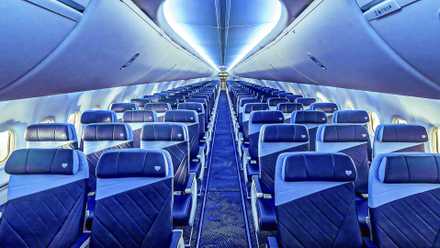
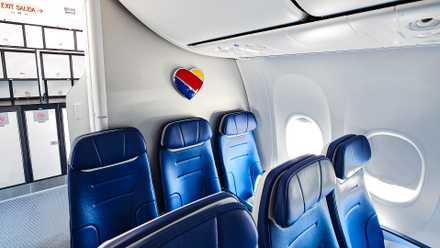
The ancillary revenue dimension of this decision is arguably its most consequential element for understanding the competitive dynamics now reshaping domestic aviation. Between 2018 and 2023, American, Delta, United, Frontier, and Spirit collectively collected $12.4 billion in seat-assignment fees — a revenue stream Southwest was categorically unable to access because open seating eliminates the fixed real estate identifiers required to charge for specific positions. Simultaneously, network carriers captured $5.5 billion in checked bag fees during just the first nine months of 2023. Southwest's response has been systematic and accelerating: free bag policies were abandoned in mid-2025, a fare stratification matrix replaced the carrier's historically simplified booking structure, and a baggage fee escalation implemented on April 9, 2026 raised first-bag fees to $45 and second-bag fees to $55. The cabin has been converted from a communal, egalitarian space into a monetized grid, each seat now generating direct fee revenue insulated from fuel price volatility and ticket price compression.
The projected financial outcomes frame the magnitude of this structural pivot. Southwest's internal models project $1.5 billion in standalone annual seat revenue from assigned and premium configurations, contributing to a $4.3 billion expansion in total operating profit and a 9.5% increase in revenue per available seat mile. These are not incremental adjustments — they represent a fundamental reengineering of Southwest's commercial operating model toward the legacy carrier financial architecture the airline spent five decades explicitly rejecting. For operators and pilots working in charter, Part 135, or business aviation, this shift carries an indirect but meaningful signal: the domestic airline landscape is consolidating around a premium-differentiated model that is actively compressing the middle market. Travelers who previously accepted the Southwest experience as a low-friction alternative to network carriers are now being funneled into a tiered system that increasingly resembles the very product they were avoiding.
The broader trend this decision reflects is the near-complete erosion of the structural low-cost carrier model as originally conceived. Ultra-low-cost carriers like Spirit and Frontier have struggled with bankruptcy and operational instability, while hybrid carriers like Southwest are absorbing legacy carrier practices wholesale to survive. For business aviation operators, this convergence is commercially relevant: as the gap between premium airline cabins and charter or fractional products narrows in cost while the gap in flexibility and reliability remains substantial, the value proposition of business aviation becomes easier to articulate to prospective clients. Southwest's transformation confirms that the airline industry is moving decisively toward revenue stratification and away from the democratized, undifferentiated travel model — a dynamic that historically correlates with sustained demand growth in the business and general aviation sectors.












 Read original article