How Much Does It Cost To Upgrade To Business Class On British Airways?
British Airways' Club World upgrade pricing structure in 2026 reflects the broader commercialization dynamics shaping transatlantic premium cabin travel, with cash upgrade costs ranging from $1,000 to $3,000 depending on original fare class, route demand, and proximity to departure. The carrier's loyalty program, the Executive Club, uses Avios as its redemption currency, with a one-way premium economy to business class upgrade typically requiring between 24,000 and 30,000 Avios plus the differential in carrier surcharges and taxes. Notably, BA calculates Avios upgrade costs as the difference in redemption value between cabin levels rather than a flat fee, meaning a route priced at 60,000 Avios in premium economy and 90,000 in business class carries a 30,000-point upgrade cost. Basic economy fares remain ineligible for upgrades entirely, and availability is governed by reward seat release rather than physical seat vacancy.
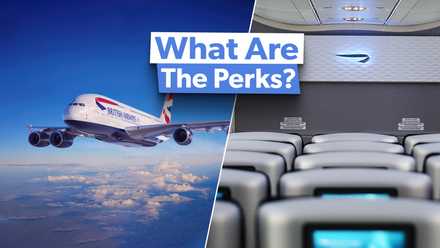
For corporate flight departments and Part 91 operators who routinely book executives on transatlantic commercial segments—either to complement fractional or charter itineraries, or when positioning personnel to international bases—understanding BA's upgrade economics has practical budgetary relevance. The cost-per-hour framework cited in the article, targeting under $75–$100 per flight hour for premium economy-to-business upgrades, provides a useful benchmark for travel managers evaluating whether an incremental spend is justifiable against productivity and rest considerations on overnight transatlantic routes. The Club World product's fully flat bed, direct aisle access, privacy door, and Heathrow lounge access represent meaningful operational advantages for executives arriving at early-morning European meetings, a calculation that corporate aviation departments frequently weigh against the total trip cost of a charter or fractional segment.
The competitive context matters for operators advising high-net-worth clients or managing travel programs that blend business aviation with commercial options. BA's Avios surcharges are noted as higher than many U.S. and European competitors despite offering strong redemption values, a tension that positions programs like American Airlines AAdvantage or Air France-KLM's Flying Blue as alternative pathways for transatlantic premium cabin access at lower out-of-pocket costs. The Household Account pooling feature—allowing family members to combine Avios balances—has direct relevance for principal-owner operators and family office travel coordinators who manage loyalty currencies across multiple travelers. For this segment, maximizing Avios accumulation through credit card spend and commercial travel to fund upgrade redemptions represents a legitimate and increasingly sophisticated cost-reduction strategy.
More broadly, the sustained consumer demand for transatlantic business class upgrades—and BA's structured, tiered pricing response to that demand—reflects the ongoing bifurcation of commercial aviation into a high-margin premium segment and a commoditized economy segment. Airlines have invested heavily in Club Suite-style products with privacy doors and flat beds precisely because premium cabin yields continue to outperform economy on long-haul routes, a trend directly relevant to business aviation operators who frequently compete for or complement the same high-value traveler demographic. As commercial carriers refine their premium products and loyalty upgrade pathways, the value proposition calculus for private charter and fractional ownership operators shifts accordingly, particularly on routes where Club World access at upgrade pricing narrows the experiential gap with light or midsize jet travel. Professional pilots operating in business aviation contexts benefit from understanding these commercial benchmarks, as client conversations about travel options increasingly require fluency in both segments of the premium travel market.










 Read original article