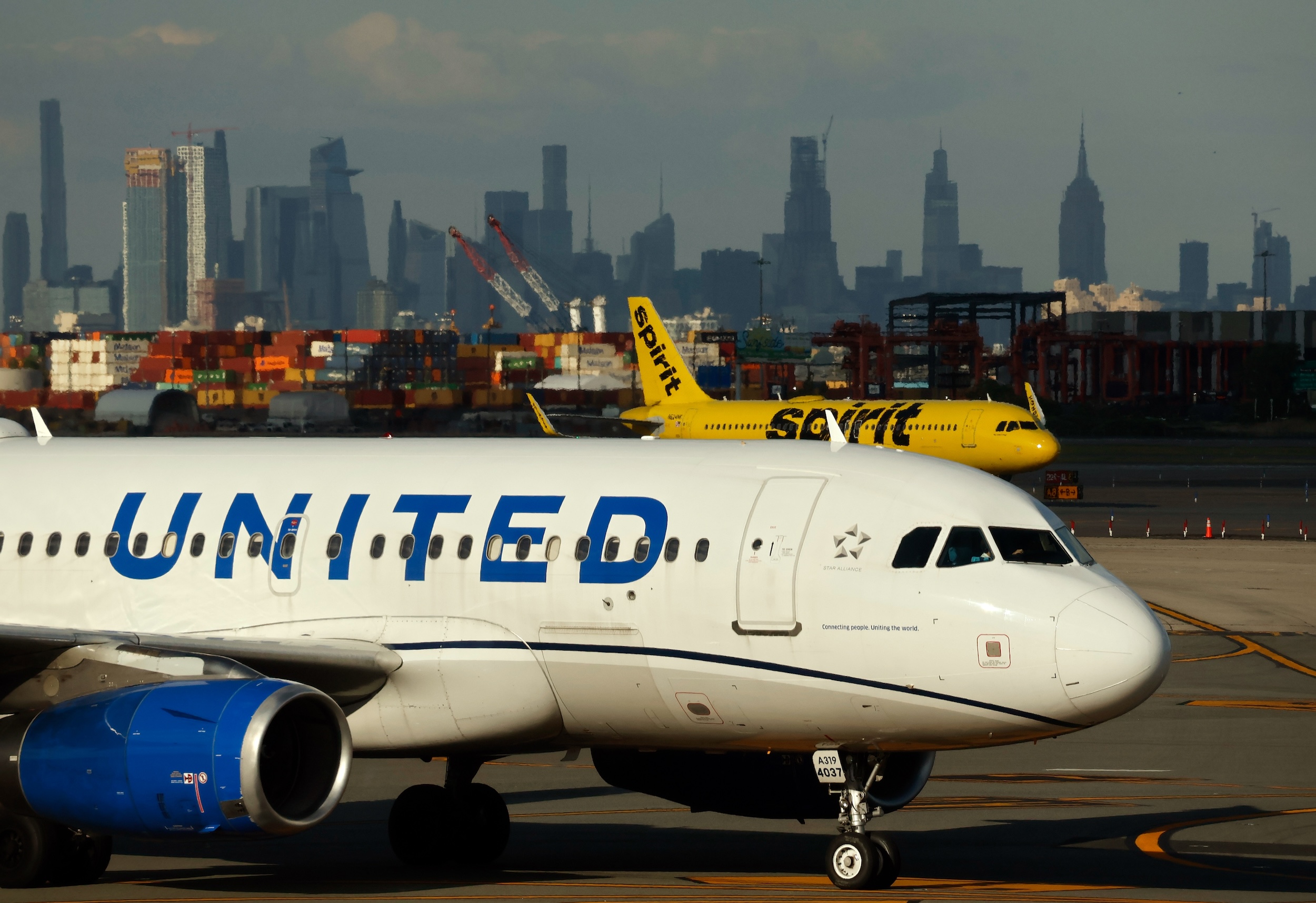
Special Report: The reasons Spirit Airlines failed are also why United wants American
Spirit Airlines' second bankruptcy and liquidation on May 2, 2026, and the separately reported — and publicly denied — merger discussions between United Airlines and American Airlines share a common structural origin: the American air transport system has reached a capacity ceiling that is simultaneously strangling low-cost carriers and pushing network airlines toward consolidation as the only remaining growth lever. The forces that defined post-deregulation aviation for nearly five decades — competitive pricing, route proliferation, and accessible fares — are eroding under the compounding weight of infrastructure constraints, systemic inflation, rising fuel costs exacerbated by the U.S.-Israel conflict with Iran, and the capital-intensive demands of modernizing airport facilities across the country. The FAA's own administrator, Bryan Bedford, acknowledged before the Senate aviation subcommittee in May that a system managing more than 18 million annual flights and over one billion passenger movements has reached its operational limits.
The premium-cabin reconfiguration of United's newest 787-9 fleet — where two-thirds of the aircraft is allocated to premium seating, pushing economy class behind the third set of exit doors — is not merely a product decision. It is a strategic signal that network carriers are deliberately retreating from the high-volume, low-margin economy passenger as a core business unit. For professional pilots operating in the Part 121 space, this trend has tangible implications: fleet planning, route economics, and scheduling are increasingly built around yield-per-seat rather than load factors driven by discounted fares. The layout echoes the pre-deregulation jet age, when the structural cost of flying was simply too high to subsidize mass-market pricing, and it suggests that major carriers have internally concluded that the economics of filling every seat cheaply no longer pencil out in the current operating environment.
The hub-and-spoke consolidation that followed deregulation has become a structural liability rather than a resilience mechanism. As the article notes, the system has grown more brittle — constrained runways, taxiways, and airspace at major hubs create cascading delays and limit the ability of airlines to absorb demand surges or irregular operations. For corporate flight departments operating under Part 91 or 91K, and for charter and fractional operators under Part 135, this brittleness in the commercial system is a recurring business-case argument for private aviation: hub congestion, reduced frequencies to secondary markets, and equipment upgauging that eliminates thin-route service are all factors that drive corporate travel buyers toward alternatives. The simultaneous trend of upgauging — putting larger aircraft on surviving routes to offset infrastructure constraints — is actively shrinking air service options to smaller U.S. cities, a development that has historically preceded growth in general aviation and business aviation activity in those underserved markets.
The reported United-American merger interest, even if denied publicly, reflects the final stage of a consolidation arc that has defined U.S. aviation since the mid-2000s. With organic growth effectively capped by airspace, slot, and gate constraints at the country's major hub airports, and with the low-cost carrier model having demonstrably failed to sustain itself through Spirit's collapse, the remaining network carriers face a strategic binary: maximize yield from existing infrastructure or attempt to absorb competitors' assets, routes, and aircraft to achieve scale without building new capacity. For pilots at both carriers, a potential merger of this magnitude would represent the most significant workforce integration event since the American-US Airways merger completed in 2015, with seniority list arbitration, fleet harmonization, and base consolidation all carrying direct career implications. Whether or not the United-American discussions ever advance beyond the reported preliminary stage, their very existence confirms that airline leadership views the current system as one where competitive positioning, not expansion, is the dominant strategic imperative.