Rolls-Royce Archives - Leeham News and Analysis
Rolls-Royce and the broader commercial engine manufacturing sector are navigating a convergence of durability remediation, market re-entry ambitions, and structural economic pressures that have reshaped how powerplant costs are understood across the aviation industry. Leeham News analyst Scott Hamilton draws a telling parallel between aerospace and the automotive industry: carmakers are only now discovering what engine OEMs and airlines learned years ago — that the real money lies in the service and aftermarket ecosystem rather than in initial hardware sales. The average U.S. vehicle is now 13 years old, and automakers are belatedly pivoting toward parts and maintenance revenue. In commercial aviation, that pivot happened long ago, with power-by-the-hour and total-care contracts becoming the dominant commercial model for engine manufacturers, a structure that simultaneously aligns incentives for durability and locks operators into long-term revenue relationships with OEMs.
On the durability front, GE Aerospace has stated that CFM International LEAP engines currently shipping should finally achieve on-wing life comparable to the venerable CFM56 — a benchmark that was promised at the engine's 2010 commercial launch but never delivered in early production variants. Both the LEAP and Pratt & Whitney's GTF entered service with significantly shorter on-wing intervals than guaranteed, eroding the fuel-burn savings that justified fleet transitions to the A320neo and 737 MAX families. For Part 135 and airline operators flying narrowbody fleets, this matters directly: premature engine removals drive unplanned AOG events, lease return disputes, and maintenance reserve shortfalls. The GTF crisis, which grounded upwards of 700 A320neo-family aircraft at its peak, remains the starkest modern example of how engine durability shortfalls cascade into network disruption, charter capacity crunches, and widening yield pressure across the industry.
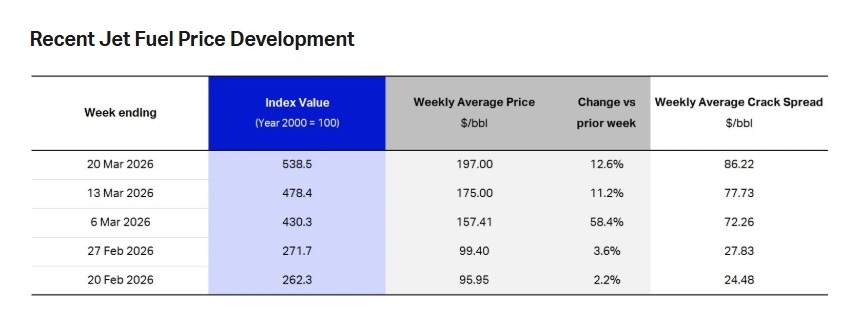
The macroeconomic backdrop adds further urgency. With jet fuel reaching $197 per barrel as of late March 2026 — more than double a five-week prior low of $93 — the pressure on airlines to take delivery of fuel-efficient narrowbodies has intensified sharply, even as both Airbus and Boeing continue struggling to meet master production schedules. The underlying constraint, as Leeham contributor Karl Sinclair outlines, is that engine manufacturers cannot keep pace with aircraft demand even under normal conditions, and supply chain and technology challenges compound across every major producer regardless of geography. For fleet planners and operators with delivery positions on 737 MAX or A320neo-family aircraft, this supply squeeze translates directly into extended delivery timelines, sustained operation of older, less fuel-efficient airframes, and continued exposure to elevated fuel costs that newer powerplants were meant to offset.
Rolls-Royce's strategic position adds a longer-term dimension to this picture. CEO Tufan Erginbilgic has used strong 2025 full-year financial results to restate the company's case for re-entering the narrowbody engine market through the £3 billion UltraFan 30 program, which targets the large and growing single-aisle segment currently dominated by CFM and Pratt & Whitney. Erginbilgic has clarified that the company is pursuing grant-based R&D support through the UK Aerospace Technology Institute rather than government loans — a distinction with real significance, since launch-aid and R&D subsidy structures have historically been flashpoints in transatlantic trade disputes. If Rolls-Royce secures development partners and successfully certifies a narrowbody engine, it would introduce a third competitive option into a market that has been a two-horse race for over a decade, with meaningful long-term implications for maintenance contract pricing, MRO capacity, and operator leverage in fleet negotiations.
For professional pilots and operators, the thread connecting all of these developments is cost predictability. The transition to services-based revenue models — whether in automotive or aerospace — reflects a market where operators are keeping assets longer, demanding greater transparency in lifecycle costs, and scrutinizing total cost of ownership far more rigorously than acquisition price alone. The LEAP durability progress, if confirmed through operational data over the next several years, would restore confidence in the 737 MAX and A320neo economics that early on-wing performance had undermined. Rolls-Royce's narrowbody ambitions, if realized, would eventually broaden competition in a segment where today's operators have limited alternatives and correspondingly limited negotiating leverage on long-term engine support agreements.






 Read original article