ELIE SAAB designs the interior of Bombardier's Global 8000 | Corporate Jet Investor | CJI news
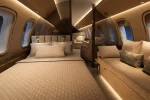
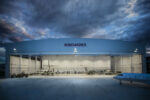
Bombardier and luxury fashion house ELIE SAAB have unveiled a bespoke cabin interior for the Global 8000 business jet, making the design available as a purchasable option for customers of the aircraft. The reveal took place at Bombardier's Aviator Lounge in Monaco during the Formula 1 Grand Prix weekend — a deliberate choice of venue that signals the brand positioning Bombardier is pursuing with its flagship ultra-long-range platform. The two companies had announced their exclusive collaboration in November 2025, and the Monaco debut represents the public fruition of that partnership. The interior emphasizes architectural clarity, natural light, expansive sightlines, and a warm color palette anchored around a central lounge area, with Bombardier's engineering teams involved throughout to ensure the design met aviation safety and certification requirements.
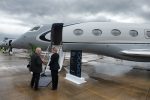
The Global 8000 holds the distinction of being the world's fastest business jet currently in service, capable of operating at Mach 0.94 with a range that connects city pairs such as New York to Dubai or London to Singapore nonstop. For operators and flight departments evaluating ultra-long-range platforms, the cabin environment is not a secondary consideration — on missions lasting 15 to 17 hours, passenger comfort and spatial design directly affect productivity, rest quality, and the overall value proposition of the aircraft. The ELIE SAAB collaboration is structured not as a concept or a one-off demonstrator but as a certified, orderable configuration, meaning prospective buyers can select it through standard delivery channels. This operational readiness distinguishes the offering from purely promotional interior showcases that often never reach production.
The collaboration reflects a broader and accelerating trend in the ultra-high-net-worth segment of business aviation, where airframe manufacturers are increasingly partnering with luxury brands across fashion, automotive, and hospitality to differentiate their products in a competitive market. Gulfstream has pursued similar strategies with its G700 and G800 programs, and Dassault has explored comparable positioning with the Falcon 10X. These partnerships serve a dual purpose: they attract buyers who already operate within luxury lifestyle ecosystems and associate a known brand's aesthetic DNA with the aircraft, while also signaling to the market that the manufacturer views the cabin as a design product deserving of the same attention as the airframe's performance specifications. For completions centers and interior design suppliers, these high-profile OEM-level collaborations also set new benchmarks for material selection and spatial planning that filter down into the broader completion market.
For flight departments and charter operators managing Global 8000 assets, the availability of a named-designer interior option introduces both an opportunity and a practical consideration. On the asset management side, a distinctive, pedigreed interior may support residual value and charter rate premiums, particularly among clientele who place weight on provenance and aesthetic exclusivity. On the operational side, operators should anticipate that bespoke material choices — however carefully certified — may carry longer lead times for replacement parts and maintenance support than standard Bombardier interior components. As manufacturers continue to push the boundaries of cabin design in collaboration with non-aviation partners, flight departments will increasingly need to factor interior complexity into their long-term maintenance planning and budget forecasting.