Bombardier to double Singapore footprint with new $78m facility | Corporate Jet Investor | CJI news
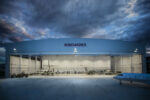
Bombardier is investing approximately US$77.7 million to construct a new 250,000-square-foot facility at Seletar Aerospace Park in Singapore, marking the Canadian manufacturer's third major development in the country since 2014. Construction is scheduled to begin in the second half of 2026, with full operations targeted for the second half of 2028. The facility will deliver a comprehensive suite of services including scheduled maintenance, avionics installations, aircraft-on-ground support, a Component Repair and Overhaul workshop, recompletion services, and customer amenities — effectively doubling Bombardier's physical footprint in the region.
For operators flying Bombardier platforms — Challenger, Global, and Learjet variants — across Asia-Pacific routes, this expansion carries direct operational significance. The current Singapore facility already supports approximately 2,000 aircraft annually and employs over 300 staff, including roughly 250 licensed engineers and technicians. It stands as the largest OEM business aviation service facility in the region. When the new site comes online in 2028, turnaround capacity, AOG response times, and access to component repair and overhaul services should improve materially, reducing the logistical burden that has historically accompanied unscheduled maintenance events in a region where OEM service density has lagged demand growth. For Part 91 and Part 135 operators positioning aircraft in Asia, reduced downtime exposure translates directly into schedule reliability and reduced ferry-flight costs to reach adequate MRO capability.
The decision to anchor in Singapore rather than expand in competing hubs such as Hong Kong, Tokyo, or Shanghai reflects deliberate strategic calculus. Singapore's regulatory environment, its deep pool of licensed engineers, and Seletar Aerospace Park's established aviation infrastructure make it a stable long-term base. Singapore's Changi and Seletar airports serve as critical transit and positioning nodes for business aircraft operating across Southeast Asia, South Asia, and Australasia. Bombardier's executive framing — citing continued regional demand growth — aligns with broader market data showing sustained fleet expansion among Southeast Asian ultrahigh-net-worth operators and increasing utilization by multinational corporations maintaining regional headquarters in Singapore and surrounding markets.
Bombardier's concurrent move to join A*STAR's Advanced Remanufacturing and Technology Centre as an anchor member signals an intent to embed AI, digitalization, and automation into its MRO workflows. This is consistent with a wider industry push toward predictive maintenance, digital twin modeling, and automated inspection protocols that major OEMs including Gulfstream, Dassault, and Textron Aviation are pursuing globally. For flight departments and Director of Maintenance personnel, this trajectory points toward more data-driven service intervals, potentially greater integration between aircraft health monitoring systems and OEM service centers, and a gradual shift away from purely calendar- or cycle-based maintenance paradigms. Operators who invest in aircraft equipped with robust health monitoring architectures stand to benefit most as these capabilities mature.
The broader implication for Asia-Pacific business aviation is that Bombardier is signaling a long-term structural commitment to a region that has seen episodic underinvestment in OEM aftermarket infrastructure relative to its fleet size. Combined with similar expansions by competing OEMs and MRO independents across the region, this trend suggests that Asia-Pacific is transitioning from a secondary aftermarket theater to a primary one. For flight operations managers and corporate aviation departments routing Bombardier aircraft through the region, the 2028 horizon represents a meaningful inflection point in service accessibility — one that warrants incorporation into long-range fleet planning, base-of-maintenance decisions, and aircraft acquisition analyses where serviceability geography is a weighted factor.