Avflight opens Detroit facility at Coleman A. Young International | Corporate Jet Investor | CJI news
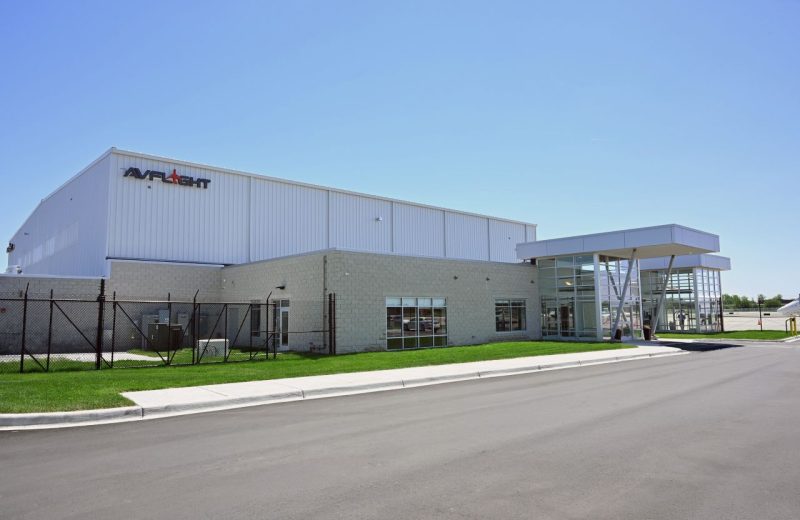
Avflight has opened a new fixed-base operator complex at Detroit's Coleman A. Young International Airport (KDET), replacing a 1950s-era terminal that had long outlived its useful service life. The ribbon-cutting ceremony on June 3, 2026, drew Detroit Mayor Mary Sheffield, airport director Jason Watt, and Avflight senior vice president of operations Joe Meszaros, signaling strong institutional support for the project. The new facility comprises a 5,000-square-foot FBO terminal, a 20,000-square-foot heated hangar capable of sheltering aircraft as large as a Gulfstream G700, and an attached heated indoor parking garage — a meaningful amenity given Michigan's harsh winter operating environment. Avflight has maintained a presence at KDET since 2011, steadily building toward the funding and approvals necessary to bring this facility to completion.
The new complex arrives within a broader airport-wide capital improvement program that positions KDET as a more viable option for business aviation traffic in the Detroit metropolitan area. City-funded upgrades include a $3.5 million runway renovation, LED taxiway lighting, ramp pavement improvements, and installation of an engineered material arresting system (EMAS) — the runway-end safety technology that arrests overrun aircraft. A new control tower is also in planning stages through an FAA partnership. Taken together, these investments substantially raise the airport's operational and safety profile, which had previously made KDET a secondary choice compared to Detroit Metro (KDTW) or Oakland County International (KPTK) for many business aviation operators.
For working pilots and flight departments, the upgrades at KDET carry practical significance. The ability to park a G700 in a heated hangar at a general aviation reliever airport inside the Detroit city limits opens scheduling and routing flexibility that did not previously exist at this facility. Indoor aircraft parking is particularly valuable for operators concerned about cold-soak effects on avionics, hydraulic systems, and cabin interiors during Michigan winters, as well as for clients who prefer covered arrival and departure environments. The LED lighting and ramp pavement improvements directly affect operational safety margins during low-visibility and night operations, while the EMAS installation addresses a runway-end overrun risk that had existed at the field.
The development at KDET reflects a broader trend in which secondary and reliever airports are investing aggressively in infrastructure and FBO quality to compete for business aviation traffic that has historically concentrated at major GA hubs. Operators seeking to avoid congestion at primary metropolitan airports, reduce ground transportation time for Detroit-proper destinations, or find competitive fuel and handling rates increasingly look to well-equipped reliever options. Avflight's investment — and the city's parallel capital program — positions KDET to capture a larger share of that demand. For operators and dispatchers routing trips into the Detroit area, KDET now warrants fresh evaluation as a legitimate primary destination rather than a fallback option.