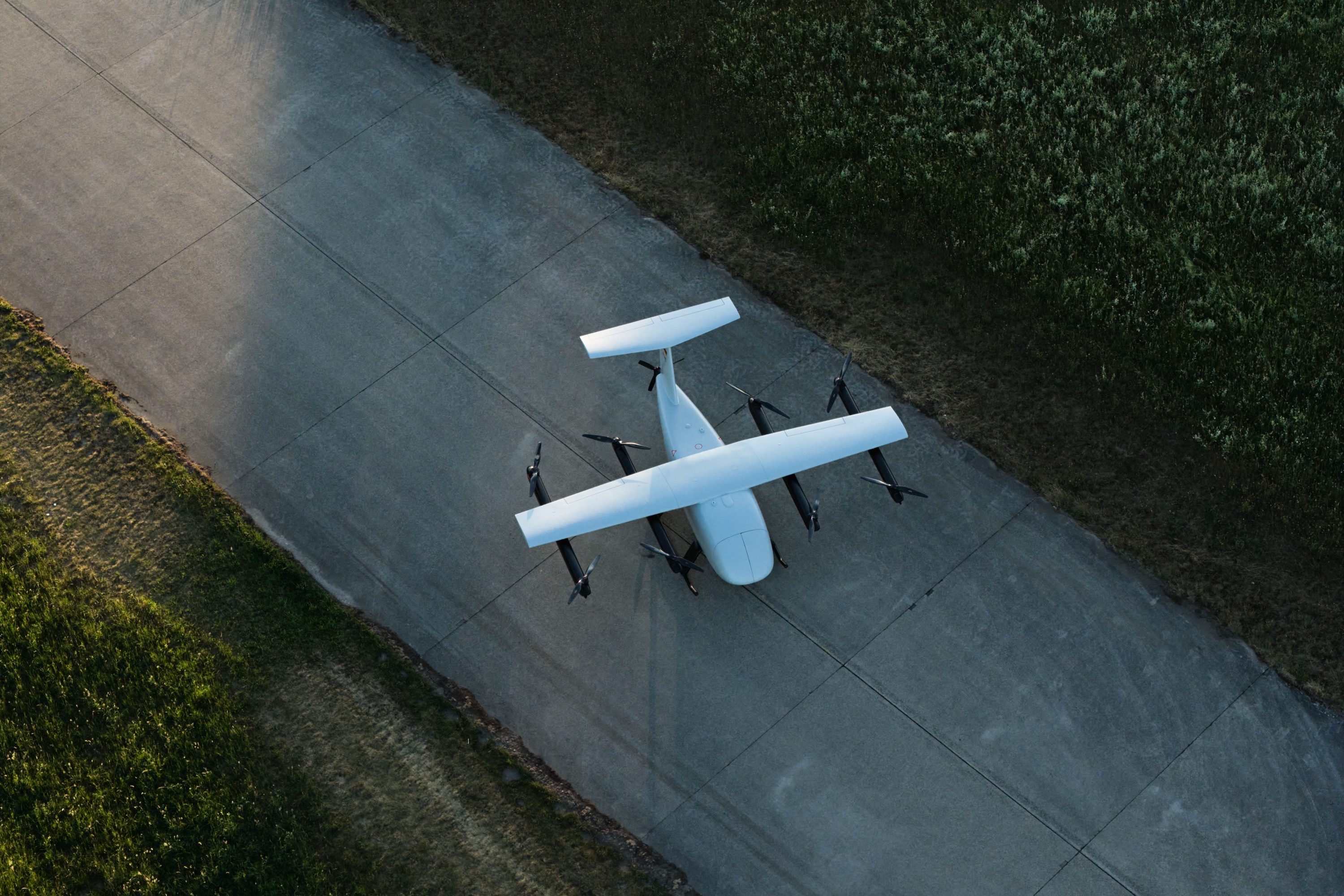
Germany gives eVTOLs another look as ERC unveils heavy-lift cargo drone
Germany's eVTOL sector is attempting a strategic reset following the high-profile collapses of Lilium and Volocopter in 2024, both of which exhausted their capital after failing to secure federal and state loan guarantees. The failures left a significant gap in European advanced air mobility development and accelerated a broader geographic shift in the industry's center of gravity toward the United States and China, where government-backed programs have provided sustained funding and regulatory runway for electric aircraft developers. Germany's second-wave developer ERC System is now positioning itself to fill that void, announcing at the ILA Berlin air show a memorandum of understanding with defense contractor Rheinmetall and the government of the State of North Rhine-Westphalia to co-develop and produce the Victor U250, a hybrid-electric heavy-lift cargo drone targeting first deliveries in 2028.
The Victor U250's framing as a near-term defense capability gap solution is a strategically significant pivot from the passenger-centric business cases that defined first-generation European eVTOL ventures. By leading with a defense application, ERC is pursuing the same pathway that has proven durable for advanced aviation programs globally — anchoring development costs in government procurement rather than speculative commercial revenue. The involvement of Rheinmetall, one of Europe's most prominent defense manufacturers, lends considerable industrial and political credibility to the program. For operators in the cargo and logistics space, this defense-first development trajectory is worth monitoring; historical precedent in aviation suggests that platforms proving their reliability in military applications frequently migrate into commercial and civil operator fleets with reduced certification risk.
The hybrid-electric propulsion architecture of the Victor U250 also reflects lessons absorbed from the failures of pure-electric eVTOL concepts, which struggled to deliver practical payload and range performance given current battery energy density limitations. Hybrid-electric systems allow meaningfully larger useful loads and longer operational ranges while still offering reduced acoustic signatures and lower operating costs compared to conventional turbine-powered rotorcraft — a combination that could address real operational needs for Part 135 cargo operators and logistics companies serving austere or urban environments. The 2028 first delivery target, if met, would put the Victor U250 into service roughly concurrent with the first generation of FAA-certificated eVTOL passenger aircraft in the U.S. market, making the competitive and regulatory landscape at that moment particularly consequential for the entire sector.
ERC's longer-term roadmap — using the Victor program as an industrial and regulatory steppingstone toward the crewed passenger-carrying Charlie aircraft — mirrors the development logic employed by several U.S. eVTOL developers who have used cargo or uncrewed variants to build operational data, supply chains, and regulator familiarity before pursuing passenger certification. For corporate flight departments and charter operators evaluating the advanced air mobility space, this staged development model offers a more credible path to eventual crewed operations than clean-sheet passenger aircraft programs that attempt to compress development timelines. The broader implication for the European aviation ecosystem is that the state-partnership model dismissed or delayed during the Lilium era is now being formally embraced, suggesting that future European eVTOL contenders will increasingly structure themselves around defense and public-sector co-investment from the outset rather than treating government support as a fallback option.