The Airline That Created Premium Economy Now Has The Most Spacious Version In The Sky
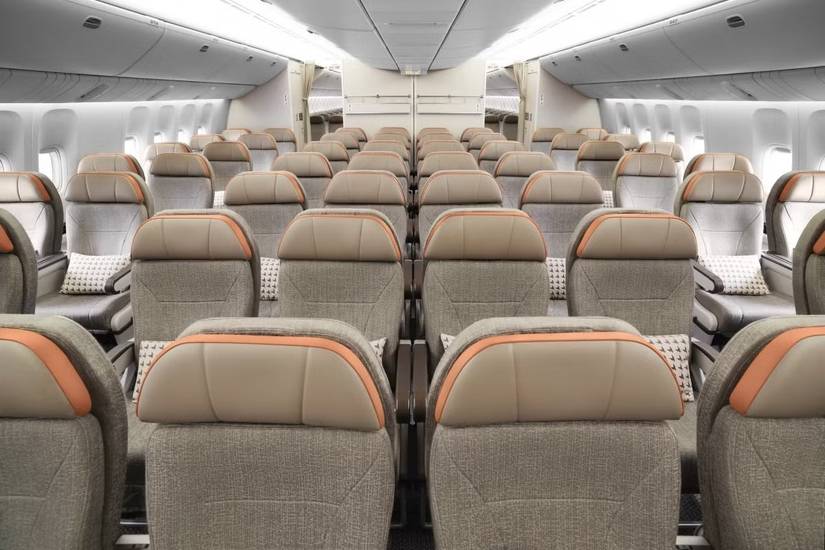
EVA Air's introduction of a fourth-generation premium economy product aboard its Boeing 787-9 fleet in 2025 marks a significant inflection point in the three-decade evolution of a cabin class the Taipei-based carrier effectively invented. By increasing seat pitch to an industry-leading 42 inches in a 2-3-2 configuration, EVA Air has reset the competitive baseline for mid-tier long-haul seating — a configuration that, by the airline's own metrics, exceeds the legroom offered in many carriers' short-haul business class products. The advanced cradle-motion seat mechanism, which delivers eight inches of effective recline without encroaching on the aft passenger's space, addresses one of the most persistent friction points in long-haul cabin design. The deliberate reduction in interior density aboard the 787-9 — a widebody whose economics are typically optimized for higher seat counts — signals that EVA Air is positioning premium economy not as a budget compromise but as a genuine revenue-generating product tier in its own right.
The historical context underpinning this development is commercially significant. EVA Air launched its original Evergreen Deluxe Class in 1992 on transpacific 747-400 operations with a 38-inch pitch in a 2-4-2 arrangement, essentially creating a market segment that the global industry took nearly 30 years to universally adopt. Virgin Atlantic entered the space in the same calendar year, and a diplomatic dispute over precise priority has persisted ever since — though the operational record favors EVA Air as the first carrier to board paying passengers in a dedicated mid-tier cabin. That the originator of the concept is now also the holder of the industry's most spacious iteration, 33 years later, is a notable arc in airline product strategy that carries weight beyond marketing positioning.
For working pilots and flight operations teams — particularly those flying international widebody equipment under Part 121 or Part 91K corporate mandates — the broader implication of EVA Air's move involves load factor economics and cabin revenue density. Premium economy has become, on a per-square-foot basis, the highest-yielding section of long-haul widebody aircraft, which directly influences how carriers configure fleet assets, bid for international route authorities, and structure corporate contract pricing. Operations departments at fractional and charter operators routing high-net-worth clients on transpacific itineraries will find that EVA Air's product now competes credibly against business class on value-per-dollar metrics, which can reshape how travel procurement teams specify cabin class on managed travel programs.
The structural trend driving this investment cycle extends well beyond EVA Air. Full-service network carriers that long resisted a three-cabin configuration — fearing cannibalization of their business class yield — have been forced into the premium economy market by two converging forces: the sustained post-pandemic surge in premium leisure travel, and corporate travel policy reforms that cap reimbursable airfare below full business class fares on routes under a certain block-hour threshold. Airlines including Lufthansa, Singapore Airlines, and Cathay Pacific have committed to substantial fleet retrofit programs specifically to expand premium economy capacity, and several low-cost long-haul operators have begun evaluating hybrid cabin configurations that incorporate a single premium tier. The 787-9 platform has become the preferred vehicle for this evolution given its cabin width, fuel efficiency on thinner transpacific and transatlantic segments, and the flexibility of its interior architecture for custom seat integration.
EVA Air's reclamation of the premium economy benchmark is therefore both a product story and a revenue strategy signal readable across the industry. The 42-inch standard it has established will pressure competitors to respond, particularly on highly contested routes where brand differentiation must manifest physically inside the aircraft rather than through loyalty program structures alone. For aviation operators tracking fleet investment trends, cabin retrofit economics, and the shifting geography of premium travel demand, EVA Air's fourth-generation seat represents a data point that will appear in competitive analysis presentations, IATA cabin configuration surveys, and widebody procurement discussions for the next several years.








 Read original article