Porter Airlines Smashes 10 Million Seats In 2026: Inside The Record-Breaking Growth
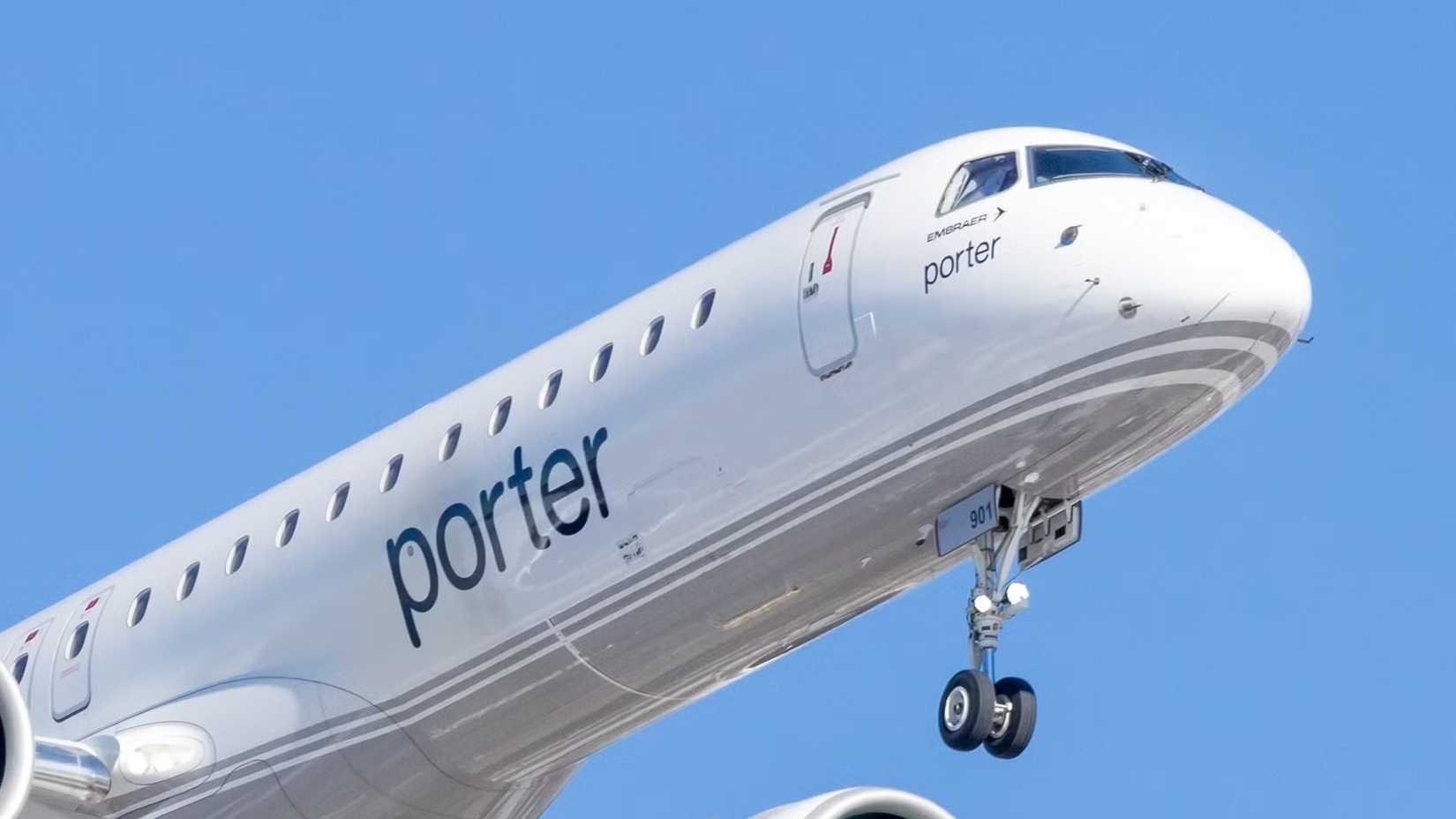
Porter Airlines has crossed 10 million scheduled seats for the first time in its history in 2026, with approximately 10.34 million two-way seats planned for the year — a figure more than eight times its capacity from less than two decades ago. The growth is almost entirely attributable to the airline's accelerating Embraer E195-E2 fleet expansion, which will account for roughly 7.16 million of those seats this year. The pace of that ramp-up is striking: E2 capacity has gone from 1.8 million seats in 2023 to more than 7 million in just three years. Total scheduled capacity has followed a similarly steep trajectory, rising from 5.32 million seats in 2023 to 7.87 million in 2024, 8.83 million in 2025, and now surpassing 10 million in 2026. New routes launching from May 2026 onward include Toronto–Boston, Toronto City–Chicago O'Hare, Toronto City–Nashville, and an extensive list of Caribbean and Latin American leisure markets including Aruba, Cancún, Puerto Vallarta, San José del Cabo, and Costa Rica, alongside 19 new domestic Canadian routes.
For working pilots and aviation operators, the operational significance of this transformation centers on the shift from a turboprop-dependent regional model to a jet-centric network carrier. The E195-E2 is a high-efficiency, fly-by-wire narrowbody with a range exceeding 2,600 nautical miles, making transatlantic sectors theoretically possible and U.S. leisure routes highly practical. Porter's pivot from Billy Bishop Toronto City Airport (YTZ) — where aircraft size and noise restrictions constrained growth — toward Toronto Pearson (YYZ) as the network's primary hub reflects a deliberate strategic repositioning. YYZ's capacity, infrastructure, and international connectivity remove the operational ceiling that YTZ imposed on the carrier's ambitions. Pilots type-rated on the E2 family or considering type additions should note that Porter has become one of the more consequential E-Jet E2 operators in North America, with a crew demand curve that mirrors its seat growth trajectory.
For airline and charter operators competing in the U.S.-Canada transborder market, Porter's expansion represents a meaningful shift in the competitive landscape. U.S.-bound scheduled seats have grown from roughly 580,000 in 2023 to more than 1.33 million in 2026, and the carrier has deliberately targeted both business and leisure traffic with a premium economy-focused cabin product. This positions Porter not merely as a low-cost regional disruptor but as a cabin-differentiated competitor on routes where legacy carriers and ultra-low-cost operators have traditionally split the market. Business aviation operators serving routes between Canadian cities and U.S. leisure destinations may see some demand compression at the premium end as Porter offers a middle-market alternative with direct routing and a consistent product.
The broader trend Porter's growth illustrates is the continued maturation of the Embraer E-Jet E2 platform as a genuine network-building aircraft, not just a regional feeder tool. Several carriers globally have used the E195-E2's economics and range to punch into markets previously dominated by larger narrowbodies, and Porter's trajectory demonstrates how decisively a well-capitalized operator can restructure an entire network around the aircraft. The 2026 seat milestone also underscores a wider recovery theme in Canadian aviation: transborder and leisure international demand has returned robustly post-pandemic, and carriers that invested in fleet transformation during the 2021–2023 downturn are now reaping the capacity dividends. Porter's case will likely be studied as a template for regional-to-network conversion using next-generation regional jets.





 Read original article