Metrojet adds Global 8000 to managed fleet, first in Asia | Corporate Jet Investor | CJI news
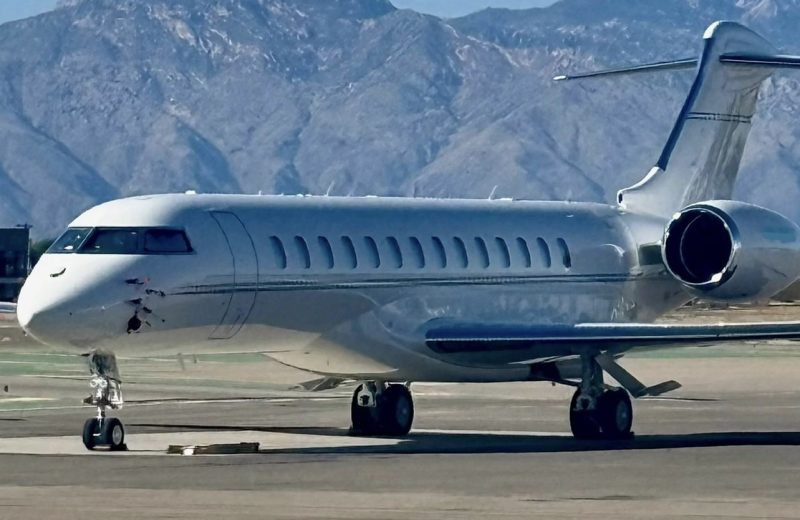
Metrojet, the Hong Kong-based aircraft management and charter company, has taken delivery of a Bombardier Global 8000 into its managed fleet, marking the first operator of the type to be based in Asia. The milestone represents a significant expansion of ultra-long-range business jet capability in a region where demand for transcontinental private travel has historically been constrained by range limitations and aircraft availability. The Global 8000 is Bombardier's flagship ultra-long-range platform, capable of 8,000nm at typical cruise speeds and a maximum speed of Mach 0.95, placing it at the top tier of the business aviation market alongside the Gulfstream G700 and Dassault Falcon 10X. The aircraft accommodates up to 19 passengers across four separate cabin zones and is powered by twin GE Passport engines, the same powerplant series that anchors the broader Global family.
For flight operations professionals, the Global 8000's cabin altitude specification is among its most operationally relevant differentiators. At FL410, the aircraft maintains a cabin altitude of approximately 2,691 feet — substantially lower than the 6,000–8,000 foot cabin altitudes common in older-generation business jets and even many contemporary narrowbody airliners. That physiological advantage directly translates to reduced passenger fatigue on ultra-long sectors, a selling point that carries particular weight on routes such as Hong Kong to London, New York, or São Paulo, all of which fall within the aircraft's nonstop capability envelope. The Smooth Flĕx Wing technology further addresses passenger comfort by engineering aerodynamic load alleviation that actively dampens gust response in cruise, reducing the perceived turbulence signature on long oceanic sectors where ride quality can otherwise degrade.
From an aircraft management perspective, Metrojet's acquisition of the type signals a maturation of the managed fleet model in Asia-Pacific. Managing an aircraft at the Global 8000's complexity level requires not only qualified flight crews but deep maintenance infrastructure, regulatory authorization across multiple jurisdictions, and the operational sophistication to support an owner whose schedule may demand rapid intercontinental repositioning. Metrojet's existing Bombardier maintenance capabilities — which the company explicitly cited as a foundational competency — reduce the dependency on third-party MRO relationships and shorten turnaround time for scheduled and unscheduled maintenance events. For pilots operating under Part 91K equivalents or managed charter certificates in the region, this signals a growing local pool of type-qualified infrastructure and training resources tied to the Global platform.
The broader trend this placement reflects is the continued migration of the most capable ultra-long-range business jets into Asian-based fleets, a shift that tracks with the concentration of high-net-worth individuals and corporate headquarters in markets such as Hong Kong, Singapore, and mainland China. Historically, many Asian owners placed their aircraft with European or North American management companies due to the lack of regional expertise in handling top-tier widebody business jets. Metrojet's positioning of the Global 8000 as a locally managed asset challenges that model and likely signals competitive pressure on established players to develop parallel capabilities in the region. As Bombardier continues to ramp Global 8000 deliveries following the type's entry into service, the availability of an experienced management operator already operating the type in Asia will likely accelerate fleet growth across the region and further normalize ultra-long-range nonstop operations from Asia-Pacific origins.