Gulfstream hits double milestone as G700 Clocks 100th delivery, speed record | Corporate Jet Investor | CJI news
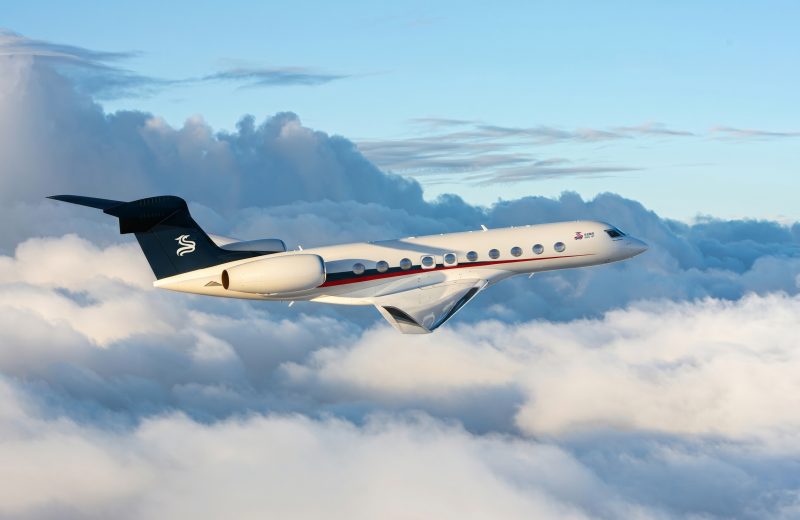
Gulfstream Aerospace marked a convergent milestone for the G700 program on a single day, logging both the aircraft's 100th customer delivery and its 100th city-pair speed record — a pairing that signals not just production momentum but an accelerating operational footprint across the ultra-long-range business jet market. The record flight departed Savannah, Georgia, reaching San Jose, California in 4 hours and 36 minutes at an average cruise speed of Mach 0.91, then continued to Teterboro, New Jersey in 4 hours and 14 minutes at the same speed — performance that sits comfortably above the aircraft's long-range cruise of Mach 0.85 and demonstrates real-world capability approaching its Mach 0.935 maximum operating speed. Certification in more than 20 countries broadens the G700's operational envelope to transatlantic, transpacific, and intercontinental missions without the friction of blanket operational restrictions that can affect newer types in early certification phases.
For the pilot community, the G700's growing installed base carries direct professional implications. With over 700 type-rated aviators trained through FlightSafety International, the type is developing the kind of crew-base depth that supports fractional operations, charter availability, and corporate flight department staffing flexibility. Gulfstream's Symmetry Flight Deck — featuring active control sidesticks, extensive touchscreen integration, and Phase-of-Flight intelligence — represents a distinct departure from conventional yoke-and-switch ergonomics common across legacy large-cabin jets. Pilots transitioning into the G700 are contending with a cockpit philosophy closer in concept to fly-by-wire transport category aircraft than to traditional business jet designs, which has real implications for initial training depth, recency requirements, and crew standardization programs within Part 91K and Part 135 operational frameworks.
The 100-delivery threshold carries particular weight in the context of large-cabin business jet production economics. Gulfstream's parent company General Dynamics has invested in next-generation manufacturing infrastructure at its Savannah facility, and reaching triple-digit deliveries in relatively short order following entry into service reflects that investment in improved production rate and aircraft maturity. Early production aircraft in any new type program frequently carry higher maintenance burdens and recurring airworthiness directives; a 100-aircraft fleet now accumulating real-world hours allows the operator community to develop MEL experience, maintenance interval data, and reliability patterns that are essential for dispatch-critical operations typical of high-utilization corporate flight departments.
The G700's cabin specifications — panoramic oval windows, 100% fresh air circulation, and lowest-in-class cabin altitude at cruise — align with a well-documented post-pandemic preference among high-net-worth operators for physiological comfort on ultra-long-range routes. Cabin altitude directly affects passenger and crew fatigue on missions exceeding 10 hours, and operators running non-stop transatlantic or transpacific routings increasingly treat pressurization performance as a mission-critical specification rather than a marketing differentiator. The G700's range figures of 7,750nm at Mach 0.85 or 6,650nm at Mach 0.90 effectively cover New York to Dubai or Los Angeles to Tokyo non-stop depending on wind, which places it in direct competition with the Bombardier Global 7500 for operators evaluating single-stop versus non-stop economics on intercontinental itineraries.
Broader industry context positions this milestone within a sustained period of strong demand for ultra-long-range business jets, driven by increased high-net-worth individual travel, corporate reshoring of executive itineraries away from commercial carriers, and geopolitical routing constraints that favor range-capable aircraft with flexible overflight options. Gulfstream's ability to sustain delivery pace while simultaneously accumulating speed records serves a dual commercial purpose: demonstrating production reliability to operators already in the backlog while generating performance-based marketing data for prospects still evaluating the type against competitors. For operators and chief pilots writing aircraft acquisition recommendations, the G700's combination of an expanding type-rated pilot pool, multi-country certification, and demonstrated real-world cruise performance above Mach 0.90 provides a more complete operational picture than early-program projections alone could offer.