Why The Boeing 747SP's Short-Body Design Solved A Problem No Other Aircraft Could In Its Era
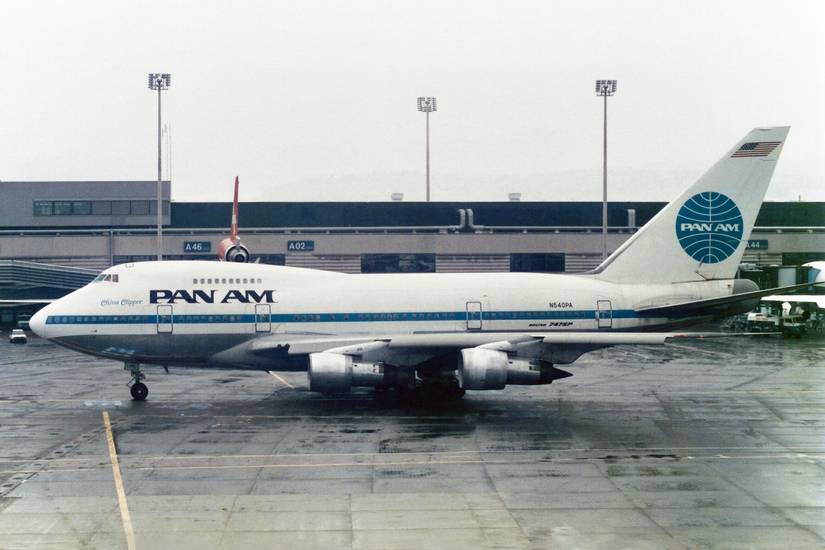
The Boeing 747SP represents one of commercial aviation's most deliberate engineering compromises, built specifically to address a market gap that no existing airliner could bridge in the mid-1970s. When Pan American World Airways sought nonstop service between New York and distant Middle Eastern and Asian destinations, neither the McDonnell Douglas DC-10 nor the Lockheed L-1011 offered sufficient range, and the standard 747 carried far more seat capacity than those thin, long-distance routes could support economically. Boeing's response, approved by its board in September 1973, was to remove approximately 47 to 48 feet of fuselage from its existing 747 platform rather than develop an entirely new aircraft. The program—initially designated the 747SB for "Short Body" before being rebranded as the 747SP for "Special Performance"—produced an aircraft roughly 183 feet long with a typical three-class capacity of around 280 passengers, a dramatic reduction from the standard 747's potential load of more than 400 seats. Pan Am committed to 10 aircraft at a combined value of approximately $280 million, and the type entered service in 1976.
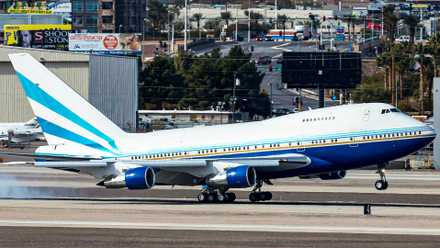
The engineering logic behind the 747SP centered on the relationship between structural weight and mission capability. By eliminating nearly 50 feet of fuselage, Boeing reduced the aircraft's empty weight from what would become the 747-400's 404,600 pounds down to approximately 337,000 pounds, freeing a substantial portion of the aircraft's gross weight for fuel rather than structure. Crucially, Boeing retained the four-engine configuration, the full widebody cabin cross-section, and the upper deck, preserving the aerodynamic and thrust characteristics of the original design. The tradeoff was not without complications. Shortening the fuselage compressed the moment arm—the distance between the aircraft's center of gravity and its tail surfaces—creating aerodynamic stability challenges that required engineers to enlarge the vertical and horizontal stabilizers substantially. The resulting tail assembly gave the 747SP its visually distinctive, almost top-heavy silhouette and earned the aircraft its "Baby Jumbo" nickname. The aircraft ultimately achieved a certificated range of approximately 5,830 nautical miles, well short of the later 747-400's 7,285-nautical-mile capability, but considerably beyond what competing trijets could offer at the time.
For working pilots and aviation operators, the 747SP story carries meaningful lessons about the economics and engineering of mission-specific aircraft design. The "long and thin" route problem that the SP addressed in the 1970s has never fully disappeared—it has simply been solved by successive generations of technology. The Boeing 777-200LR, the Airbus A350-900ULR, and the 787-9 are all, in different ways, descendants of the same commercial logic: airlines need aircraft that can connect low-demand city pairs separated by extreme distances without the fuel and structural overhead of a high-capacity widebody. Corporate and business aviation operators encounter an analogous version of this tradeoff constantly, weighing range capability against cabin size and operating cost when selecting platforms for transcontinental or transatlantic missions. The 747SP demonstrated early on that purpose-built range optimization, even at the cost of passenger volume, could unlock commercially viable routes that would otherwise remain impossible.
Only 45 Boeing 747SPs were ever constructed, a production run that reflects both the aircraft's narrow market fit and the rapid evolution of engine and airframe technology that soon produced more capable and efficient alternatives. Despite its limited numbers, the type achieved notable operational milestones, including the first nonstop commercial service between New York and Tokyo for South African Airways, and it remained in service with various operators for decades after its introduction. Several examples were converted for government and research roles, including NASA's Stratospheric Observatory for Infrared Astronomy. The broader significance of the 747SP within aviation history is that it established a proof of concept for ultra-long-haul commercial operations at a time when the industry had not yet accepted that such routes were economically sustainable. That concept, validated in 1976 by a shortened jumbo jet with an oversized tail, now underpins the global network of nonstop ultra-long-haul routes that modern operators take for granted.











 Read original article