Why Northrop Grumman Must Accelerate B-21 Raider Production Before The USAF Can Hit Its 100-Bomber Target
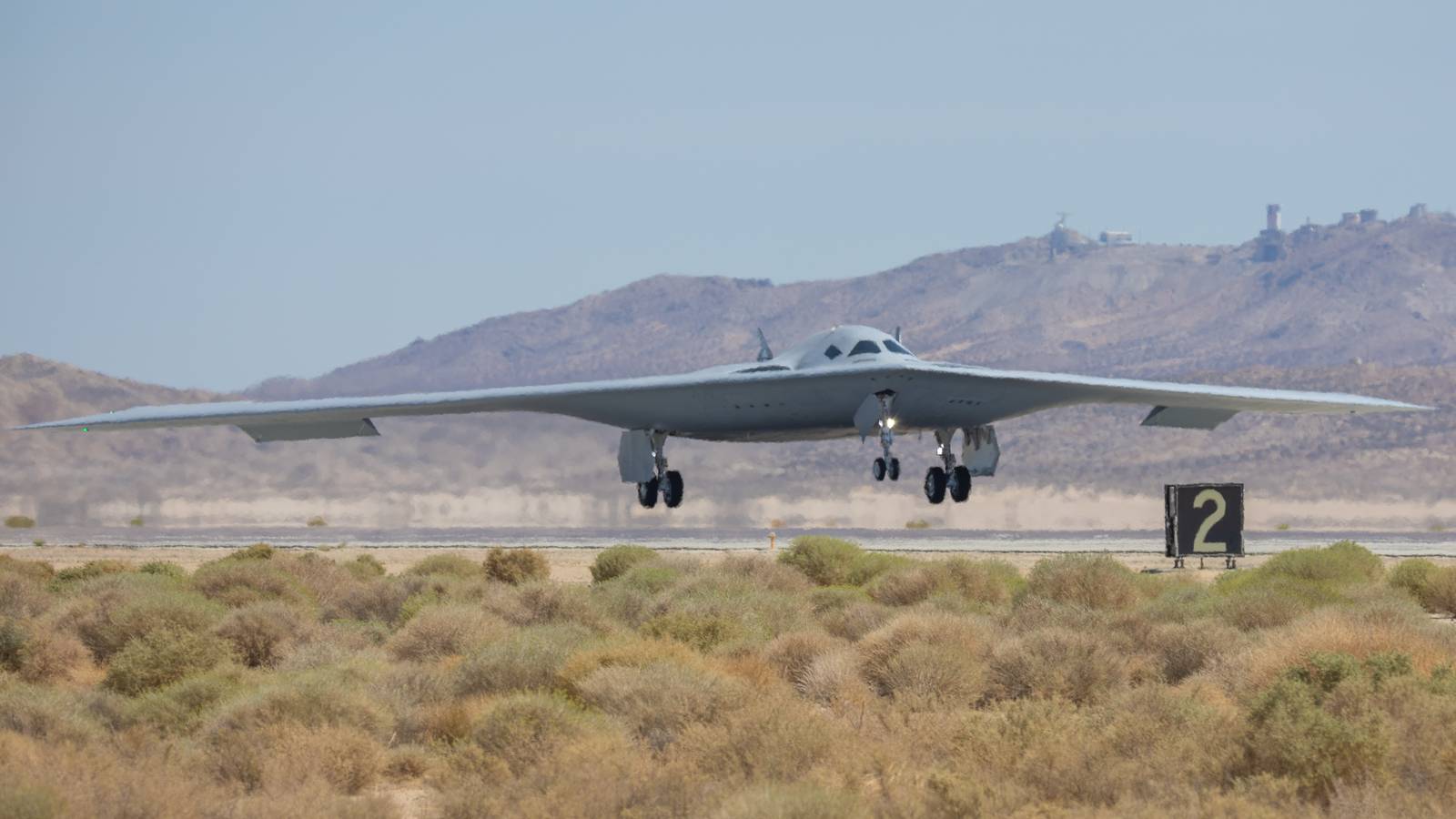
The Northrop Grumman B-21 Raider stands at the center of the most ambitious recapitalization of American airpower in decades, with the U.S. Air Force pressing to replace both the 45-aircraft B-1B Lancer fleet and the 19-aircraft B-2 Spirit fleet as rapidly as production allows. The baseline procurement target of 100 aircraft is already under pressure from multiple directions: U.S. Strategic Command has formally pushed for a minimum of 145 Raiders, broader Pentagon planning discussions have floated figures as high as 200, and a 2025 agreement between the Department of the Air Force and Northrop Grumman formalized a 25% increase in annual production capacity at Plant 42 in Palmdale, California. Unlike virtually every major defense procurement program of the past generation, the B-21 has remained on schedule and within budget — a distinction the Air Force is determined to preserve by accelerating to a continuous production tempo, which manufacturing economists have long recognized as the most effective mechanism for stabilizing costs and preventing the supplier-base collapse that destroyed the B-2 program when Congress cut that order from 132 to 21 aircraft.
The engineering philosophy behind the B-21 represents a fundamental departure from the manufacturing methods that defined its predecessors, and those differences carry significant implications for aircraft availability — a metric that any professional aviator understands as the true measure of operational utility. The B-2 Spirit was, in practical terms, a hand-built aircraft: its radar-absorbing coatings were applied manually with liquid tape and chemical compounds requiring days of curing, its systems were hardwired and deeply integrated into the airframe, and heavy maintenance events required physical teardown of structural components and miles of wiring. The result was chronic availability problems that kept individual aircraft in maintenance hangars for hundreds of hours at a stretch. The B-21, by contrast, was conceived as a digital-first program from the outset, with Northrop Grumman investing approximately $5 billion in digital engineering and production infrastructure. Advanced 3D modeling simulated the entire assembly process before a physical aircraft was built, ensuring interchangeability across every airframe. Stealth materials are robotically woven into composite structural panels and chemically cured as a permanent element of the aircraft's skin, eliminating the fragile hand-applied coatings that made B-2 maintenance so labor-intensive and weather-sensitive.
For working aviators and fleet operators, the B-21's Modular Open Systems Architecture represents the most operationally significant technical innovation in the program. MOSA replaces the hardwired, hardware-specific configurations of older aircraft with plug-and-play modules that line maintenance technicians can swap without specialized depot-level tooling, with the central mission computer automatically recognizing and activating new capabilities. This is not merely an incremental maintenance improvement — it is the same architectural philosophy increasingly driving commercial and business aviation avionics development, from modern integrated flight decks to software-defined avionics suites in large-cabin business jets. The Air Force's explicit goal is to support deployed B-21 operations with lean maintenance teams focused on digital diagnostics and modular software updates rather than sheet-metal and wiring work, a posture directly aligned with the service's broader Agile Combat Employment doctrine designed for dispersed, expeditionary operations from austere airfields rather than fixed main operating bases.
The broader industrial strategy behind the B-21 acceleration has direct parallels to maintenance and supply chain challenges across civil and business aviation. Northrop Grumman is building a "digital twin" database — a continuously updated virtual replica of every individual aircraft — that allows logistics command at Tinker AFB to employ predictive maintenance algorithms, positioning replacement parts at forward locations before failures occur rather than after. This predictive, data-driven maintenance model mirrors the direction commercial aviation MRO operations have moved over the past decade, with carriers and large flight departments leveraging aircraft health monitoring systems and manufacturer analytics platforms to reduce unscheduled maintenance events. The supply chain investment accompanying the production ramp-up — spanning hundreds of vendors across dozens of states — is specifically designed to prevent the "vanishing vendor" problem that made B-2 repairs prohibitively expensive as original suppliers went out of business or exited the defense market over the bomber's 30-year operational life. The first fully operational B-21 combat units, the 34th and 37th Bomb Squadrons at Ellsworth AFB, are targeted for activation by 2027, with follow-on basing at Whiteman and Dyess AFBs, establishing the Raider as the centerpiece of Air Force Global Strike Command's next generation of strategic deterrence.








 Read original article