How Cabin Crew Will Rest & Sleep On Long Boeing 777X Flights
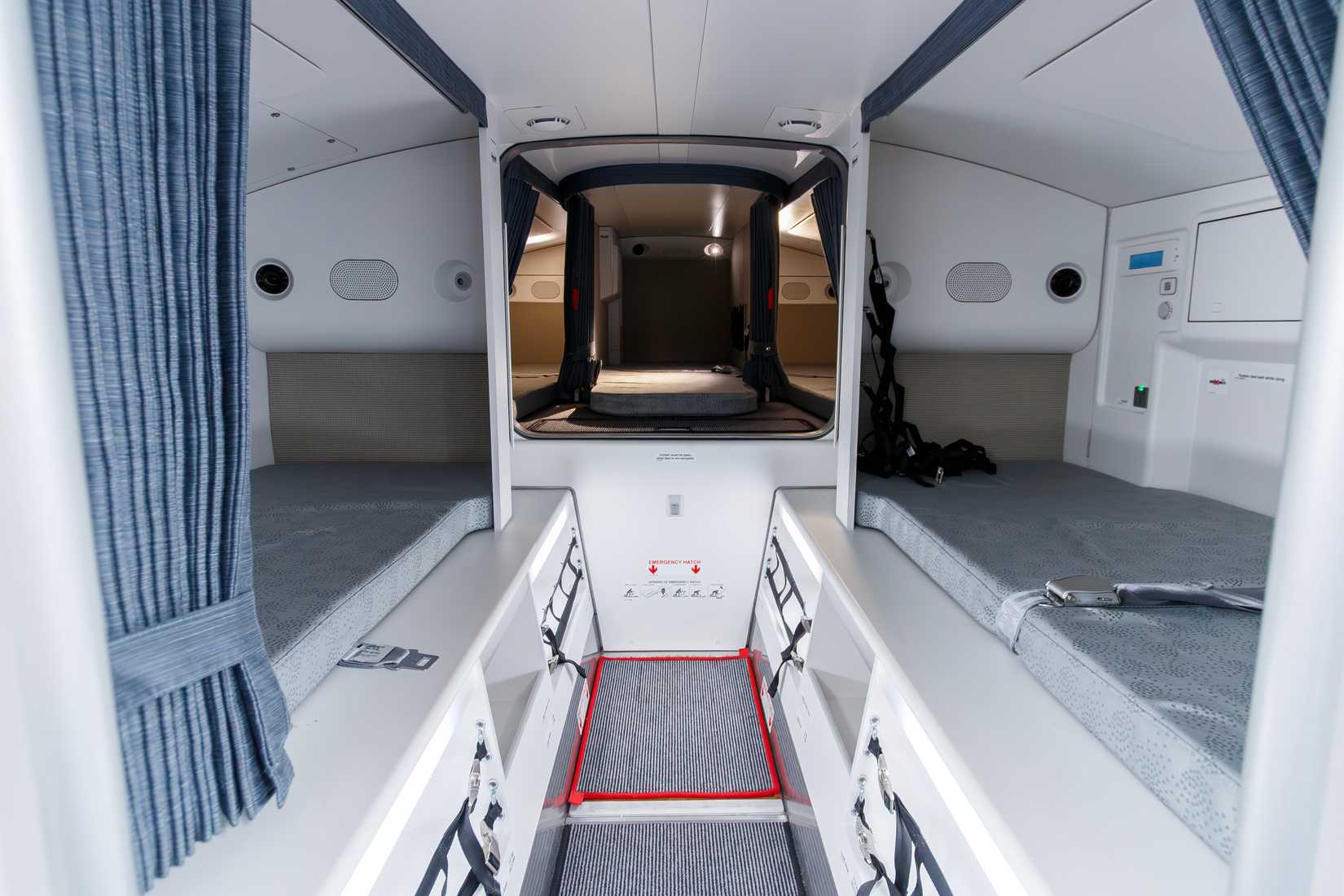
Boeing's 777X introduces certified crew rest accommodations that represent a meaningful regulatory evolution for ultra-long-haul operations. The aircraft's overhead flight crew rest area — a concealed compartment accessed via a hidden door and steep staircase — features two bunks and two seats capable of supporting four crew members during extended sectors. Under Federal Aviation Administration special conditions applicable to both the 777-9 and the 787-8 Dreamliner, the overhead flight crew rest area may be occupied during taxi, takeoff, and landing phases, provided occupants are seated rather than in the bunks. This marks a departure from the longstanding prohibition on rest area use during critical phases of flight and reflects a deliberate regulatory accommodation for the operational realities of modern ultra-long-haul flying. The certification also carries specific emergency obligations: smoke detection, emergency oxygen systems, fire suppression, secondary evacuation hatches opening into the main cabin, and mandatory notification of airport fire and rescue services that crew members may be present in overhead compartments during emergency landings.
The practical driver behind the FAA's special conditions is straightforward. As airframe range capabilities extend sector lengths beyond what a standard two-pilot crew can legally operate without exceeding flight time limitations, augmented crew configurations — carrying additional flight crew members who rotate through rest periods — become operationally necessary. Allowing crew to be seated in the rest area during taxi and departure means augmenting crew members do not need to occupy jumpseats or other cabin positions during those phases, streamlining crew management on flights such as the ultra-long sectors that airlines like Emirates, Singapore Airlines, and Qatar Airways are expected to operate on the 777X. The rest area itself supports this model with its full complement of safety infrastructure: intercom systems, seatbelt signs, emergency oxygen coverage throughout the lavatory, sink area, bunks, and seats, and training requirements for crew to operate the evacuation hatch independently.
The broader context for working pilots is the continued convergence of airframe capability and regulatory adaptation. The FAA's Class One, Two, and Three crew rest area framework has existed for decades, but certifying overhead rest areas for use during critical phases represents a substantive refinement of that framework rather than simply an update to existing guidance. Pilots operating augmented crews on 777X routes will need to be thoroughly familiar with the specific limitations — seats permitted, bunks prohibited — and with the emergency procedures unique to occupied overhead rest areas, including secondary evacuation hatch operation and coordination with rescue personnel. This is not a passive procedural detail; it is an active safety consideration during any abnormal or emergency situation on departure or arrival.
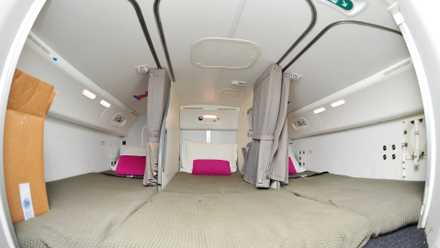
For aviation operators and schedulers, the 777X rest area certification has direct implications for crew pairing and duty time planning on routes where a layover is operationally or commercially undesirable. The ability to field a legal augmented crew that can rest in a certified overhead compartment from the moment the aircraft pushes back expands the usable duty window without requiring additional airport stops. Airlines evaluating 777X deployment on routes such as Dubai to New York, Singapore to Los Angeles, or potential future ultra-long sectors will factor this capability directly into network planning. The cabin crew rest area, located at the aircraft's rear with ten bunks in a standard configuration, follows conventional design and does not carry the same critical-phase occupancy certification, meaning the flight crew rest area distinction is operationally significant and not uniformly applicable to the entire augmented crew.
The 777X crew rest provisions also illustrate the degree to which human factors considerations now shape airframe certification from the design stage rather than being retrofit accommodations. Requirements for temperature controls, sound dampening, privacy curtains, reading lights, and intercom access reflect decades of operational feedback from flight crews on fatigue mitigation. The inclusion of cold drink storage, a lavatory, and a sink in the 777X flight crew rest area acknowledges that restorative rest depends on more than a horizontal surface with a seatbelt. As aviation medicine research continues to refine understanding of in-flight fatigue and circadian disruption, the regulatory standards governing crew rest areas are likely to evolve further, with the 777X's special condition framework potentially serving as a template for subsequent widebody certifications.








 Read original article