How Qantas Used The Boeing 747SP To Conquer Wellington's Notoriously Short Runway
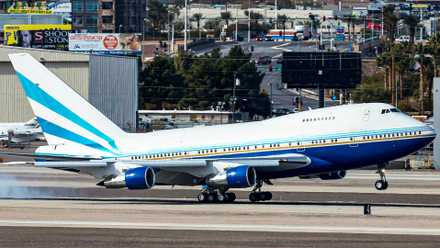
The Boeing 747SP represents one of the most consequential airframe-engineering decisions in commercial aviation history, a deliberate act of structural subtraction that unlocked operational envelopes standard widebody jumbos could not approach. By removing approximately 47 feet (14.3 meters) from the main fuselage sections forward and aft of the wing box, Boeing shed between 45,000 and 50,000 pounds of empty structural weight relative to the 747-200B, fundamentally altering the aircraft's power-to-weight ratio without any modification to the powerplants or wing structure. The aerodynamic penalties introduced by a shortened fuselage — most critically, reduced tail moment arm and degraded directional stability at low airspeeds — were addressed through a taller vertical stabilizer measuring 65 feet 10 inches and the substitution of simpler, lighter single-slotted trailing-edge flaps for the standard 747's triple-slotted system. That flap redesign also eliminated large underwing fairings, reducing parasite drag and contributing to the 747SP's record-setting service ceiling of 45,100 feet, the highest of any subsonic commercial transport. The result was an aircraft that could deliver widebody economics on routes and into airports that categorically excluded its larger siblings.
Wellington Airport's operational environment illustrates precisely why field performance data demands serious respect in route planning and aircraft selection. With a runway measuring less than 6,000 feet (1,829 meters), hemmed by water at both ends and subject to severe terrain-induced turbulence and microclimatic wind shear, the airport imposed hard limits on maximum takeoff weight that standard 747-200B operations could not satisfy at commercially viable payload levels. For working pilots, the critical constraint was not simply runway length in benign conditions, but the regulated accelerate-stop and engine-out climb gradient requirements under adverse scenarios. A standard 747-200B, unable to reduce its structural baseline weight, faced unacceptable safety margin violations under V1 engine-failure analysis at Wellington. Qantas's solution — operating a matched pair of 747SPs configured specifically for the trans-Tasman corridor — demonstrates how weight and balance engineering, WAT (weight, altitude, temperature) limit management, and takeoff performance analysis drove a major network carrier's entire fleet strategy for a specific city pair. Crews operating into Wellington even today must engage the same fundamental performance disciplines, albeit through the lens of modern FMS-computed V-speeds and reduced-thrust departure profiles.
The broader operational legacy of the 747SP connects directly to a persistent tension in commercial and business aviation: how to serve thin, high-yield, constrained markets without surrendering the unit economics of larger aircraft. The SP's purpose was structurally identical in logic to what operators of the Gulfstream G700, Bombardier Global 7500, and Dassault Falcon 10X are doing today in the business aviation segment — extracting ultra-long-range performance from airframes optimized for weight discipline rather than raw capacity. In the airline world, the Airbus A321XLR is the direct philosophical descendant of the 747SP's operating concept: a structurally optimized, fuel-efficient airframe that penetrates city pairs and airports that larger aircraft cannot economically or physically serve. The article's framing of the Qantas Wellington operation as a "thin, high-yield city pair" problem is precisely the language modern Part 91K and Part 135 operators use when justifying the acquisition of large-cabin, long-range business jets for routes that cannot support airline service. The 747SP's commercial career was short and its production run limited to just 45 aircraft, but its operational logic — that structural discipline and performance engineering can substitute for raw power — has never stopped influencing how aviation professionals think about fleet selection.
For flight crews and aviation operators, the Qantas 747SP story reinforces several enduring professional disciplines. Runway-limited operations require rigorous preflight performance analysis that accounts not just for nominal takeoff distance but for all regulatory climb gradient segments, particularly OEI (one engine inoperative) scenarios at airports where terrain and obstacle environments eliminate the option of a low-energy departure. The transition from standard 747 triple-slotted flaps to single-slotted flaps on the SP is also noteworthy from a systems and handling perspective: simplified high-lift systems generally trade peak low-speed lift coefficient for reduced complexity and weight, meaning crews must internalize how flap system architecture affects threshold speed, landing distance, and go-around performance. Qantas's decision to deploy the SP specifically on Wellington routes, rather than across its broader network, also illustrates a disciplined fleet specialization philosophy that remains relevant for corporate flight departments selecting aircraft for specific mission profiles. The aircraft that best serves a London-to-Singapore sector is rarely the optimum choice for a New York-to-Teterboro segment, and the 747SP is perhaps the most dramatic historical proof of that principle.










 Read original article