Why Every One Of Dubai's New 400 Airport Gates Will Fit An Airbus A380
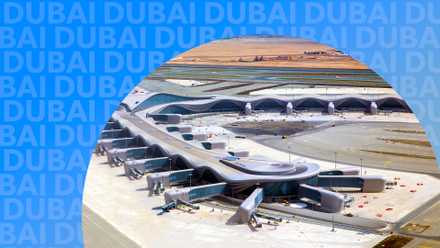
Al Maktoum International Airport's approved $34.85 billion (128 billion AED) expansion represents the most consequential single infrastructure investment in commercial aviation history, and its design philosophy marks a fundamental departure from how major hub airports have historically been built. The project will ultimately span 36,000 acres, accommodate 260 million passengers annually across five parallel runways, and connect four concourses via a 14-station automated people mover — numbers that dwarf every existing facility on Earth. What distinguishes DWC from other megaprojects is not scale alone but intentionality: the entire terminal footprint has been engineered to ICAO Aerodrome Reference Code F specifications at every one of its 400 contact gates, rather than the conventional approach of designating only a handful of Code F positions and working around them operationally.
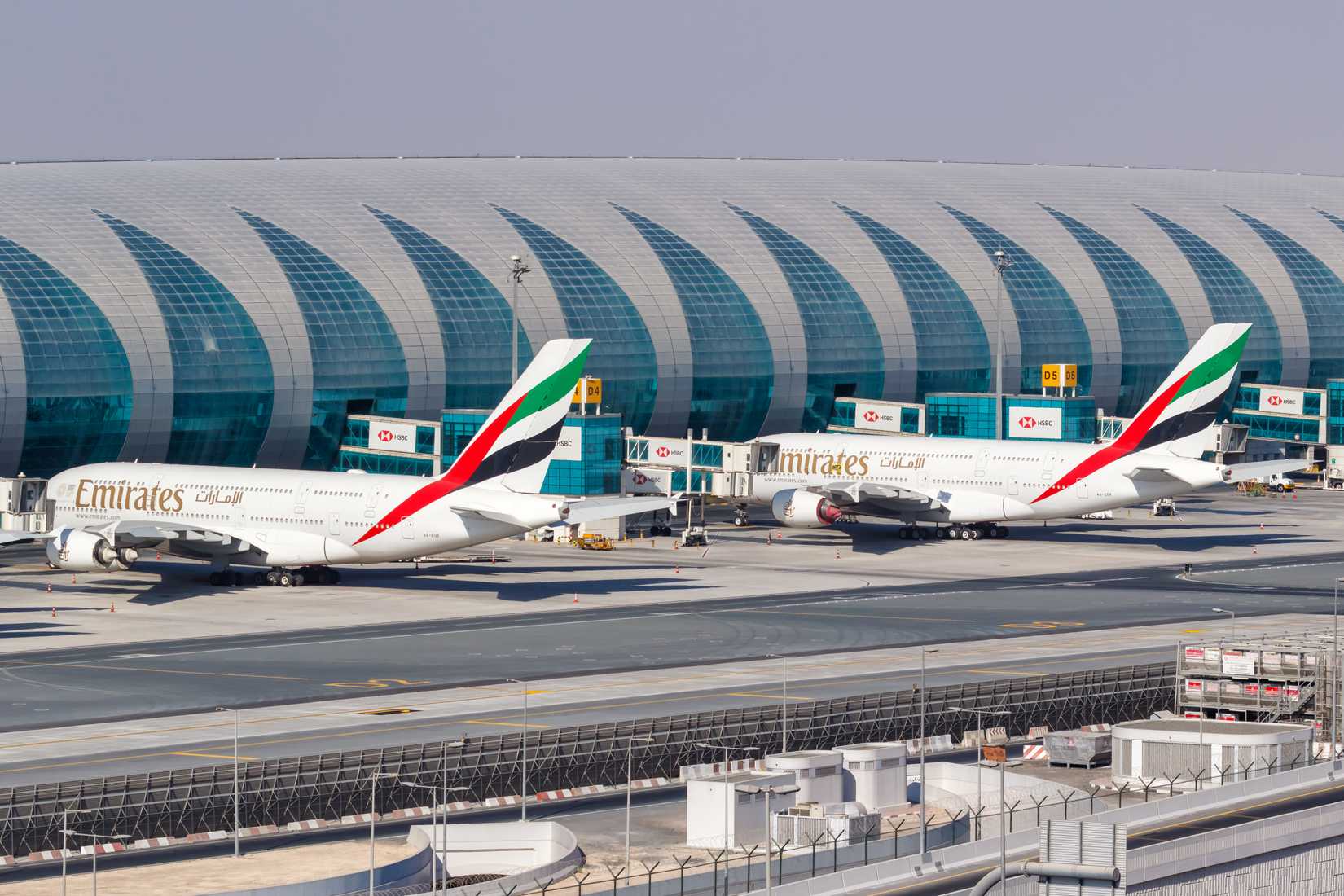
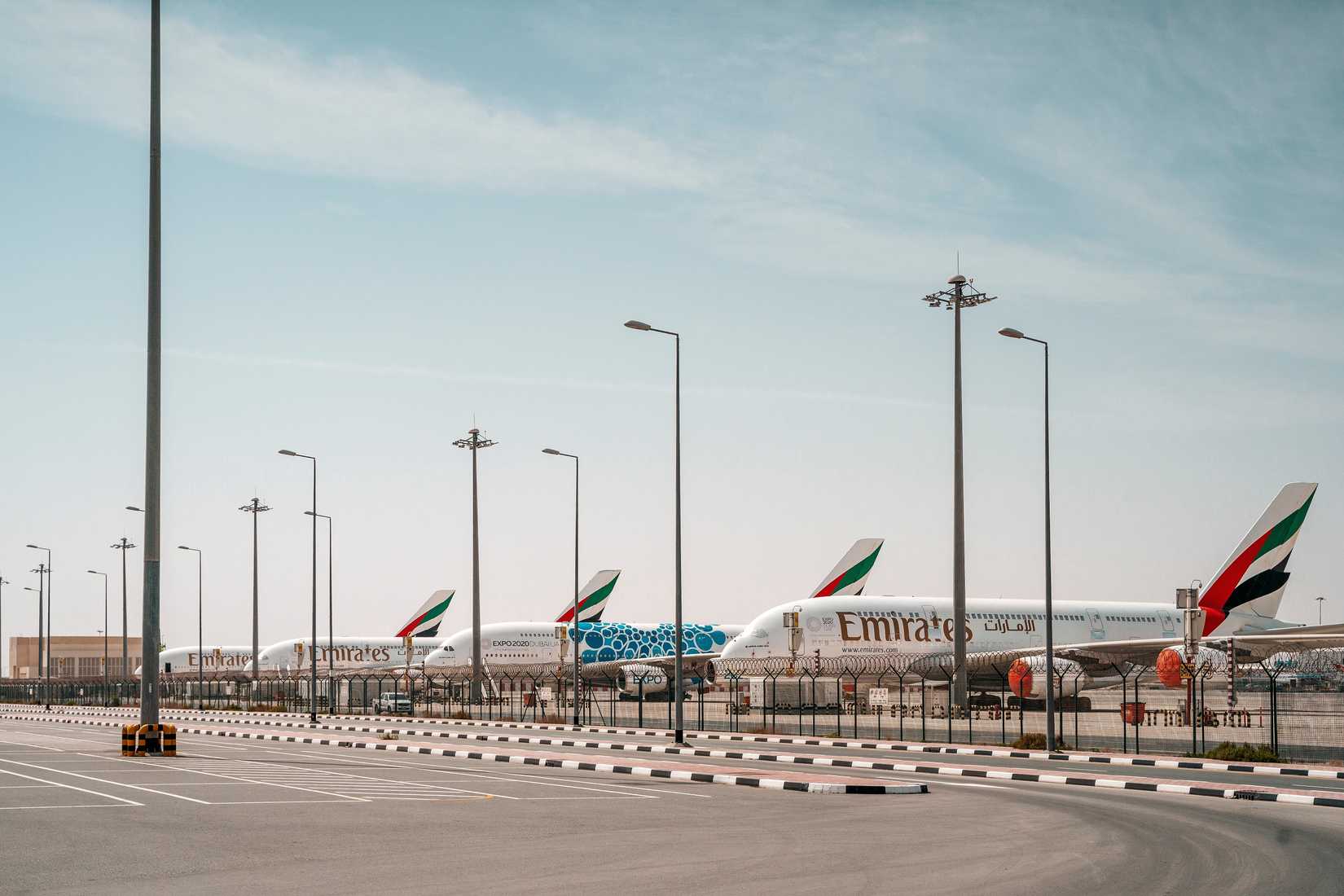
The Code F decision carries enormous practical weight for flight crews and dispatchers alike. Code F is the highest regulatory tier for commercial aircraft, establishing the dimensional minimums for runway-to-taxiway separation, taxiway-to-taxiway clearance, and gate spacing required to safely operate aircraft with wingspans up to 80 meters — the category that defines the Airbus A380. At virtually every other major international gateway today, a Code F arrival is a logistical event: adjacent taxiways close, neighboring gates go dark, and ground controllers manage a sequenced clearance corridor around the superjumbo's 262-foot wingspan. At DWC, that coordination overhead disappears entirely. Any arriving wide-body, up to and including the A380, can be assigned any available gate across the full 400-position apron without triggering downstream ground delays. For Emirates dispatchers managing a fleet of roughly 120 A380s plus a growing complement of Boeing 777X and 787 aircraft, this eliminates one of the most chronic sources of turn-time variance at DXB today.
Emirates' parallel investment of 18.7 billion AED ($5.1 billion) in a purpose-built maintenance, repair, and overhaul facility at Dubai South confirms that DWC is not a supplemental reliever airport — it is a wholesale fleet relocation. Airlines occasionally build new line maintenance stations at secondary airports, but constructing a full-scale heavy maintenance base before passenger operations even begin is a statement of permanence. The MRO facility will allow Emirates to grow its maintenance capacity in lockstep with fleet deliveries rather than retrofit existing hangars to accommodate new airframe types, a chronic problem for carriers whose engineering infrastructure predates their current widebody generations. This sequencing — MRO first, terminal second — mirrors the logic of a greenfield industrial campus more than a traditional airport expansion, and it signals to other carriers that DWC's gate infrastructure will be calibrated and maintained to A380/777X standards from day one.
For the broader commercial and business aviation community, DWC's 2032 initial opening at 150 million passengers annually will reshape the established hierarchy of Gulf connecting hubs. Dubai International currently holds the title of the world's busiest international airport, and its eventual handoff to DWC will redirect enormous connecting traffic flows that currently anchor the Middle East's position as the dominant bridge between Asia-Pacific, Africa, South Asia, and the North Atlantic. Carriers competing with Emirates on long-haul routes — particularly those using hub-and-spoke models through London Heathrow, Frankfurt, and Singapore — will face a competitor operating from a facility specifically designed to minimize the ground time, gate conflicts, and apron congestion that inflate connection windows at legacy airports. Reduced minimum connection times at DWC, enabled by its uniform gate infrastructure and high-throughput people mover, could make Dubai's transit product structurally faster than hubs constrained by mixed-fleet terminal designs.
For business aviation and Part 91/135 operators routing through or near the Gulf, DWC's development also signals a longer-term shift in FBO and handling service geography around the region. As commercial traffic migrates from DXB to DWC, general aviation support infrastructure, fuel contract positioning, and overflight handling services will realign accordingly. Operators flying ultra-long-range aircraft — Gulfstream G700s, Bombardier Global 7500s, Dassault Falcon 10Xs — increasingly use Gulf stops as range-extending waypoints on Asia-Europe and Africa-Europe routings, and the consolidation of Dubai's aviation ecosystem at a single, purpose-built site may ultimately simplify coordination for non-commercial operators navigating one of the world's most complex airspace environments. The broader lesson DWC offers aviation planners globally is structural: airports built around the lowest common denominator of gate specifications will eventually be operationally outcompeted by facilities designed from the outset for the largest aircraft they will actually serve.





 Read original article