One Boeing 737 Every 3 Days: Alaska Airlines Wraps Up Fleet-Wide Premium Cabin Refresh
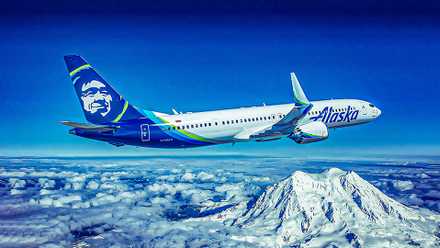
Alaska Airlines completed a sweeping 650-day cabin refresh program across its entire narrowbody Boeing 737 fleet, finishing with the redelivery of tail number N562AS late last week. The effort touched more than 200 aircraft spanning three variants — the 737-800, 737-900ER, and MAX 9 — on aggressive three-day turnaround cycles, a logistical achievement that signals strong maintenance execution capability from the airline's fleet technical support team. The scope of changes is meaningful: first class seating on the 737-800 and MAX 8 grew from 12 to 16 seats, while premium class on the 737-900ER and MAX 9 expanded from 24 to 30 seats. Hardware upgrades include new Recaro seats with updated leather upholstery throughout, high-power USB-C charging ports repositioned for ergonomic access, universal device holders at every seat position regardless of cabin class, and reserved overhead bin placards for premium cabin passengers — a feature increasingly demanded by frequent business travelers who depend on carry-on access.
For professional pilots and flight operations personnel, the immediate operational relevance lies in fleet standardization. Alaska's narrowbody operation now presents a consistent cabin configuration across legacy 737 variants and the newer MAX family, which simplifies crew briefings, reduces passenger confusion during irregular operations and aircraft swaps, and improves the reliability of first class and premium class revenue forecasting. The three-day cycle time for each aircraft is particularly noteworthy from an MRO and scheduling standpoint — achieving that cadence across 200-plus airframes without significant disruption to the summer schedule represents careful integration between maintenance planning, line operations, and crew scheduling departments. Managing Director Christopher Dela Rosa's LinkedIn announcement, citing the team's readiness ahead of the busy summer schedule, confirms the timing was deliberate and load-bearing for the airline's peak-season revenue targets.
The refresh program is architecturally connected to Alaska's merger with Hawaiian Airlines, announced in late 2023 and closed in 2024. With a combined fleet now including Airbus A330 widebodies formerly operated by Hawaiian, Alaska is in the process of building a genuinely international network anchored at Seattle-Tacoma International Airport, with 12 new international destinations targeted by 2030. The domestic narrowbody cabin refresh serves as the revenue engine funding that expansion — higher proportions of first class and premium class seats on routes between West Coast cities and Pacific Northwest hubs translate directly into improved yield on established short- and medium-haul flying. The upgrade also positions Alaska competitively against Delta, United, and Southwest, all of which have undertaken similar domestic premium seat expansion programs in recent years as carriers recognize that business travelers on sub-three-hour flights represent disproportionately high margin.
Looking forward, the cabin standardization program bridges the gap between Alaska's current fleet and its incoming order book. The airline holds orders for 105 Boeing 737 MAX 10s — the longest and highest-capacity narrowbody variant, pending FAA certification — with deliveries expected to begin in 2027, alongside an expanded order for the 787 Dreamliner announced in early 2026. Boeing's continued production rate challenges, rooted in the manufacturing and quality control crises that began with the January 2024 door plug incident and the subsequent FAA production cap, have slowed deliveries industry-wide. By refreshing legacy 737 interiors to near-MAX-equivalency in passenger experience, Alaska has effectively hedged against delivery delays, ensuring that customers on older airframes receive a product consistent with the brand promise being built around the incoming jets. The follow-on widebody refresh program targeting the A330 fleet indicates Alaska's leadership views interior standardization not as a one-time project but as an ongoing strategic discipline as the merged airline scales toward a dual-hub, intercontinental operation.





 Read original article