Why The SR-71 Blackbird's Silver Tires Wore Out Faster Sitting Still Than Landing At 200 Knots
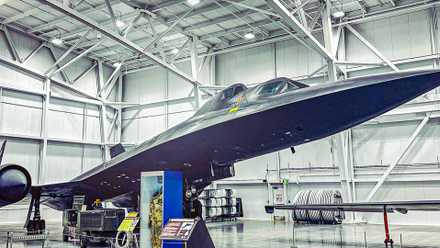
The Lockheed SR-71 Blackbird's tire system stands as one of the most counterintuitive engineering solutions in aviation history, produced directly by the aircraft's extreme operational envelope. Developed by B.F. Goodrich under the constraints of Mach 3.3 flight and skin temperatures reaching 900°F, the tires were constructed from a rubber compound infused with aluminum powder, giving them their distinctive silver appearance. Rather than providing structural strength, the aluminum particles served a thermal management function — reflecting radiant heat away from the core rubber compound and raising the effective flash point of the material during high-speed flight. The tires were inflated to 415 psi of pure nitrogen, a figure that dwarfs commercial aviation norms (the Boeing 787 runs approximately 200 psi) and eliminates the oxygen that would otherwise ignite under aerodynamic heating. At $2,300 per tire in period dollars, and requiring replacement every 20 missions, the system was expensive, specialized, and deliberately optimized for conditions that existed only at the edge of the atmosphere.
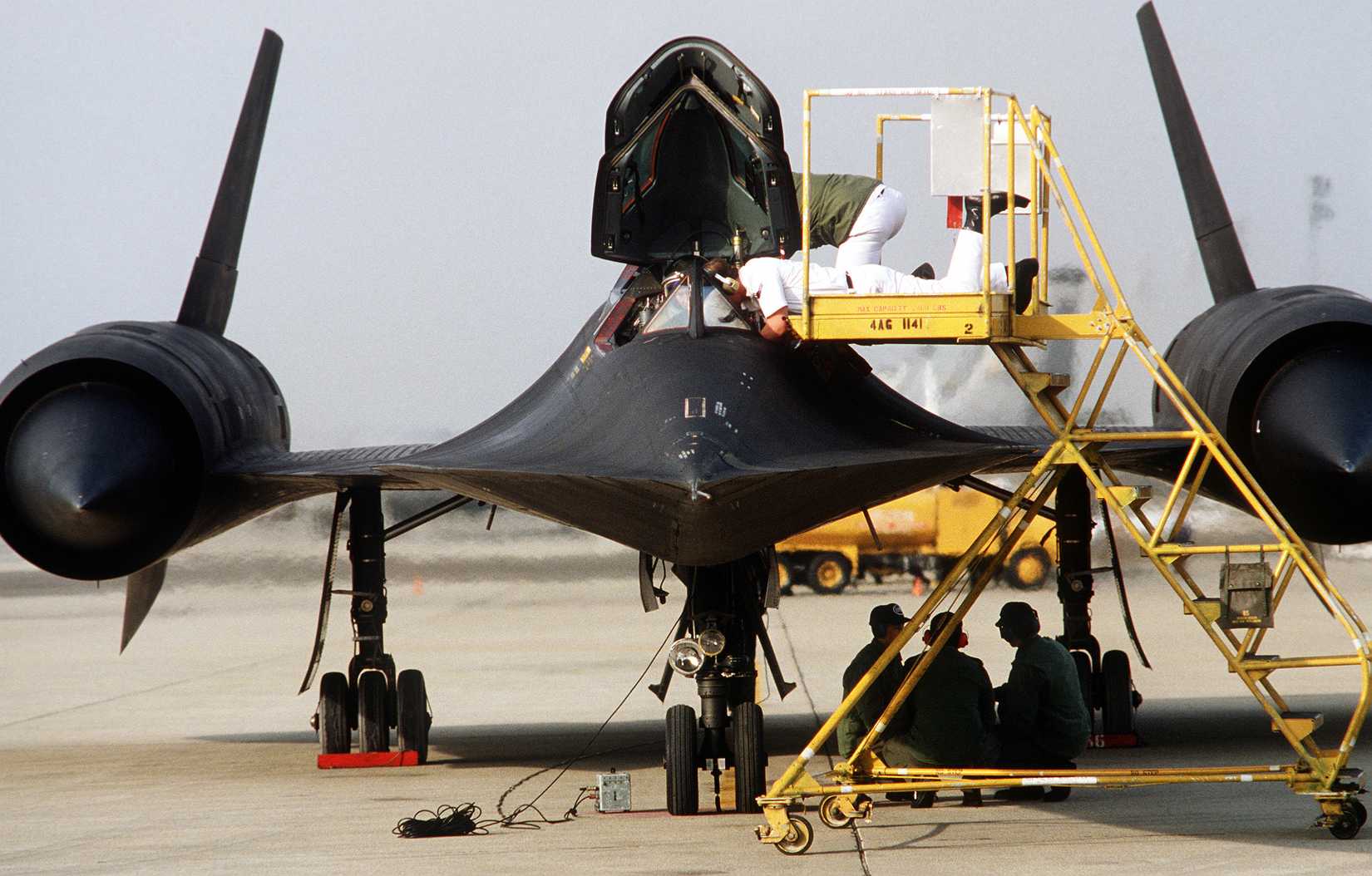
The central paradox — that these tires degraded faster on the ramp than during a 200-knot landing — illuminates a fundamental tension in tire engineering that working pilots rarely confront but that is particularly acute in high-performance aircraft. Conventional aircraft tires are engineered to handle enormous instantaneous dynamic loads during touchdown, with the rubber compound and carcass construction prioritizing impact absorption and rotational stress. The SR-71's tires, by contrast, were tuned almost exclusively for thermal survivability at speed. The aluminum-impregnated rubber compound that performed well under aerodynamic heating was comparatively brittle and poorly suited to sustaining the prolonged, concentrated static load of the aircraft's weight distributed across a small contact patch on the ramp. The heavy titanium airframe — titanium comprising approximately 92% of the structure — imposed a constant compressive stress on tires that were never designed for long-duration ground bearing. Landing, despite its violence, was brief; sitting still was structurally relentless.
For professional pilots and operators, the SR-71 tire story carries direct relevance to how aircraft systems are evaluated in their actual operating context rather than against generalized performance standards. Type-specific tire inflation schedules, replacement intervals, and ground handling limitations exist precisely because no single tire design optimizes equally across takeoff, cruise, landing, and static ground operations. The SR-71 case represents an extreme version of a trade-off that appears in more modest forms across business aviation — high-performance aircraft often carry tires with narrower operational windows and more aggressive replacement intervals than their airliner counterparts. Operators of high-speed turboprops and business jets running maximum gross weight operations on hot days are navigating a less dramatic but structurally similar thermal and load management problem. Tire pressure monitoring, nitrogen inflation practices, and ground time management between flights are not administrative details but engineering-driven operational requirements.
The broader context of the SR-71 program underscores how Cold War intelligence requirements drove aerospace engineering into territory where standard industrial supply chains and materials science were wholly inadequate. The titanium that defined the airframe could not be sourced domestically in sufficient quantities, leading the CIA to covertly purchase raw rutile ore from the Soviet Union — the very nation the aircraft was designed to surveil. This same design-under-constraint philosophy extended to every subsystem, including the tires. The engineers at Lockheed's Skunk Works were not optimizing for cost, serviceability, or longevity in the conventional sense; they were solving for mission completion under conditions that had no precedent. The result was an aircraft whose ground support requirements were as demanding as its flight operations, a lesson that carries forward into contemporary discussions of hypersonic vehicle development, where thermal protection, materials sourcing, and ground infrastructure remain the binding constraints on operational feasibility.










 Read original article