The Critical Capability Gap In The US Vice President's Boeing 757 That Nobody's Talking About
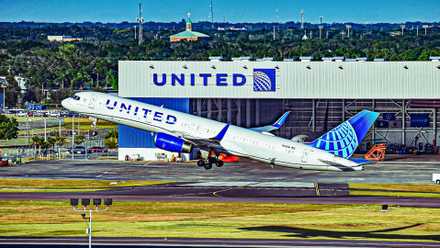
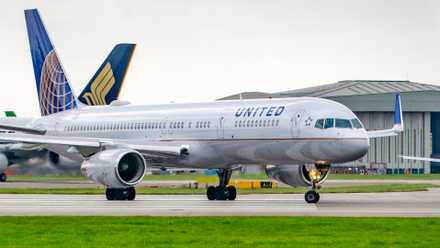
The Boeing C-32A, the military executive transport variant of the Boeing 757 that has served as "Air Force Two" since June 1998, occupies a uniquely irreplaceable position in the United States government's airlift inventory — one that is now generating quiet but serious concern among defense planners. The aircraft's operational value stems from a convergence of characteristics that no single modern platform replicates: the ability to operate from short, constrained, or high-elevation airfields while simultaneously carrying substantial classified payloads — encrypted communications suites, defensive countermeasure systems, hardened armor — over intercontinental ranges approaching 5,500 nautical miles without refueling. The 757 achieved this through an unusually powerful combination of high-bypass turbofans and an oversized wing relative to its narrowbody fuselage, earning it the nickname "Flying Pencil." When Boeing permanently closed the 757 production line in 2004, it eliminated not just an airframe but a specific performance envelope that the commercial market has since moved around rather than through. For the 89th Airlift Wing at Joint Base Andrews, which operates the C-32A fleet, this means sustaining aging airframes under the demanding operational tempo of vice-presidential travel with no clear successor on any horizon.
The mid-market gap left by the 757's discontinuation has practical consequences that extend well beyond VIP transport. For working pilots and aviation operators in the executive and government airlift space, the core problem is the absence of a domestic-built platform capable of combining short-field performance with heavy-payload intercontinental range. The Airbus A321XLR is the closest commercial analog and is already displacing civilian 757s across major airline fleets, but it is categorically unavailable for U.S. government head-of-state transport. Industrial base policy, domestic political constraints, and the extraordinary engineering burden of integrating classified U.S. defense systems into a foreign-designed airframe make the A321XLR a non-starter for military application. The Boeing 737 MAX 9 and MAX 10, despite matching 757 passenger capacity in commercial configurations, are disqualified by the fundamental geometry of the 737 platform: its low-slung fuselage and 1960s-era landing gear architecture prevent it from accommodating the large-diameter, high-bypass engines required for hot-and-high or short-field operations at the gross weights required by C-32A-equivalent mission equipment. Widebody alternatives like the 787 or 767 solve the payload problem but introduce a different constraint — they are too large to access the secondary and tertiary airports where much of executive diplomatic operations actually occur.
Boeing's conceptual answer, the New Midsize Airplane widely referred to as the 797, remains indefinitely deferred. The program was formally paused in January 2020 as the company redirected engineering and capital resources toward resolving the 737 MAX grounding crisis and subsequent manufacturing quality failures. The envisioned 797 — a clean-sheet, composite-intensive widebody with a distinctive 2-3-2 cabin configuration — was explicitly scoped in two variants: a smaller 225-seat model with a 5,000-nautical-mile range targeting the 757-200 replacement market, and a larger 275-seat variant aimed at replacing the 767. Boeing has publicly conditioned a formal program launch on the maturity of next-generation propulsion technology sufficient to achieve the promised 40 percent reduction in operating costs. That technology threshold has not been reached, and no launch timeline has been announced. In the interim, the very market conditions that drove airlines away from the 757 — high per-seat fuel and maintenance costs on short domestic sectors — no longer uniformly apply, as transatlantic point-to-point flying has expanded the commercial case for a capable mid-market aircraft considerably.
The implications for the broader aviation industry are significant and underscore a structural risk that Boeing's strategic decisions over the past two decades have created. The choice to extend the 737 platform rather than invest in a clean-sheet mid-market design — driven by the financial efficiency of derivative development and the capital demands of the 787 program — left a gap in the capability spectrum that neither narrowbody nor widebody designs can fully address. For commercial operators, this manifests as an ongoing tension between the range limitations of narrowbody fleets and the seat-cost inefficiency of deploying widebodies on thinner routes. For military and government operators, the gap is more acute: the C-32A fleet is aging without a replacement path, and the institutional and industrial barriers to procuring a foreign-built substitute are effectively prohibitive. Part 91 and 135 operators in the large-cabin business jet space face a parallel dynamic, as the upper end of that market — ultra-long-range heavy jets — similarly lacks a platform that combines true short-field agility with intercontinental payload capacity at a manageable operational cost. The 757's disappearance from production created a vacancy across multiple aviation segments simultaneously, and the industry has been navigating around it rather than through it ever since.











 Read original article