All-Business-Class Airline Beond Asks Employees to Keep Working Despite Months Without Pay
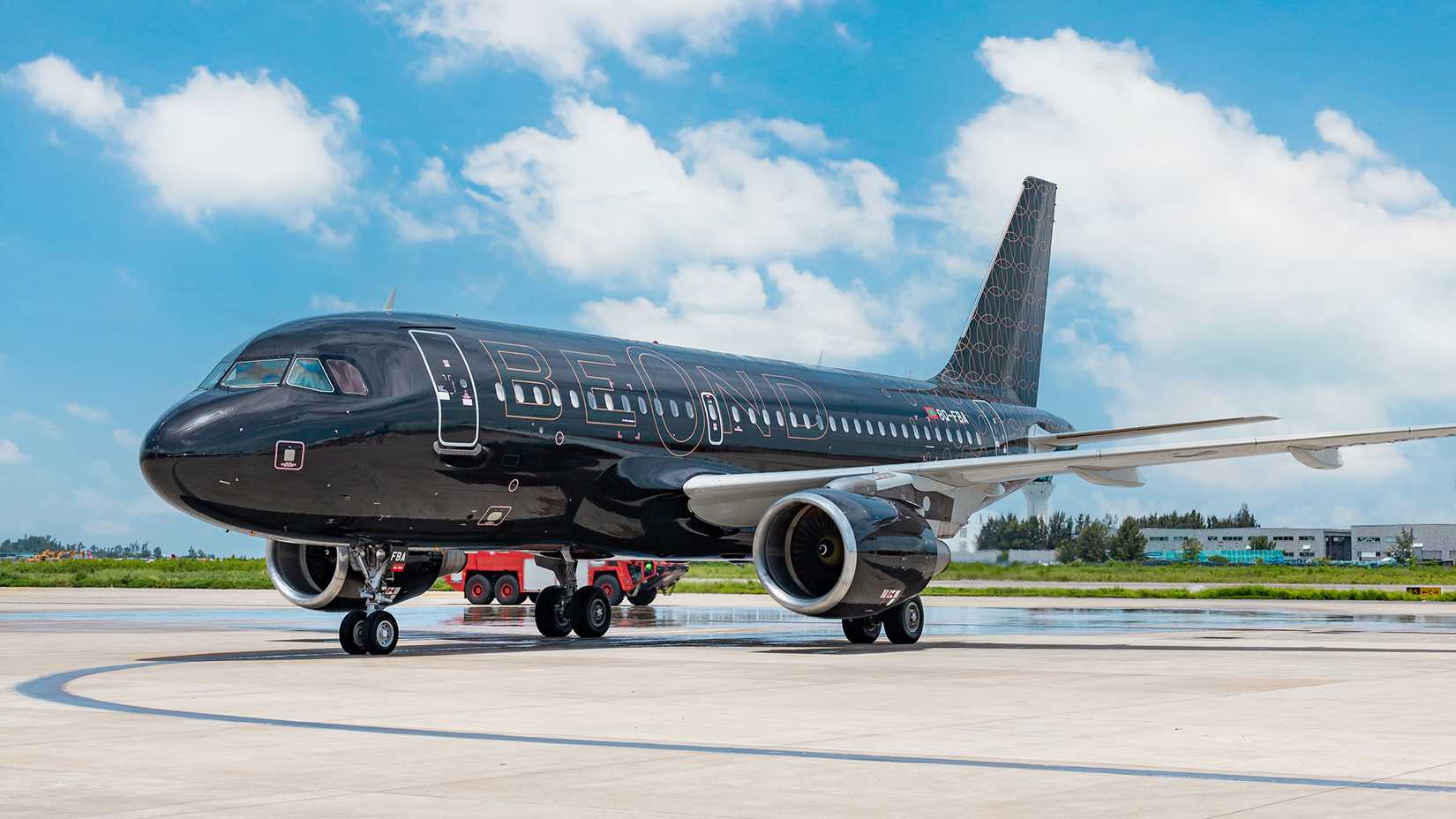
Beond, the Maldives-focused all-business-class carrier, has entered what appears to be a critical liquidity crisis, with CEO Tero Taskila acknowledging in an internal memo that the airline is two months in arrears on employee salaries and that multiple expected funding deadlines have already slipped. The Finnish-led startup, which operates a two-aircraft fleet consisting of a single Airbus A319 configured for 44 passengers and a single A321 for 68 passengers, has simultaneously suspended all scheduled flying until October 2026, leaving crews and administrative staff in financial limbo while still being asked to report for charter operations. The next tranche of shareholder funding, according to the memo, is contingent on approval of a project tied to Saudi Arabia's General Authority of Civil Aviation (GACA), a dependency that introduces significant timeline uncertainty. Taskila's framing — that each charter flight "protects the company's ability to make good on what we owe you" — reflects the narrow margin between operational continuity and insolvency that the airline is currently navigating.
For professional pilots and aviation operators, the Beond situation illustrates a textbook failure mode for ultra-niche premium startups: the intersection of structural underfleet, seasonal demand concentration, and undercapitalization. A two-aircraft operation carries no meaningful redundancy. When a single airframe goes technical, enters scheduled maintenance, or is repositioned to charter flying, the entire scheduled network collapses. Crews at airlines of this size carry disproportionate operational exposure — schedule disruptions, irregular operations, and last-minute charter reassignments become the norm rather than the exception. The salary arrears disclosure also raises immediate questions under applicable labor regulations across multiple jurisdictions, as Beond employs crew members operating under European licensing frameworks while the airline itself is Maldivian-registered, creating a complex legal web if insolvency proceedings are eventually triggered.
The structural weaknesses embedded in Beond's business model were present from the outset and are now being stress-tested simultaneously. The airline markets a premium, boutique alternative to the Maldives, yet its A319 and A321 narrowbodies lack the range to operate the core Europe-Malé routing nonstop. Every European departure must transit Al Maktoum International Airport in Dubai, adding a technical stop that fundamentally undermines the seamless premium product narrative. That positions Beond in direct comparison with the full-service widebody business class offered by Emirates, Qatar Airways, and Etihad — carriers that bring loyalty ecosystems, lounge infrastructure, robust irregular operations recovery, and metal that can actually fly the sector nonstop. The all-premium cabin configuration also demands near-perfect yield performance on every departure; there is no economy cabin to absorb load factor softness, and the Maldives market's pronounced winter peak means summer flying is structurally loss-generating at any credible load factor.
The broader context for business aviation and commercial operators is the accelerating difficulty facing premium leisure startups that emerged during the post-COVID travel boom. Carriers including La Compagnie, JSX, and various luxury charter concepts rode a wave of suppressed demand and high-yield leisure travel in 2022 and 2023 that has since normalized. Fuel price volatility, driven in part by ongoing Middle East conflict and regional airspace disruption, disproportionately punishes small-scale single-fleet operators with no hedging scale. The Saudi GACA pivot Beond is now pursuing — apparently a potential expansion or partnership project announced in December 2025 — reflects a pattern seen repeatedly in undercapitalized aviation ventures: the search for a transformative anchor deal that will resolve near-term cash problems, a strategy that tends to introduce more timeline risk than it eliminates. For corporate flight departments and Part 135 operators tracking the business aviation landscape, Beond's trajectory serves as a useful case study in how premium product positioning, without corresponding operational scale and capital depth, fails to translate into sustainable airline economics regardless of how compelling the leisure market opportunity appears on paper.





 Read original article