The age of drone warfare brings new battlefield roles for helicopters
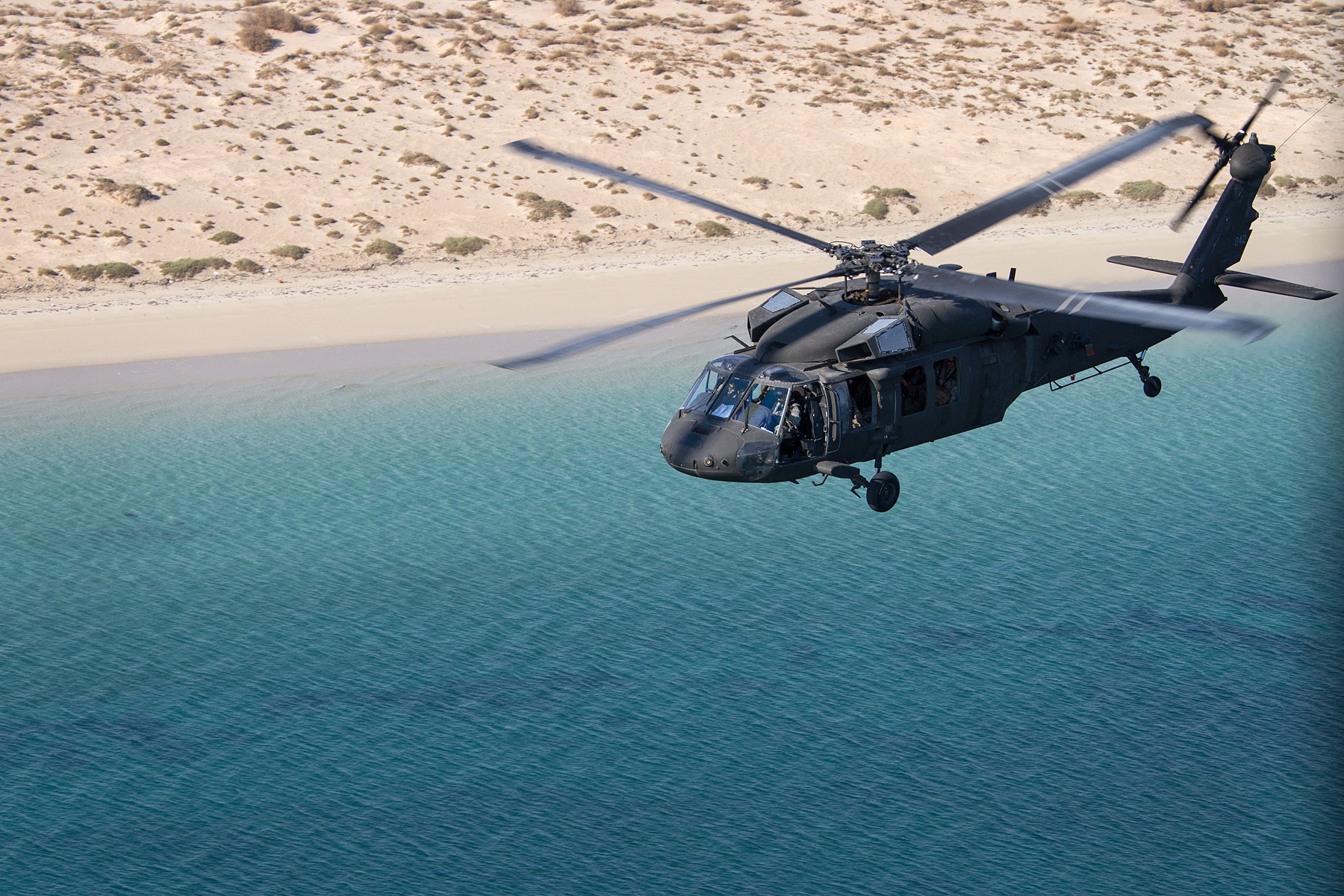
The Pentagon's growing reliance on helicopters as counter-drone platforms reflects a fundamental shift in how military aviation planners are responding to the proliferation of low-cost, lethal uncrewed aircraft systems (UAS) on modern battlefields. Beginning June 22, Air Force Reserve aircrew from the 301st Rescue Squadron will conduct a four-day exercise off Cape Canaveral, Florida, employing HH-60W Jolly Green II combat rescue helicopters in simulated counter-drone roles — a capability drawn directly from Ukrainian Air Force operational experience. The exercise comes in the immediate wake of a June 8 incident near the Strait of Hormuz in which a U.S. Army AH-64 Apache attack helicopter was reportedly destroyed by an Iranian Shahed 136 loitering munition, underscoring that even front-line attack aircraft are not inherently protected from the drone threat. CENTCOM declined to formally characterize the loss, but the incident has accelerated urgency around developing coherent doctrine, tactics, and training frameworks for helicopter crews operating in contested airspace where drones are present.
The vulnerability exposed by the Apache shootdown carries significant implications beyond purely military aviation. The Shahed 136 is characterized as a large, relatively slow-moving drone designed primarily to attack fixed ground infrastructure — not a purpose-built air-to-air weapon. The fact that it downed a dedicated attack helicopter signals that rotary-wing aircraft of all performance categories face meaningful threat exposure from even unsophisticated UAS in contested environments. For military helicopter crews — whether flying rescue, utility, or attack missions — the incident reinforces that traditional assumptions about airspace threat hierarchies must be reconsidered. Situational awareness tools, radar warning receivers, and crew procedures developed around fixed-wing threats and man-portable air defense systems (MANPADS) may provide inadequate protection against a threat profile that is slow, low-observable to some sensor types, and potentially operating in swarms.
The Ukraine conflict has served as the primary laboratory for understanding how helicopters can be adapted to intercept drones, and U.S. planners are explicitly looking to that operational theater for lessons. Ukrainian forces have employed rotary-wing assets to hunt and destroy Shahed drones in flight, developing tactics that leverage the helicopter's low-altitude agility and weapons flexibility. The 301st Rescue Squadron exercise represents a U.S. attempt to formalize and rehearse analogous procedures before any large-scale operational deployment demands them. The exercise location — the Atlantic coast off Cape Canaveral — suggests a controlled maritime environment for rehearsing intercept geometries, rules of engagement, and crew coordination in conditions that replicate real-world operational contexts without the interference of congested domestic airspace.
For professional aviators operating in civil and commercial contexts, the broader trajectory of drone warfare doctrine carries indirect but consequential relevance. The rapid expansion of military counter-drone operations necessarily accelerates the development of detect-and-avoid technologies, airspace deconfliction frameworks, and UAS threat assessment methodologies — all of which feed directly into the regulatory and operational environment governing civil aviation. The FAA's ongoing work on UAS integration into the National Airspace System is taking place against a backdrop in which the threat characteristics of advanced drones are being catalogued and studied at the operational level by the military. Business aviation operators flying in proximity to military exercise areas, particularly along coastal corridors, should remain attentive to NOTAM activity associated with counter-drone training exercises. More broadly, the demonstrated lethality of commercially available or state-produced drone systems against sophisticated rotary-wing platforms is a data point that risk managers and flight operations directors at corporate and charter operators should factor into threat assessments for international operations in areas of geopolitical instability.