How Cabin Crew Rest & Sleep On The Airbus A350-1000
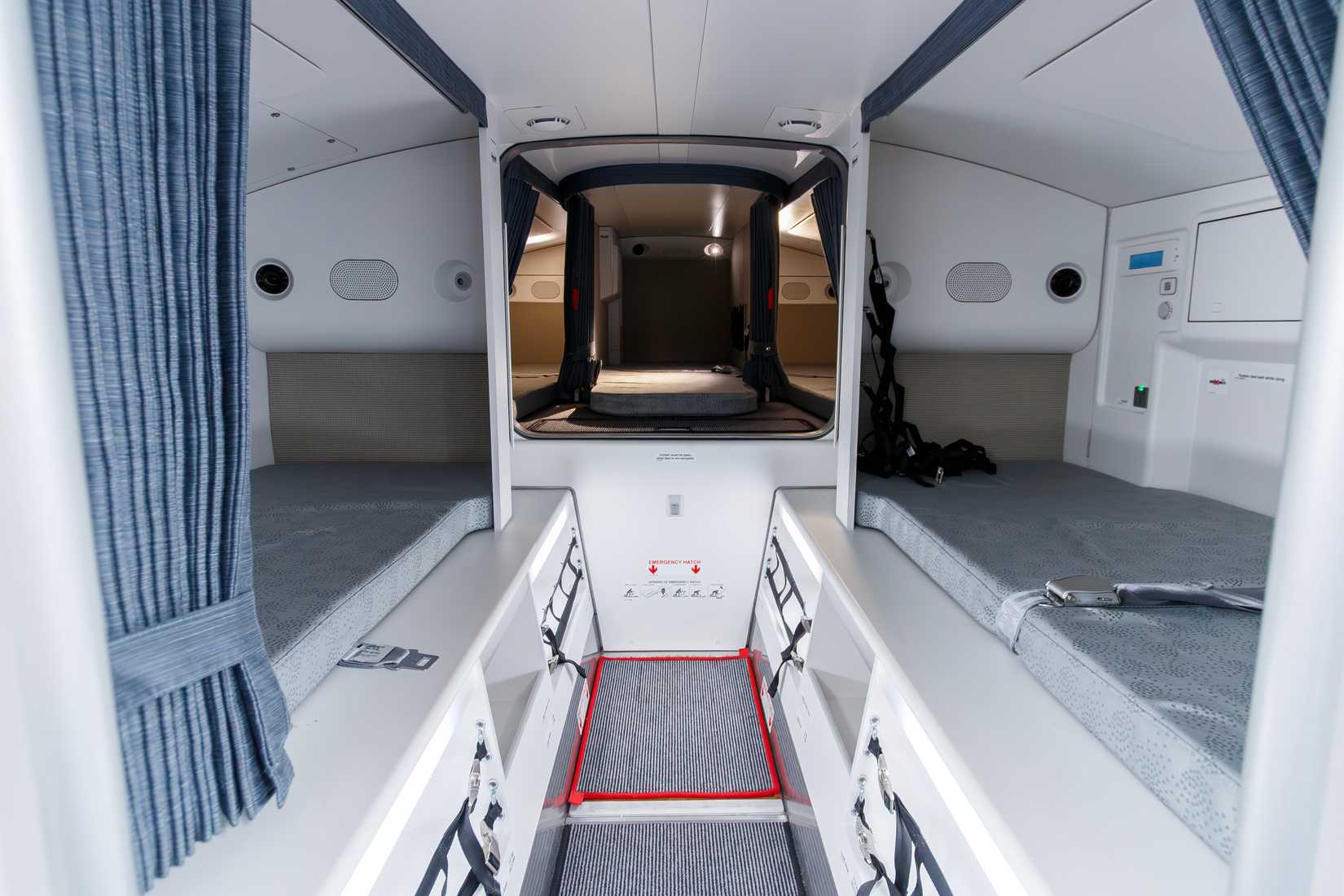
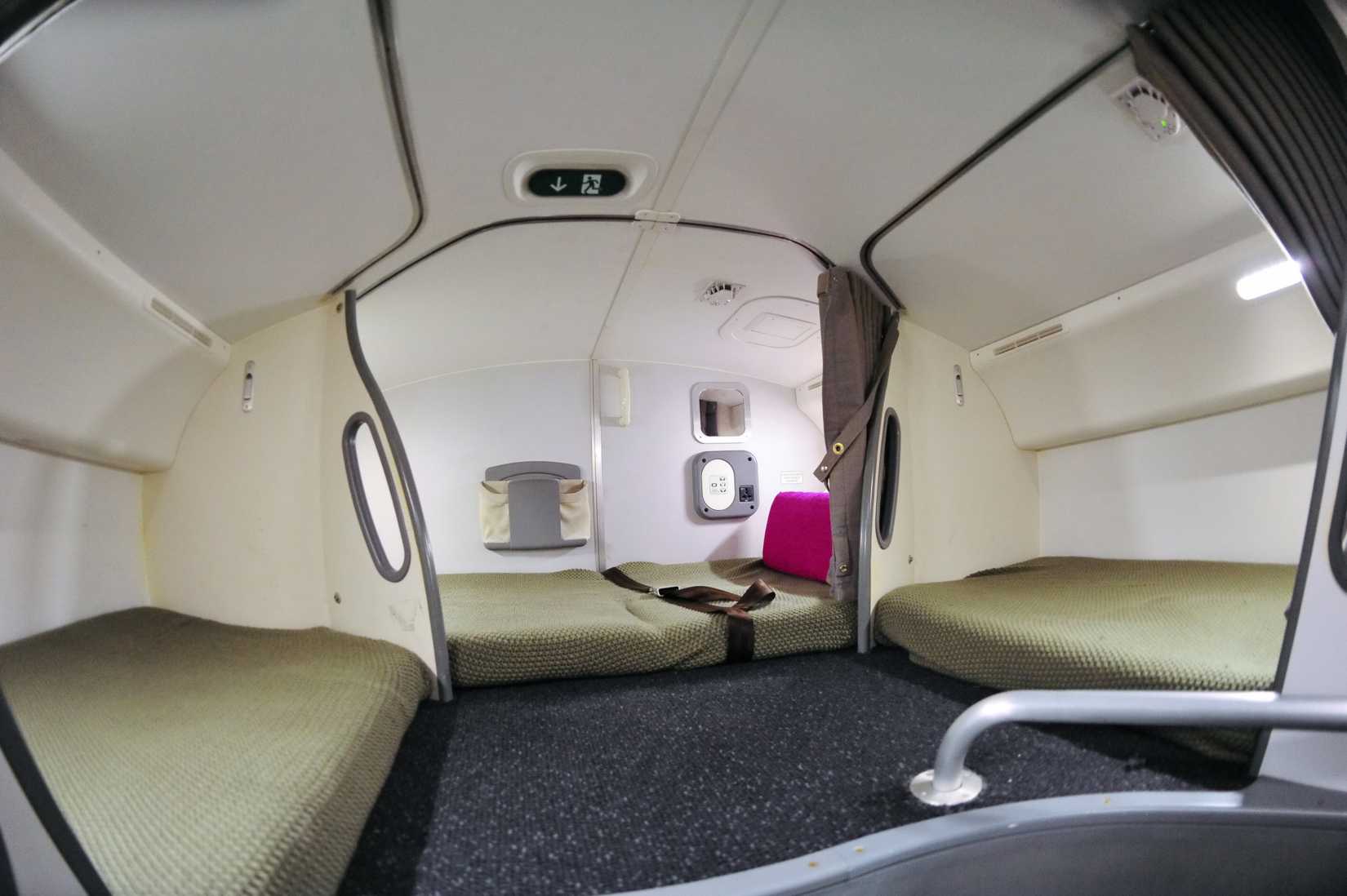
Cabin crew rest compartments aboard the Airbus A350-1000 represent a purpose-built engineering solution to one of commercial aviation's most persistent operational challenges: managing crew fatigue across ultra-long-haul sectors that routinely exceed fourteen hours of block time. On the A350-1000, the crew rest area is accessed through a discreet, unmarked door typically positioned near the rear galley, from which flight attendants climb a narrow staircase into a crown-area compartment situated above the main passenger cabin. This vertical separation is by design, preserving aisle-level cabin real estate while providing the acoustic and visual isolation necessary for genuine sleep cycles rather than superficial rest. The compartment itself contains individual bunk bays arrayed along the sides of a compact central space, each equipped with a mattress pad, privacy curtain, reading light, personal storage, and — critically — a seatbelt for use during turbulence. The layout deliberately prioritizes sleep density over comfort, distinguishing crew rest architecture from the premium cabin ergonomics meant to impress revenue passengers.
For aviation operators, the existence and design specifications of these compartments carry direct regulatory weight. International long-haul operations — whether conducted under FAA Part 117 fatigue risk management rules, EASA flight time limitation regulations, or equivalent frameworks — mandate minimum rest periods for cabin crew based on flight duration and duty period length. The physical rest facility itself must meet defined standards: adequate bunk dimensions, the ability to darken the space, temperature control, and protection from noise and movement within the cabin. Airlines rostering A350-1000 flights on sectors such as Singapore to New York or London to Perth must staff above minimum cabin crew counts precisely because the rotation model requires enough bodies to keep sufficient personnel in the active cabin while others cycle through mandated rest windows. Operators running Part 135 or Part 91K international operations on large-cabin business jets face analogous considerations, though the specific regulatory thresholds and aircraft-specific rest facility requirements differ substantially from transport category airline operations.
The crew rest system on the A350-1000 also reflects a broader industry acknowledgment that fatigue management is inseparable from cabin safety performance. A flight attendant who has not completed a meaningful rest cycle is measurably less effective during an emergency evacuation, a medical event, or any abnormal situation requiring coordinated crew response — concerns that are not theoretical on fifteen-hour flights operating over remote oceanic tracks. The seatbelt requirement in each bunk is illustrative: crew rest facilities are regulatory environments, not informal accommodations, and the design standards enforced by both Airbus and certifying authorities treat them accordingly. The layout variation across carriers — some airlines specifying above-cabin crown configurations, others using below-deck compartments accessed by ladders — reflects the degree to which airlines negotiate with Airbus during the aircraft delivery process to match their specific route network and crew complement requirements.
From a fleet planning perspective, the A350-1000's crew rest infrastructure is one of the enabling factors that makes the aircraft commercially viable on the longest point-to-point routes in the global network, including Singapore Airlines' non-stop service between Singapore and New York JFK, which operates at approximately nineteen hours and represents the longest scheduled commercial flight in the world. Without compliant crew rest facilities, those sectors are operationally impossible under any major regulatory regime. For pilots operating long international missions in any category — airline, business aviation, or charter — the crew rest architecture aboard transport category widebodies like the A350-1000 serves as a useful reference point for understanding how fatigue science, regulatory compliance, and aircraft design intersect in practice, and why those intersections increasingly drive purchasing decisions, route planning, and crew scheduling models across the industry.









 Read original article