MD Aircraft Eyes Electric Regional Market With Battery-Swapping Design
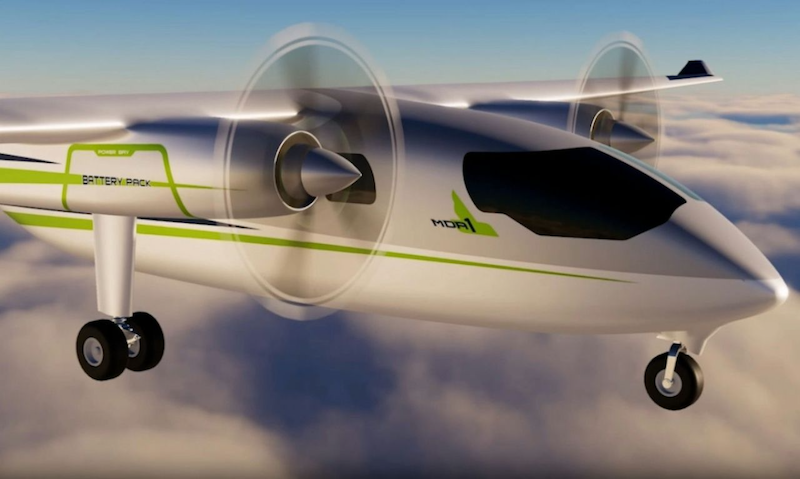
MD Aircraft, a German manufacturer, is developing the MDA1 eViator, a nine-passenger all-electric regional aircraft distinguished by a swappable battery architecture, with flight testing now targeted for late 2027 or early 2028. The aircraft follows a conventionally configured fixed-wing design — a notable departure from the multirotor and tilt-rotor configurations that dominate the advanced air mobility landscape — positioning it as a more operationally familiar platform for regional operators already experienced with turboprop or piston-engine commuter aircraft. The swappable battery concept represents a deliberate engineering response to one of the most persistent commercial barriers in electric aviation: turnaround time. Rather than relying solely on on-site charging infrastructure, a battery-exchange model allows ground crews to remove depleted packs and install pre-charged units, potentially bringing electric regional aircraft closer to the utilization rates that make short-haul commercial operations economically viable.
For working pilots and regional operators, the battery-swap architecture addresses a genuine operational concern that charging-dependent designs have struggled to answer. Electric aircraft certified under current FAA and EASA frameworks must carry sufficient energy reserves comparable to those required of conventional aircraft, and recharging to those margins at small regional airports — many of which lack robust electrical infrastructure — can impose ground times that erode the schedule efficiency operators depend on. A swappable system, if standardized and certified, shifts the energy replenishment burden from airside charging hardware to a logistics model more analogous to fuel handling, a workflow that ground operations personnel already understand. That said, battery weight, energy density, and the structural certification of quick-change battery systems under Part 23 or equivalent EASA CS-23 standards remain formidable engineering and regulatory challenges that will define whether this design premise translates from concept to airworthy product.
The MDA1 eViator occupies a strategically significant niche: the nine-passenger capacity places it squarely in the air taxi and commuter category that has historically been served by aircraft like the Cessna Caravan, Pilatus PC-12, and Twin Otter — platforms that form the backbone of regional feeder services, Essential Air Service routes, charter operations, and island-hopping carriers worldwide. Electric propulsion at this scale promises substantially lower direct operating costs through reduced fuel spend and simplified powerplant maintenance, but the certification timeline is the critical variable. With flight testing not expected until late 2027 at the earliest, type certification under any major regulatory authority is realistically a 2030 or later event, placing the eViator in a crowded queue alongside competing electric commuter programs from manufacturers including Eviation, Heart Aerospace, and Surf Air's electrification partnerships.
The broader trajectory of electric regional aviation continues to be shaped by the tension between technological ambition and certification reality. Several programs that announced aggressive timelines in the early 2020s have encountered delays driven by battery energy density limitations, regulatory pathway complexity, and the capital intensity of bringing novel propulsion architectures through airworthiness processes designed around conventional aircraft. MD Aircraft's conventional fixed-wing configuration may offer an advantage here, as regulators and operators are more familiar with evaluating this type of design compared to unconventional eVTOL configurations — but the swappable battery system introduces its own novel certification questions around structural integrity, quick-release mechanisms, and battery management system interoperability. The degree to which the company has engaged with EASA on a certification basis, and whether a parallel FAA validation pathway is planned for North American market entry, will be among the most consequential near-term milestones to watch.









 Read original article