Air Medical Provider Unveils Learjet Cabin
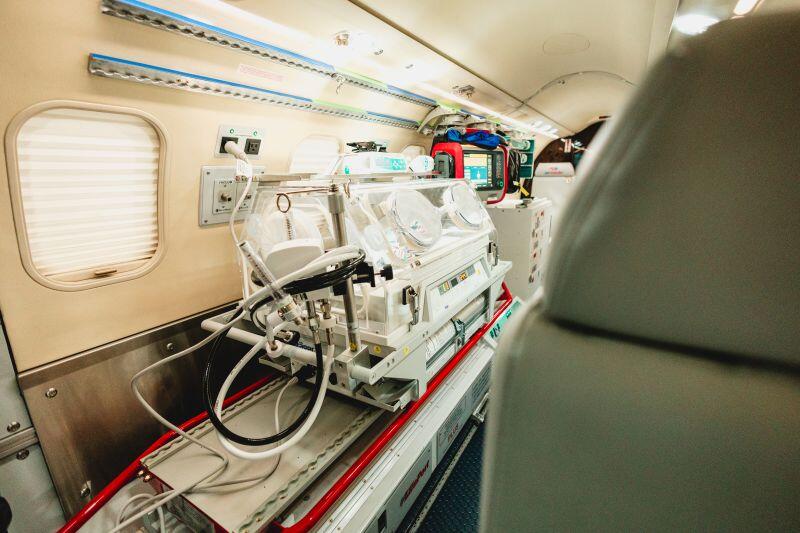
Airmedic, a Canadian air medical transport provider, has introduced a purpose-built permanent medical interior for the Bombardier Learjet 45XR midsize business jet, developed in collaboration with Fargo Jet Center, the North Dakota-based completion and modification specialist. The new cabin configuration carries a Supplemental Type Certificate (STC), meaning the installation has undergone formal FAA certification as an airworthy, permanent modification rather than a removable or field-installed arrangement. The announcement, made June 17, marks a notable step in how specialized air medical operators are approaching fleet standardization and regulatory compliance for dedicated medevac platforms.
The choice of the Learjet 45XR as the platform is significant for crews and operators familiar with air medical fixed-wing operations. The 45XR variant, which features uprated Williams FJ44-3A engines relative to the baseline Learjet 45, offers improved hot-and-high performance, a certified ceiling of 51,000 feet, and transcontinental range — characteristics that make it well-suited for interfacility critical care transport across Canada's vast geography and into northern or remote destinations where runway length and elevation can be limiting factors. A permanent STC'd interior eliminates the weight, time, and configuration uncertainty associated with modular or portable medical equipment lashdowns, and provides crews and receiving hospitals with a consistent, predictable clinical environment on every mission.
For pilots operating air medical fixed-wing platforms under Part 135 or equivalent Canadian CARs authority, a certified permanent interior has direct operational implications. Weight-and-balance documentation, emergency equipment placarding, and crew briefing requirements all become more straightforward when the medical configuration is a formal, documented part of the aircraft's type design rather than an add-on. Fargo Jet Center's involvement reflects the growing role of specialized MRO and completion centers in bridging the gap between OEM airframes and the niche operational requirements of EMS, organ procurement, and critical care transport operators — a segment that demands both clinical functionality and airworthiness rigor simultaneously.
The development fits within a broader trend in business aviation toward purpose-configured aircraft for specialized mission profiles, moving away from the historical practice of adapting standard corporate interiors with portable equipment. As air ambulance demand has grown — driven by aging populations, increased organ transplant activity, and expanding coverage networks in Canada and the U.S. — providers have found that ad hoc configurations create inconsistency in clinical workflow, crew training, and regulatory documentation. Obtaining an STC through a recognized completion authority like Fargo Jet Center also creates a replicable, transferable certification basis, meaning Airmedic or other operators could potentially install the same certified interior on additional 45XR airframes without restarting the engineering and approval process from scratch.
The Airmedic–Fargo Jet Center collaboration underscores the maturation of the air medical fixed-wing sector as a distinct aviation market vertical, one that now commands dedicated completion engineering rather than borrowing from the charter or corporate segments. For business aviation professionals tracking fleet utilization and aftermarket modification trends, it also illustrates the continued viability of the Learjet 45-series platform well into its third decade of production, as purpose-built mission configurations extend the economic and operational life of airframes that might otherwise migrate toward less specialized roles.







 Read original article