Alaska 737s leading candidate to replace Hawaiian 717s on interisland operations
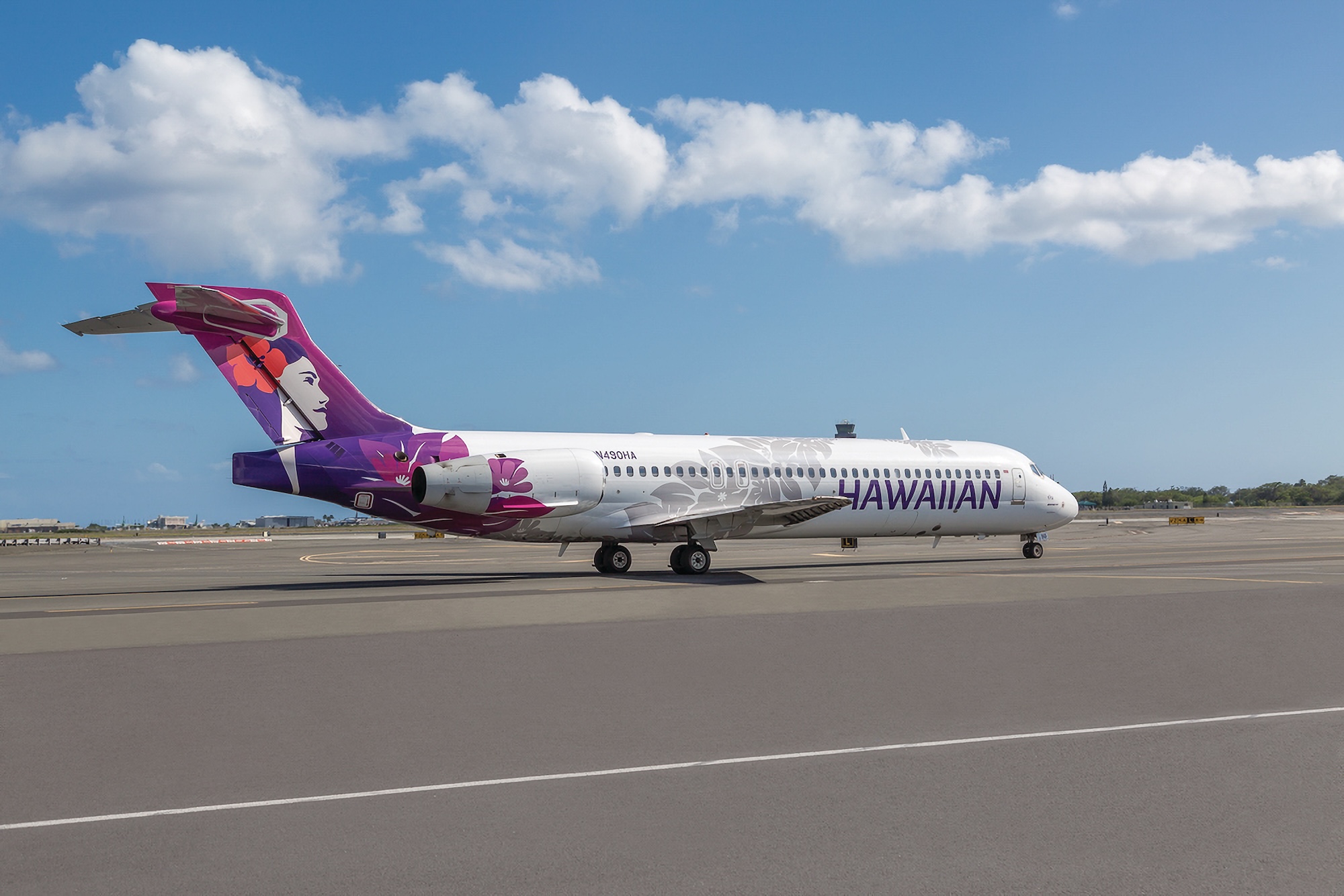
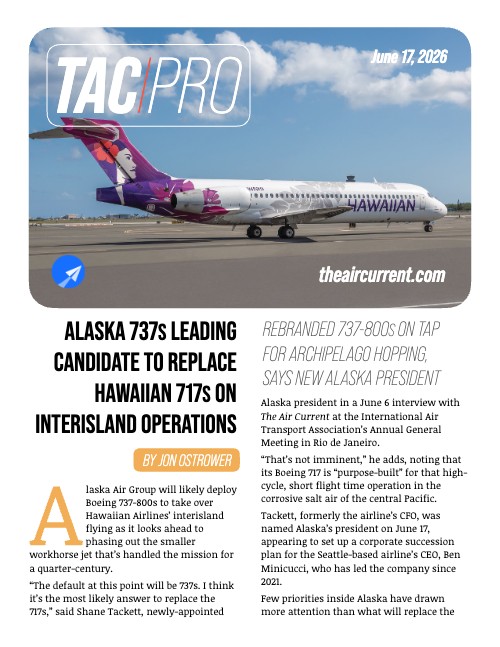
Alaska Air Group's leadership has signaled that Boeing 737-800s represent the most likely long-term successor to Hawaiian Airlines' fleet of Boeing 717s on interisland Hawaii routes, a mission the 717 has held for approximately 25 years. Shane Tackett, who serves as both Alaska's CFO and newly appointed president following a June 17 promotion, made the disclosure during an interview at the IATA Annual General Meeting in Rio de Janeiro. Tackett was careful to frame the transition as neither imminent nor final, acknowledging that the 717 remains uniquely suited to the operational demands of interisland flying — a point that carries significant engineering and economic weight given the aircraft's short-stage-length, high-cycle profile and exposure to corrosive central Pacific salt air.
The 717's fitness for the interisland mission is not incidental. Originally developed as the McDonnell Douglas MD-95 and designed for high-frequency short-haul operations, the aircraft's airframe and systems were optimized for the very cycle counts and turnaround cadences that define Hawaiian's interisland network — segments often under 30 minutes block-to-block. Transitioning to the 737-800, a significantly heavier and larger narrowbody with a design heritage oriented toward medium-haul routes, introduces real operational tradeoffs. The -800's higher minimum equipment requirements, different ground handling footprint, and increased fuel burn on sub-hour segments will require careful yield and capacity management across a thin-margin domestic island market. Pilots current on the 737 type within Alaska's mainline operation would represent a training-cost advantage, but any Hawaiian pilots transitioning off the 717 would face new type rating requirements.
From an airline strategy standpoint, the move reflects Alaska Air Group's broader post-merger effort to rationalize its combined fleet under what it has termed a "proudly all airplanes" integration approach — a posture that prioritizes operational synergies over aircraft-type proliferation. Retaining the 717 long-term would require Hawaiian to maintain a separate fleet type with its own training pipeline, simulator infrastructure, parts provisioning, and maintenance program. As the 717 is no longer in production and the global fleet continues to shrink, economies of scale on parts and vendor support will only erode further. The 737 platform, by contrast, anchors Alaska's existing mainline narrowbody operation and provides immediate commonality benefits across crew scheduling, maintenance, and ground infrastructure at the airline's scale.
Tackett's promotion to Alaska president is also a development worth tracking for industry observers and operators who follow airline labor and leadership dynamics. The move appears to establish a formal succession framework beneath CEO Ben Minicucci, who has led the carrier since 2021 through the significant turbulence of post-pandemic recovery, the failed Spirit Airlines period in the broader industry, and Alaska's own transformative acquisition of Hawaiian. Having the CFO step into the president role — particularly during a complex integration — signals that financial discipline and cost structure will remain central strategic priorities as the combined carrier works through fleet decisions like the 717 replacement.
For pilots operating or considering employment within the Alaska-Hawaiian system, the interisland transition timeline remains open-ended, but the directional signal is clear enough to inform career planning. Hawaiian pilots currently holding 717 type ratings should expect eventual retraining on 737-series equipment, while pilots already 737-qualified within Alaska's operation may see expanded opportunities as interisland flying absorbs more of the combined network's utilization. The broader lesson for the industry is a familiar one: niche, purpose-built aircraft that serve specific mission profiles with efficiency often outlast their expected service lives precisely because no direct replacement exists — but fleet economics and integration pressures eventually override operational elegance.