Here's Why The Boeing F-47 Could Become The Most Expensive Aircraft In History
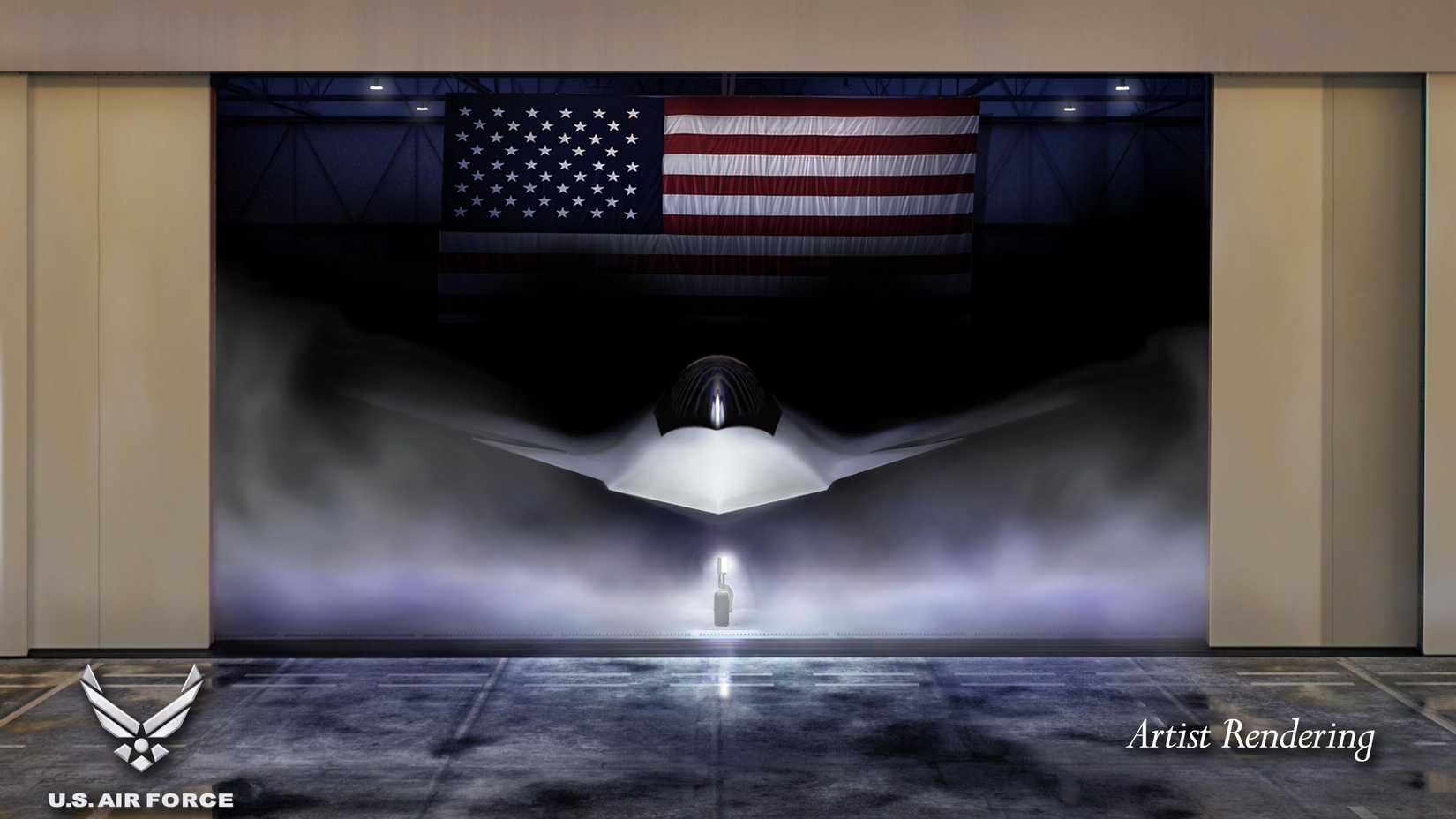
Boeing's F-47, the centerpiece of the Air Force's Next Generation Air Dominance program, is on a trajectory to become the most expensive individual aircraft in history, with a per-unit price estimated at approximately $300 million — roughly double the inflation-adjusted cost of the F-22 Raptor it is designed to succeed. The Department of Defense awarded Boeing the NGAD contract in early 2025, and the program is projected to consume $29 billion through 2029 alone, with total lifecycle costs currently estimated at $100 billion across a planned fleet of just 185 airframes. That extraordinarily small production run is central to understanding the cost calculus: unlike the F-35, which achieves relative cost efficiency through a 3,000-unit global order book spread across three service branches and 19 partner nations, the F-47 will be a deliberately classified, export-restricted platform with no allied sales to dilute per-unit development and manufacturing costs. The aircraft is purpose-built for the Indo-Pacific theater — specifically the long-range, contested airspace scenarios that the shorter-legged F-22 was never optimized to address — and the extreme operational sensitivity of its sixth-generation technologies makes export variants a near-impossibility, permanently foreclosing the economies of scale that might otherwise moderate costs.
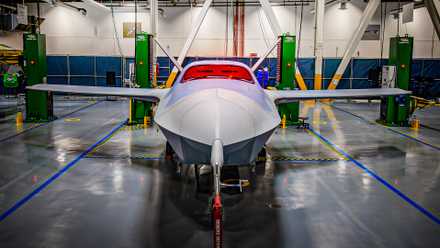
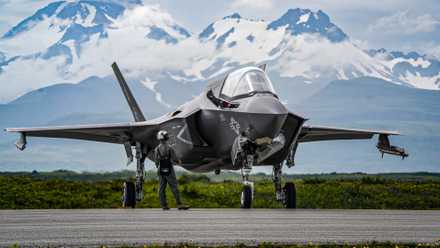
The program's cost risk is compounded by the unprecedented scope of what the Air Force is attempting to build simultaneously. The F-47 is designed not as a standalone fighter but as an airborne command node at the center of a larger kill web, intended to operate in concert with a planned fleet of roughly 1,000 Collaborative Combat Aircraft — autonomous loyal wingman drones that represent an entirely new class of military aviation being invented from scratch in parallel. This "system of systems" architecture means the true cost of F-47 operational capability extends well beyond the airframe price, encompassing the CCA fleet, the advanced data links required to manage it, and the ground and space-based infrastructure that enables it. Meanwhile, the F-35 program continues to generate its own cost drag, with persistent software and system shortcomings requiring ongoing investment even as production continues toward the 3,000-unit mark. Running two of the largest and most technologically complex defense aviation programs in world history concurrently, while simultaneously developing a new class of combat drones, represents a degree of industrial and financial risk with few historical precedents.
Boeing's own institutional health adds a significant risk layer that defense analysts and procurement officials cannot ignore. The company's recent track record on major defense contracts is marked by substantial overruns: the VC-25B Air Force One replacement program is years behind schedule and has generated hundreds of millions of dollars in losses, a situation so severe that the sitting administration sought a used 747-8 as an interim solution. Production of the FA-18E/F Super Hornet and F-15EX Eagle II at Boeing's St. Louis facilities has been repeatedly disrupted by labor actions, and the company lost the competition to replace its own E-4B Nightwatch aircraft to Sierra Nevada Corporation — a loss attributed in part to Boeing's diminished credibility in delivering on existing programs. These are not abstract reputational concerns; they are direct operational signals about Boeing's capacity to absorb the technical complexity and schedule pressure that a bleeding-edge sixth-generation fighter program will inevitably generate. The $100 billion cost projection should be viewed as a floor, not a ceiling, given the historical pattern of "requirements creep" and "vanishing vendor syndrome" — the progressive loss of suppliers and skilled workforce that crippled both the F-22 and B-2 Spirit programs during their boutique production runs.
For professional pilots and aviation operators, the F-47 story carries implications that extend beyond military airpower. Boeing's struggles across its defense portfolio are deeply intertwined with its commercial and business aviation operations, as they draw on shared manufacturing infrastructure, engineering talent, and corporate financial reserves. A major cost overrun or program restructuring on the F-47 would further strain a company that is simultaneously managing the 737 MAX certification aftermath, the 777X development timeline, and the ongoing rebuilding of its quality culture following the manufacturing scandals of the early 2020s. The health of Boeing as a viable dual-use aerospace manufacturer matters directly to operators flying its commercial and business jet platforms — from the 737NG and MAX series to the BBJ and 787 — because supplier network stability, parts availability, and long-term technical support all flow from the same industrial base. A defense contractor that is financially and operationally overstretched is also a commercial aerospace partner operating with reduced bandwidth for the product support and certification work that line operators depend on.
The broader trajectory of sixth-generation military aviation also signals where the entire aerospace industry is heading in terms of systems integration complexity, autonomy, and sensor fusion — technologies that will inevitably migrate into commercial and business aviation over the following decade. The F-47's role as a crewed node managing autonomous wingmen is an accelerated expression of the same human-machine teaming concepts beginning to appear in advanced avionics suites, single-pilot operations research, and Urban Air Mobility frameworks. The cost and schedule difficulties that attend the F-47's development are partly a function of this technological ambition, and the lessons learned — both positive and cautionary — will shape how the FAA, manufacturers, and operators approach the certification and integration of increasing autonomy in civil aviation. What the defense world is struggling to build and pay for today often defines what the civil world is flying routinely within a generation.







 Read original article