Why Boeing's MQ-28 Ghost Bat Just Gatecrashed The US Air Force's Next Big Drone Decision
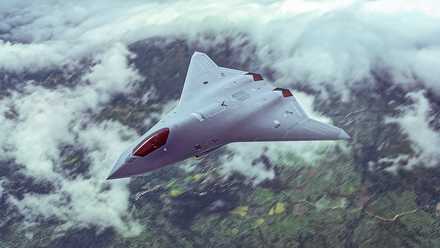
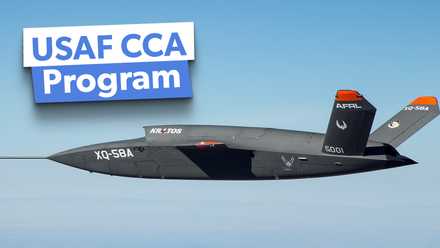
Boeing's MQ-28 Ghost Bat, originally developed by Boeing Australia to meet Royal Australian Air Force requirements, has emerged as a serious contender in the expanding and fiercely competitive US Air Force Collaborative Combat Aircraft program despite being passed over for the program's Increment 1 award. The Air Force selected Anduril's YFQ-44 and General Atomics' YFQ-42 for Increment 1 — a decision driven by speed of fielding and cost rather than maximum capability — with a winner between the two expected to be announced in September 2026. Boeing, however, has continued maturing the Ghost Bat for Australian service, where eight airframes were operational by mid-2026, while simultaneously positioning the platform as a technology feeder and export candidate for allied air forces operating common aircraft types. Former Air Force Secretary Kendall publicly characterized the MQ-28 as a "risk reduction" tool, and the service has confirmed using at least one Ghost Bat to support autonomy development efforts, signaling that the aircraft is already embedded in US uncrewed systems research even outside a formal program-of-record relationship.
The CCA program itself represents one of the most consequential and conceptually unsettled shifts in air combat doctrine in a generation. Increment 1 was deliberately scoped as a minimum viable capability — a way to begin operationalizing the loyal wingman concept and building institutional knowledge — but Increment 2 must solve a qualitatively different and far harder set of engineering problems. The Air Force's stated requirement for CCAs to achieve a 700-nautical-mile combat radius, matched against an F-47 sixth-generation fighter with a 1,000-plus-nautical-mile combat radius, imposes serious demands on range, payload, low-observable design, electrical power generation, and thermal management. The distances inherent in any credible Indo-Pacific conflict scenario make these not aspirational targets but operational necessities. The Ghost Bat's advertised 2,000-nautical-mile ferry range gives it a significant edge in that calculus, and its Australian design lineage — built to operate alongside F/A-18s, F-35As, E-7 Wedgetails, and P-8 Poseidons, all of which are central to US and allied Pacific operations — makes integration into existing US Air Force and Navy fleets structurally more straightforward than a clean-sheet American design.
The breadth of competition for Increment 2 and beyond reflects how seriously the defense industry has read the room on autonomous combat aviation. Northrop Grumman's Project Lotus, now designated YFQ-48A Talon Blue, returned to the field after losing Increment 1 by cutting 1,000 pounds of weight, reducing parts count by 50 percent, and accelerating production timelines by 30 percent — a striking example of how rejection from a government program can force genuine engineering discipline rather than program collapse. Lockheed Martin is self-funding its Vectis high-end stealth CCA after the Air Force deemed its Increment 1 bid too costly, betting that the service will eventually conclude it needs a more capable, survivable platform against peer-threat integrated air defenses. Meanwhile, Shield AI's X-Bat is pursuing an entirely different conceptual path, designed as a fully autonomous tail-sitting combat aircraft intended to be a peer to crewed fighters rather than a complement to them, while Hermeus is developing a high-Mach and eventually hypersonic CCA in the Darkhorse/Quarterhorse program. The Navy is simultaneously exploring its own CCA variants, including low-cost one-way attack munitions deployable from carrier decks — a definition of "drone" that differs sharply from the persistent, reusable wingman concept the Air Force and RAAF have pursued with the Ghost Bat.
For professional pilots and aviation operators, the CCA program's trajectory carries implications that extend well beyond military airspace. The autonomy architectures, sense-and-avoid systems, human-machine teaming protocols, and airspace integration standards being developed under programs like CCA will inevitably migrate into civilian and business aviation contexts over the following decade. The question of how a crewed aircraft communicates with, commands, and maintains situational awareness over an autonomous wingman is structurally analogous to emerging questions in urban air mobility, advanced air mobility cargo operations, and single-pilot or reduced-crew commercial transport. The investment being made in real-time autonomous decision-making, datalink reliability in contested environments, and fault-tolerant flight management systems under military CCA development is generating intellectual and engineering capital that suppliers, avionics manufacturers, and airspace regulators will draw on directly. The pace at which programs like the Ghost Bat are maturing — from first flight in 2021 to eight operational RAAF airframes by mid-2026 — signals that the transition from autonomous aircraft as experimental novelty to operational asset is already well underway, and that the regulatory and operational frameworks governing all aviation will need to keep pace with that reality.







 Read original article