Dassault Completes Falcon 10X First Flight
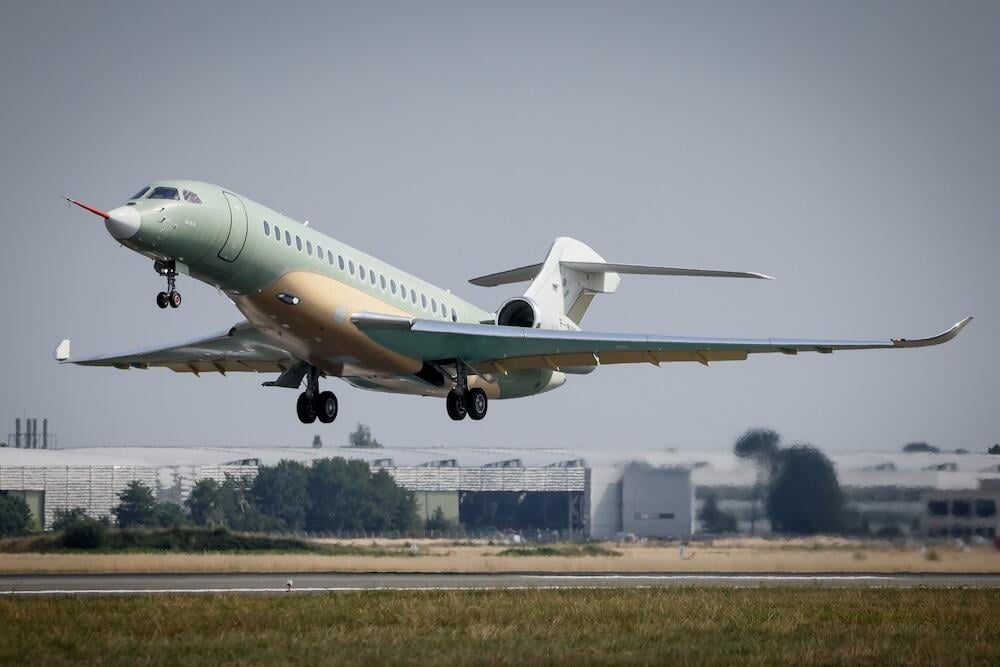
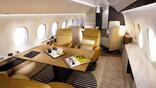
Dassault Aviation completed the inaugural flight of its Falcon 10X on June 19, 2026, lifting off at 11:10 a.m. local time from Bordeaux-Mérignac Airport, the same facility where the aircraft is assembled. Test pilot Sébastien Dupont de Dinechin led the crew on what marks the formal beginning of Dassault's flight test campaign for its largest and most capable business jet to date. The 10X represents a fundamental departure from the Falcon family's traditional tri-engine configuration, instead pairing two Rolls-Royce Pearl 10X engines beneath a new supercritical wing to deliver a projected range in the vicinity of 7,500 nautical miles. The airframe features an exceptionally wide fuselage — approximately 8 feet of cabin width — with large oval windows and generous stand-up headroom, positioning the type squarely in the ultra-large cabin segment that has grown increasingly competitive over the past several years.
For operators and pilots evaluating the ultra-long-range market, the 10X's first flight closes a meaningful gap between announcement and flight-test reality. Dassault unveiled the program at EBACE 2021, establishing the 10X as a direct response to the Gulfstream G700 and Bombardier Global 7500, both of which entered service earlier. The first flight milestone now opens the door to EASA and FAA certification work, though the path from initial flight to type certificate typically spans two or more years depending on the complexity of the program and the scope of any design refinements discovered during testing. Operators currently weighing fleet decisions in the ultra-large category will need to calibrate that timeline carefully against their own replacement or expansion schedules.
From a flight operations standpoint, the 10X introduces several considerations that distinguish it from Dassault's existing Falcon lineup. The twin-engine architecture — a shift for a manufacturer long associated with its center-engine Falcon 7X and 8X — demands updated type ratings and recurrent training profiles, and crews transitioning from other Falcon types will encounter a substantially different systems environment. The Pearl 10X engines, derived from the same Rolls-Royce family powering the Bombardier Global 5500 and 6500 in their Pearl 15 variant, bring a modern FADEC-managed powerplant with established MRO infrastructure, which is a practical advantage for operators concerned about maintenance network access on long international routings.
The broader significance of the 10X first flight extends into the competitive dynamics of the business aviation market at a moment when demand for ultra-long-range, ultra-large-cabin aircraft has remained relatively resilient despite macroeconomic pressures elsewhere in the industry. Gulfstream's G700 achieved certification and entered service, and Bombardier has continued refining its Global 7500 and Global 8000 offerings, meaning Dassault enters the flight test phase as the third major competitor in this tier rather than a pioneer. That positioning places added pressure on Dassault to deliver a compelling combination of range, cabin environment, and operating economics, while also executing a certification program efficiently enough to capture orders from operators who might otherwise commit to currently certified alternatives. The outcome of the 10X test program will be closely watched by fractional providers, flight departments, and charter operators alike as they plan fleet compositions well into the next decade.





 Read original article