AIN Archives - Leeham News and Analysis
JetZero broke ground on June 15 on what will become the largest commercial aircraft manufacturing facility in the United States, an eight-million-square-foot plant at Piedmont Triad International Airport in Greensboro, North Carolina. The facility is twice the footprint of Boeing's storied Everett plant, which for decades served as the production home of the 747, 767, 777, and 787 programs. JetZero plans to manufacture its Z4 blended-wing-body airliner at the site, with the company projecting a $4.7 billion investment and more than 14,500 jobs in Guilford County over the next decade. North Carolina officials characterized the commitment as the largest economic development project in the state's history, backed by an incentive package described as the most substantial ever offered to a startup company in any sector nationwide. The scale of the undertaking signals that JetZero is advancing beyond concept and into industrial infrastructure, a milestone that distinguishes it from the many advanced aircraft programs that have never progressed past renderings and press releases.
The blended-wing-body configuration at the heart of the Z4 program represents a fundamental departure from conventional tube-and-wing airliner design. Rather than a cylindrical fuselage attached to wings, a BWB integrates the passenger cabin and cargo volume into a lifting body that generates aerodynamic efficiency across the entire airframe. Proponents of the design have long argued it offers substantial fuel burn reductions compared to conventional aircraft, with estimates frequently cited in the range of 30 to 50 percent depending on mission profile. For airline operators and charter operators working under increasing pressure to reduce carbon intensity per seat-mile, the Z4 would represent a step-change rather than an incremental improvement. The size of the factory also implies JetZero's production ambitions extend well beyond niche quantities, suggesting the company believes the BWB can compete at volume with conventional narrowbody and widebody airliners.
A separate but operationally significant development reported across the same period involves DUST Identity's launch of its Theseus platform, designed to address the persistent and growing problem of counterfeit aircraft parts entering MRO supply chains. The platform combines diamond nanoparticle-based physical authentication tags with AI-assisted verification of airworthiness documentation, giving MRO providers independent confirmation of a part's identity and provenance without relying solely on paperwork supplied by sellers. The FAA estimates that approximately two percent of the 26 million parts installed on aircraft annually may be counterfeit, a figure that translates to more than 500,000 suspect components per year across the U.S. fleet. For Part 91, 91K, and 135 operators, this is not a theoretical concern — counterfeit parts have been linked to fatal accidents and enforcement actions, and operators bear direct legal exposure when unapproved parts are found during audits or accident investigations. A scalable authentication technology that moves verification beyond document review and into physical material analysis addresses a vulnerability that existing FAA reporting mechanisms have been unable to adequately contain.
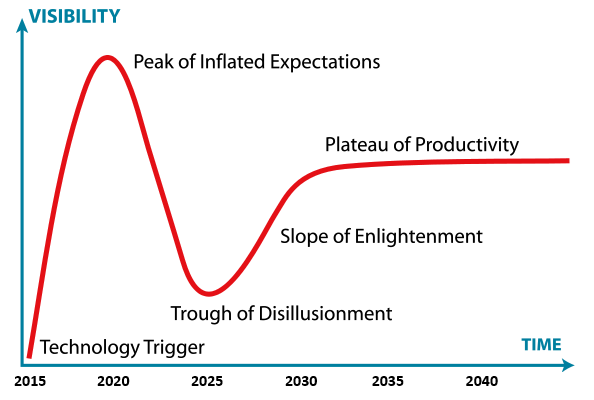
The collection of news items also reflects broader tensions in commercial and business aviation at the geopolitical and technology levels simultaneously. The paralysis of Gulf-region business aviation operations during the Iran-U.S.-Israeli conflict in early 2026 underscored that even the flexibility advantage business aviation holds over commercial airlines has geographic limits when airspace closures are comprehensive and abrupt. Operators managing long-range trips through the Middle East corridor learned that prepositioned aircraft, diversionary planning, and crew contingencies must account for scenarios in which entire regional airspace networks close with limited warning. Meanwhile, the Singapore Air Show's near-absence of commercial orders — one order for four A321neos — and Leeham's ongoing coverage of the alternative propulsion hype cycle entering its disillusionment phase together paint a picture of an industry recalibrating expectations after years of overreach. The JetZero factory groundbreaking stands as the most concrete counter-signal to that disillusionment, representing a company that has moved from advocacy to construction at a scale that demands serious attention from airline planners, investors, and the regulators who will ultimately have to certify an entirely new class of large transport aircraft.






 Read original article