Why The Country That 1st Flew A Hypersonic Weapon May Now Be A Decade Behind In 6th-Gen Fighters
Russia's early deployment of the Kh-47M2 Kinzhal hypersonic missile, announced publicly by President Putin in March 2018, generated significant concern among Western defense planners and appeared to signal a decisive Russian technological leap. The missile, which entered experimental combat duty on December 1, 2017, was described by Moscow as capable of Mach 10 speeds with maneuverability sufficient to defeat existing air defense networks at ranges exceeding 2,000 kilometers. The announcement accelerated hypersonic weapons development programs across NATO states and prompted substantial investment in new intercept technologies. However, analysts noted even at the time that the Kinzhal is more accurately characterized as an air-launched ballistic missile derived from existing Iskander technology rather than a true hypersonic glide vehicle employing boost-glide aerodynamics — the more sophisticated concept being pursued by the United States and China. The distinction matters operationally, but Russia's achievement in fielding any hypersonic-speed weapon ahead of its rivals nonetheless represented a genuine milestone and forced adversaries to reckon with compressed response timelines in contested airspace.
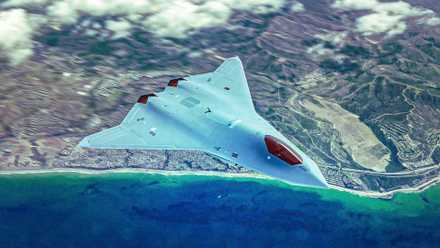
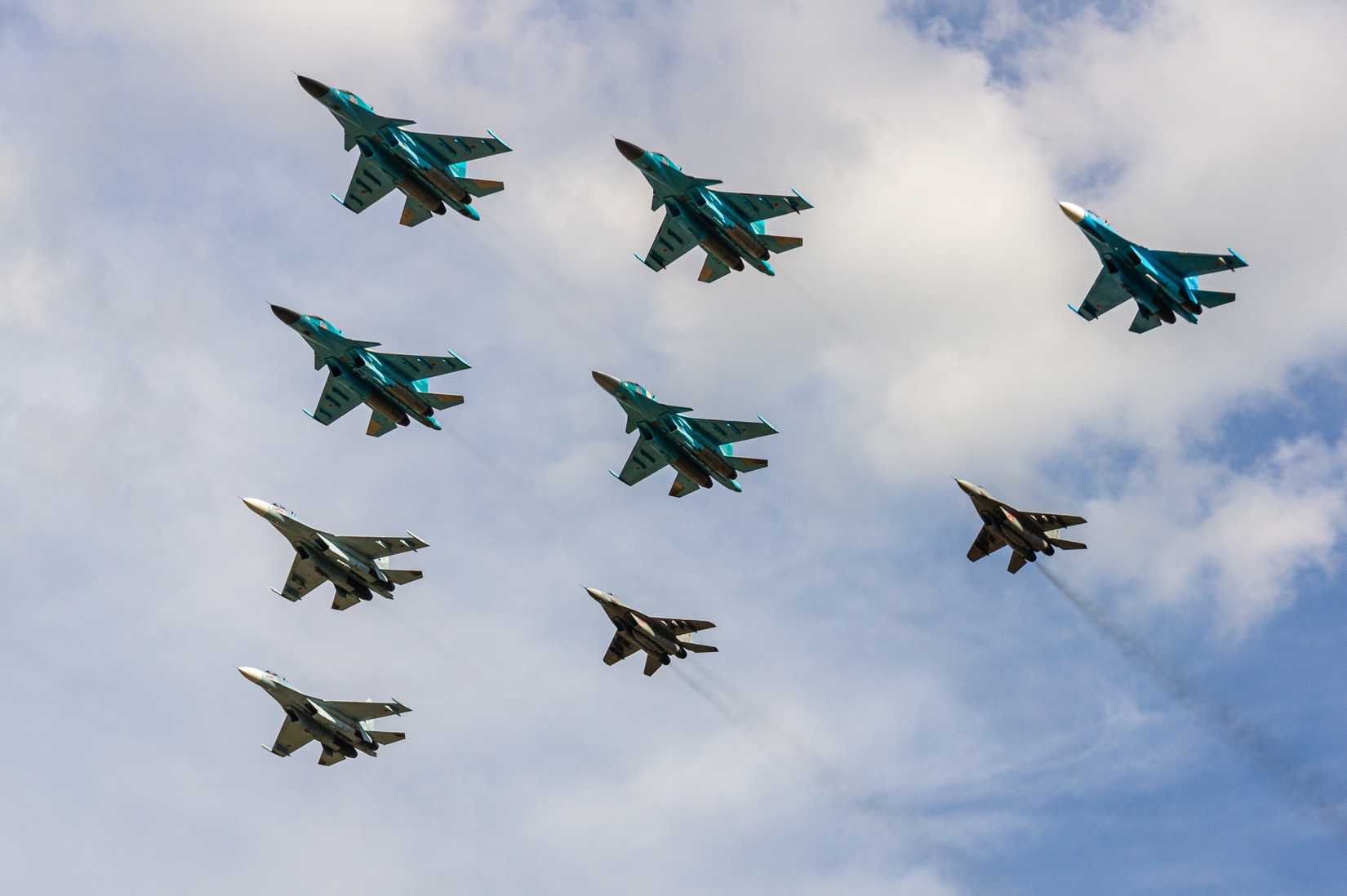
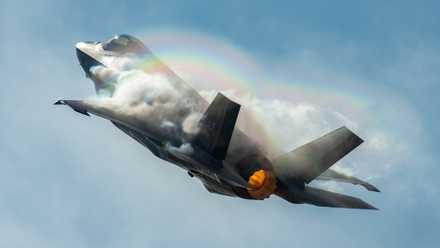
The broader strategic picture has shifted substantially in the years since the Kinzhal's debut. The United States has unveiled the F-47 under its Next Generation Air Dominance program, while Europe is simultaneously pursuing two distinct sixth-generation initiatives — the Franco-German-Spanish Future Combat Air System and the UK-Italy-Japan Global Combat Air Program. Most significantly for threat assessment purposes, China has already flown multiple next-generation prototypes broadly identified as the J-36 and J-50, demonstrating an accelerating indigenous aerospace industrial capacity that was not widely anticipated at this pace a decade ago. Russia, by contrast, remains focused on fifth-generation objectives it has not yet fully achieved. The Sukhoi Su-57, the country's primary stealth fighter and its intended answer to the F-22 and F-35, continues to be produced at rates substantially below stated program targets, leaving frontline Russian aviation units equipped predominantly with legacy platforms rather than the networked, low-observable aircraft its rivals are fielding at increasing scale.
The Su-75 Checkmate program illustrates the depth of Russia's industrial difficulties with particular clarity. Unveiled at the 2021 MAKS Airshow with considerable marketing fanfare as a lower-cost fifth-generation export fighter, the Checkmate was intended to serve dual purposes: generating hard currency through foreign sales while demonstrating that Russia's aerospace sector remained competitive under mounting economic pressure. The aircraft's first flight was originally scheduled for 2023, subsequently slipped to 2024, then 2025, and as of mid-2026 has still not occurred. The article from which this analysis draws does not indicate a revised firm date. This pattern of cascading delays reflects sanctions-driven supply chain disruption, the diversion of industrial resources toward the ongoing Ukraine conflict, and structural weaknesses in Russia's defense manufacturing base that predate the war.
For professional aviators and aviation operators, the significance of this development extends beyond academic interest in foreign military procurement. The widening gap between Russian airpower capabilities and those of the United States and its allies directly shapes the operational environment in which defense-adjacent aviation activities occur, influences threat modeling for government contract operators, and informs the geopolitical conditions under which international aviation commerce is conducted. Countries that had historically considered Russia a viable source of advanced military aircraft — including several that operate Russian-supplied platforms across Africa, the Middle East, and South Asia — now face long-term questions about parts supply, upgrade pathways, and the strategic value of those platforms as their operators consider next-generation acquisitions. The reorientation of those potential customers toward Western or Chinese suppliers carries implications for the competitive landscape in defense aviation broadly.
The contrast between Russia's 2018 hypersonic milestone and its current position in the sixth-generation development race reflects a broader pattern observable across advanced technology sectors: a single capability breakthrough, however genuine, does not translate automatically into sustained industrial leadership. Sixth-generation fighter development requires not only engineering innovation but deep and resilient supply chains for advanced materials, microelectronics, sensors, and software — precisely the domains where Western export controls and the economic consequences of the Ukraine conflict have most severely constrained Russian industry. The United States and its allies are effectively compressing the timeline on which they will achieve air dominance advantages that could persist for decades, while China's parallel progress suggests the future competitive environment for airpower will be defined by two dominant poles rather than three. For operators across Part 91, 91K, 135, and airline contexts, understanding this structural shift in the global military aviation balance provides essential context for interpreting airspace developments, regulatory changes in contested regions, and the evolving geopolitical risk landscape that affects international operations planning.






 Read original article