How Qantas' $128 Billion Fleet Renewal Project Is Reshaping The Airline's Future
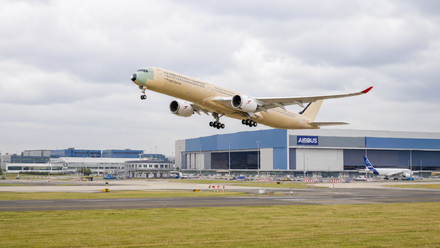
Qantas is executing one of the most structurally comprehensive fleet renewal programs in modern commercial aviation history, a four-project, multi-decade transformation estimated at A$128 billion that will replace virtually every category of aircraft in its operation. Project Winton covers the narrowbody and short-haul segment with 48 Airbus A321XLRs and 29 A220-300s displacing legacy Boeing 737-800s and 717s. Project Fysh adds 12 standard A350-1000s and 12 Boeing 787-10s to phase out the aging A330 fleet and eventually the A380s. A fourth, still-unnamed program is taking shape around a potential order for up to 20 additional widebodies — either A350s or 787-10s — that would accelerate the A380 retirement timeline beyond what the existing orders could accomplish. Underlying all of it is Project Sunrise, the most operationally ambitious element: 12 purpose-modified A350-1000ULRs with an additional 5,283-gallon rear center fuel tank engineered specifically to fly nonstop from Sydney to London Heathrow and Sydney to JFK, sectors that have never been operated commercially on a scheduled basis. The first of those aircraft has already flown in Toulouse and is currently in the paint shop ahead of flight testing resumption, with initial delivery now set for April 2027 following a four-month slip attributable to Airbus supply chain pressure.
The financial foundation supporting this level of capital deployment is significant. Qantas Group posted A$1.456 billion in underlying profit before tax for the first half of FY2026, a 5% year-over-year increase, while simultaneously spending A$1.8 billion in net capital expenditure in that same six-month window. Full-year FY2026 capital expenditure is projected between A$4.1 and A$4.3 billion, rising to A$5.1–5.4 billion in FY2027 as delivery rates increase. The fuel efficiency case is central to the investment thesis: the incoming aircraft burn 20% to 30% less fuel per seat than the platforms they replace, translating to an estimated A$150–200 million in additional annual earnings by 2027 according to financial analysis cited in the article. That margin expansion is occurring simultaneously with a reduction in carbon intensity per passenger kilometer — a metric with direct commercial implications for corporate travel contract renewals and CORSIA compliance as the compliance baseline tightens through the decade.
For working pilots and aviation operators, the Qantas renewal carries several layers of practical relevance. The Project Sunrise A350-1000ULR creates an entirely new operational category: ultra-long-haul flying measured in 20-plus-hour block times, with the aerophysiological and crew rest management challenges that entails. The University of Sydney-partnered cabin design, including a dedicated mid-cabin Wellbeing Zone, signals that Qantas is treating crew and passenger physiology as a core operational variable rather than a secondary concern, a philosophy that will likely influence how regulators and other carriers approach rest requirements and fatigue risk management on similar routes. The A321XLR deployment across domestic and short-haul international operations is separately significant: it opens thinner routes to single-aisle economics while retaining range margins that 737-800s could not match, a shift that will affect competitive dynamics on trans-Tasman and Pacific island sectors where Qantas and regional operators currently share demand.
The broader pattern Qantas represents is one accelerating across multiple major carriers simultaneously. The confluence of aging widebody fleets — A330s, 777 classics, A380s — reaching structural review points at the same time that A350, 787, and A321XLR deliveries are becoming available is producing fleet transition programs of unusual scale and complexity. Airbus and Boeing supply chains are already under strain meeting existing backlogs, and the four-month Sunrise delay is a direct product of that pressure. For operators across the industry, the lesson is straightforward: delivery timelines on next-generation narrowbodies and widebodies carry meaningful execution risk regardless of order priority, and network planning assumptions built around specific delivery windows require contingency buffers that may not have been necessary in earlier production cycles. Qantas has absorbed this slip without strategic disruption, but smaller operators with tighter network dependencies on single aircraft types face materially higher exposure to the same supply chain dynamics reshaping every major renewal program currently underway.












 Read original article