Delta Pilots Avert Disaster After American Jet Cleared Into Their Path At Boston Logan
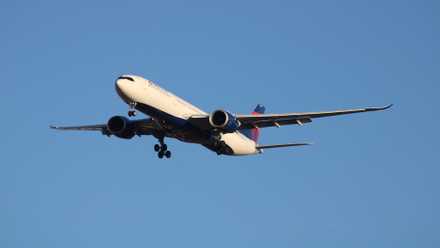
A runway incursion at Boston Logan International Airport on June 20, 2026 was averted only by the timely intervention of the Delta Air Lines Flight 2351 flight crew, who initiated a go-around on runway 33L after spotting American Airlines Flight 3161 departing from intersecting runway 27 without ATC intervention. Audio captured in a recording circulated on social media reveals that the Delta Airbus A319 crew called their go-around intention before the controller had identified the conflict, with the tower controller then querying the American Boeing 737-800 crew with "Where are you going?" — suggesting an acute breakdown in situational awareness at the radar position. The FAA has confirmed the event occurred approximately 11:30 AM local time and has opened an investigation. According to the video evidence, the American aircraft crossed the runway intersection at roughly the moment the Delta jet would have touched down under a normal approach profile, underscoring the razor-thin margins involved.
For working pilots — particularly those operating in complex Class B terminal environments — the incident reinforces a fundamental principle of crew resource management: pilots cannot delegate final safety responsibility to ATC. The Delta crew's proactive callout, made before the controller recognized the incursion, is a textbook demonstration of independent visual scanning during final approach and assertive communication under time pressure. Equally instructive is the American crew's response: they continued the takeoff roll, having received a valid clearance, which was operationally correct but highlights how simultaneous valid clearances can produce catastrophic conflicts when controller situational awareness lapses. Operators flying high-frequency routes into airports with complex intersecting runway geometries — particularly those carrying intersecting departure and arrival flows — should treat this incident as a concrete case study for recurrent training on go-around decision authority and the limits of ATC separation assurance.
The Boston Logan incident does not exist in isolation. Boston has been publicly ranked fourth among major U.S. airports for runway incursion frequency, a designation that has prompted Massport to engage the FAA on infrastructure changes including potential taxiway redesigns. The airport has experienced prior high-profile near-misses, including a separate go-around event involving a Delta A330 and a Cape Air aircraft on the runway. This clustering of events at a single facility points to systemic issues — complex runway geometry, high traffic density, and controller workload — that individual crew vigilance alone cannot fully mitigate. The FAA's push to upgrade Airport Surface Detection Equipment (ASDE-X) and expand Airport Surface Surveillance Capability (ASSC) reflects an institutional acknowledgment that the current infrastructure is insufficient for the operational tempo at major hubs.
The broader national picture is sobering. Since the collision of American Airlines Flight 5342 with an Army helicopter near Reagan National Airport in January 2025 — which killed all 67 people aboard the regional jet — runway and airspace incursion events have remained a persistent problem despite heightened regulatory attention. The subsequent fatal runway collision between an Air Canada Express regional jet and a LaGuardia Airport fire truck, in which both pilots were killed when the cockpit was destroyed, further demonstrated that loss-of-separation events are occurring across multiple aircraft-vehicle interaction categories, not just aircraft-to-aircraft conflicts. The National Transportation Safety Board has issued safety recommendations in the wake of these accidents, but the cadence of serious incidents suggests implementation is lagging behind the operational risk environment. For airline, charter, and business aviation operators, the pattern makes a compelling case for reinforcing sterile cockpit discipline during approach and departure phases, briefing specific go-around triggers at high-risk airports during preflight planning, and treating any ambiguous ATC clearance in the terminal environment as a prompt for immediate clarification rather than assumed approval.








 Read original article