Qatar Airways Is Suddenly Ending All Airbus A380 Flights To Australia
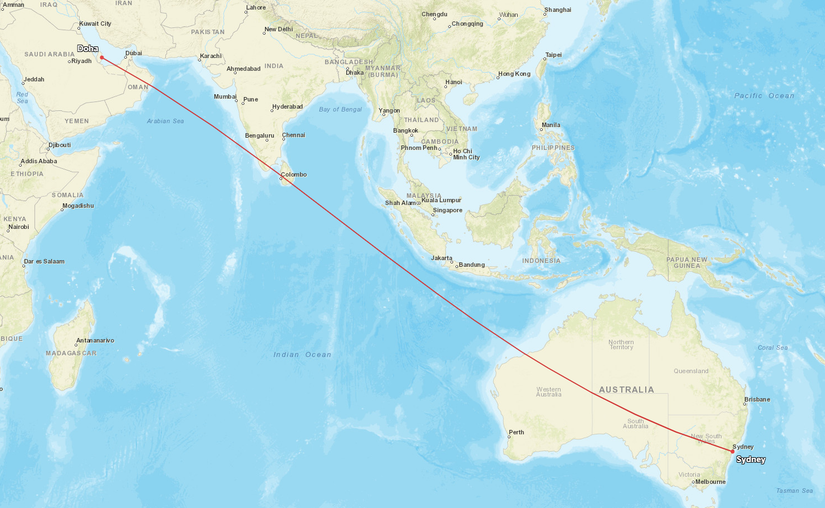
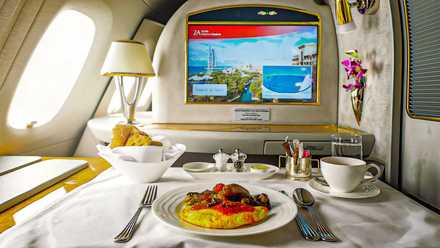
Qatar Airways has quietly closed the chapter on its Airbus A380 operations to Sydney Kingsford Smith Airport, substituting the 777-300ER on what had been a daily superjumbo rotation since 2016. The decision, revealed through Cirium scheduling data, means the A380 — which last touched down at SYD on March 22, 2026, before geopolitical disruptions associated with the 2026 Iran Crisis grounded the fleet — will not resume on the route as previously planned for September 16. The 354-seat 777-300ER that replaces it carries meaningfully less capacity than the A380's typical configuration, and critically, none of those seats will be in a first class cabin. Qatar Airways' A380 product had been a flagship offering on the Kangaroo Route corridor, and its absence signals a deliberate, demand-driven recalibration rather than a temporary operational workaround.
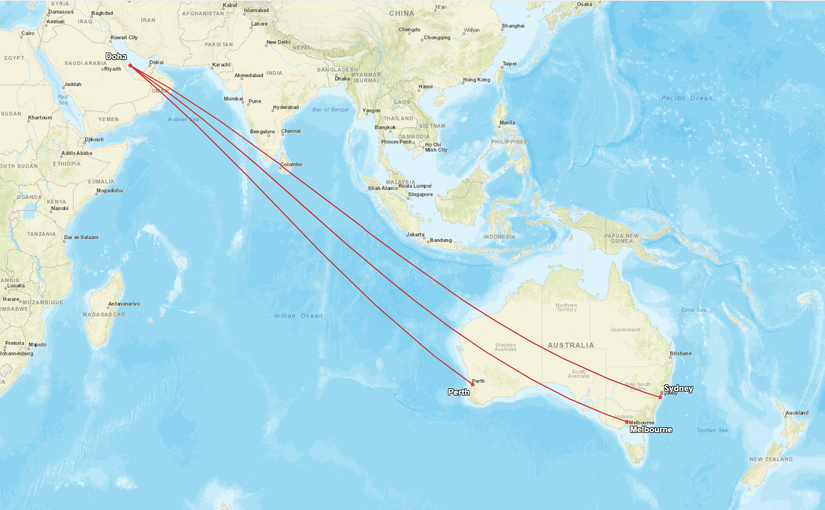
The operational implications for pilots and crew are significant in scope. Qatar Airways had flown 2,685 Doha-to-Sydney rotations on the A380 between 2016 and early 2026, representing a sustained, high-frequency commitment to the type on one of the world's longest thin-premium routes. The carrier had previously withdrawn the A380 from Melbourne after 2020 — accumulating 1,004 departures before discontinuing — and similarly wound down Perth A380 service after 2025, now substituting A350s and 777s on both. This pattern across all three Australian ports strongly suggests a structural, fleet-wide strategy rather than route-specific economics. For qualified A380 crews at Qatar Airways, the shrinking route map for the type may translate to reduced line opportunities on the superjumbo, potentially accelerating transitions to the A350 or 777 fleets where the carrier is evidently doubling down.
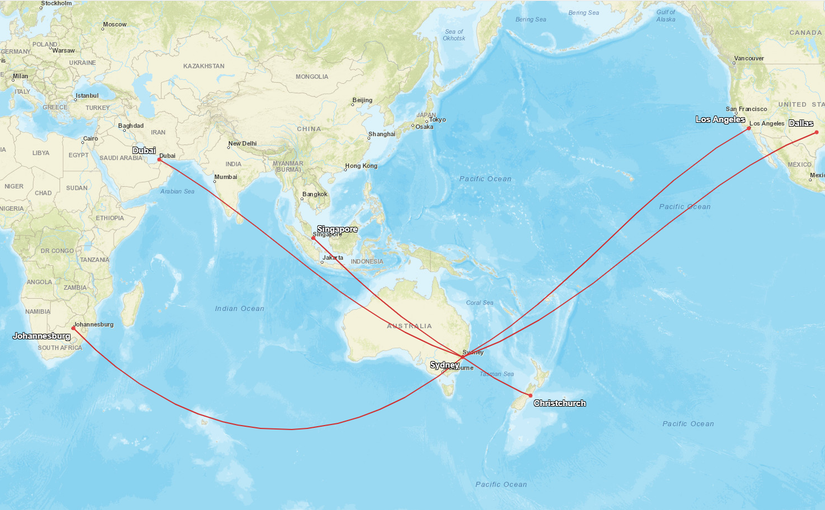
From a broader network perspective, the move reflects an airline recalibrating premium seat supply against uncertain demand in the wake of successive disruptions — pandemic contraction followed by geopolitical shock. The downgage to the 777-300ER is a conservative, reversible step: the aircraft offers nearly equivalent range on the Doha-Sydney sector and maintains business class product, but the elimination of first class reduces Qatar's ability to compete at the very top of the fare ladder against rivals still operating configured superjumbos to Australia. Emirates continues to operate twice-daily A380 service from Dubai to Sydney — one of those rotations extending through to Christchurch — while Singapore Airlines maintains twice-daily A380 frequency between Sydney and Changi. Qantas, as the dominant A380 operator out of SYD, schedules the type to four international destinations in June 2026 alone. Qatar's withdrawal from the superjumbo tier at Sydney therefore cedes ground in a premium cabin arms race that Emirates and Singapore Airlines show no signs of abandoning.
For Part 91 and charter operators serving the ultra-long-haul business jet market — segments that frequently benchmark against first-class airline product when competing for high-net-worth travelers on routes like Doha-Sydney — Qatar's pullback is a data point worth tracking. When a major carrier removes first class entirely from a flagship intercontinental pairing, it reflects underlying yield compression at the top of the market on that corridor, which can influence corporate travel policy and private aviation demand in the same geography. Meanwhile, the broader industry trend of legacy superjumbo operators quietly allowing their A380 networks to contract — rather than retire the type outright — reflects the aircraft's ongoing utility as a high-density workhorse while carriers remain cautious about deploying 500-plus seats of capacity on all but their most proven high-demand corridors. Qatar's Australian experience, spanning three airports, nearly a decade, and thousands of rotations, now stands as a case study in how quickly strategic fleet commitments can unwind when geopolitical and macroeconomic headwinds align.






 Read original article