Why Delta Air Lines' 20 Airbus A350-1000s Signal A Completely Different Long-Haul Bet Than United
Delta Air Lines is positioning itself to become the first US carrier to operate the Airbus A350-1000, with deliveries beginning in late 2026 under a firm order for 20 aircraft placed in January 2024, accompanied by options for 20 more. The aircraft, stretching 239 feet 6 inches and roughly 23 feet longer than the A350-900 Delta already operates in a fleet of 26, brings increased passenger and cargo capacity on a platform that shares the same wing, Rolls-Royce Trent XWB powerplant, and composite airframe as its smaller sibling. Airbus claims a 25% fuel burn and operating cost advantage over previous-generation widebodies, a figure rooted in the composite fuselage's weight reduction, aerodynamic refinements, and the Trent XWB's thermal efficiency. For Delta, the type addresses two aging pillars of its international network: the 767-300ER, a transatlantic workhorse that has become increasingly expensive to maintain and operate, and the A330-200 and -300, which lack the range-efficiency profile necessary to compete on the longest sectors Delta targets in Asia-Pacific, India, and the Middle East. With a published range of approximately 8,700 nautical miles, the A350-1000 opens city pairs that neither the 767 nor the A330 can serve nonstop, giving Delta routing options that did not previously exist in its network planning toolkit.
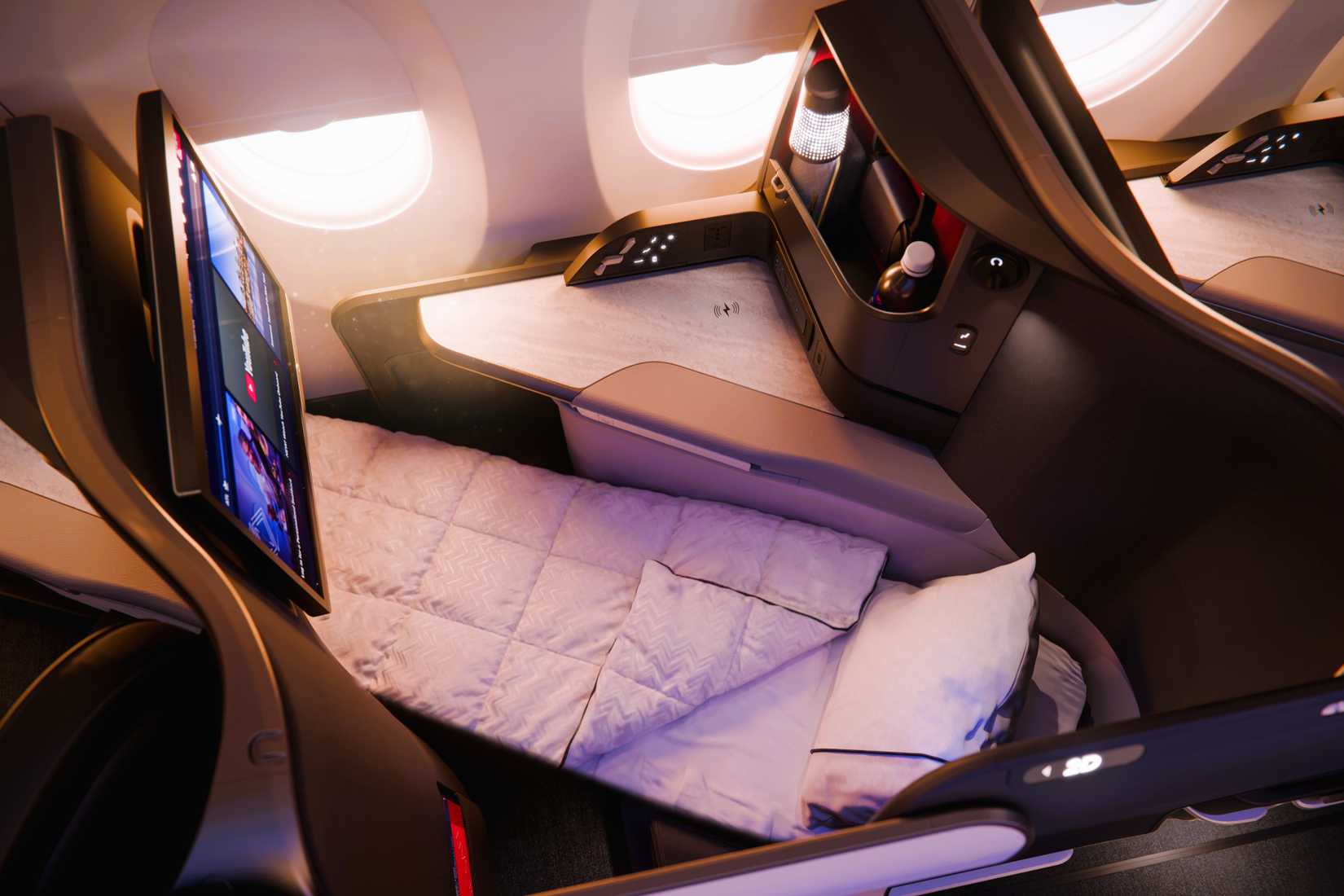
The cabin configuration Delta has selected is the most consequential and commercially aggressive aspect of the order. Approximately half of the aircraft's seats will occupy premium cabins, a ratio that is extraordinary for a US major carrier and would be considered bold even among European and Asian flag carriers known for premium-heavy configurations. The forward section carries 53 next-generation Delta One Suites in a 1-2-1 direct-aisle-access layout, each featuring an 83-inch lie-flat bed — longer than anything currently in Delta's widebody fleet — a 24-inch 4K QLED touchscreen, sliding privacy door, and access to a self-serve refreshment station within the Delta One cabin. The suites are manufactured by Thompson Aero Seating and are designed to maximize usable volume within each position rather than depending on cabin width. Behind Delta One sits an expanded Premium Select section, followed by Comfort+ and Main Cabin. The arithmetic of a 50% premium split is straightforward and unforgiving: the configuration only produces superior economics if the routes it serves generate a sustained volume of passengers willing to pay business and premium economy fares. If corporate travel demand or premium leisure softens materially on the ultra-long-haul sectors the A350-1000 is assigned to, the airline is operating with a large inventory of high-cost seats that cannot be discounted down to economy levels without structural revenue damage.
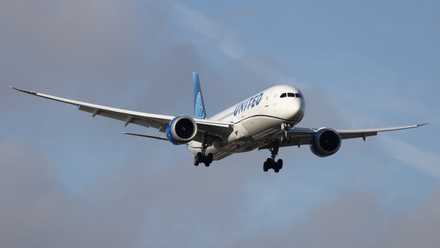
The competitive contrast with United and American reveals three distinct interpretations of what long-haul aviation will look like through the early 2030s. United has built its near-term widebody expansion around high-volume Boeing 787 deliveries, prioritizing flexibility, network density, and the ability to open or add frequency on a large number of thinner international markets. American operates an all-Boeing widebody fleet with no current Airbus orders, reflecting both historical fleet philosophy and the financial constraints of its balance sheet during the post-pandemic recovery period. Delta's approach is a deliberate concentration of capital into a smaller number of larger, premium-dense aircraft intended to dominate the highest-revenue departures in its system rather than maximize the number of markets served. This is a revenue-per-departure bet rather than a network-breadth bet, and it assumes that the secular growth in premium international demand — particularly from corporate accounts and high-net-worth leisure travelers — will continue on the specific routes Delta is targeting. The cascading fleet moves the A350-1000 triggers will be equally significant: as the new type absorbs the highest-demand long-haul sectors, existing A350-900s and A330-900neos are expected to shift to secondary routes, displacing older 767s and A330-200s toward retirement. That cascade affects crew bidding, training pipelines, and aircraft type coverage across Delta's international operation.
For professional pilots and aviation operators, the A350-1000 order offers several points of practical relevance. Delta's fleet integration will create demand for A350-qualified crews, and because the A350-1000 and A350-900 share a common type rating under EASA and FAA certification, Delta can cross-utilize its existing A350-qualified pilot pool across both variants with differences training rather than a full type transition. The Thompson Aero Seating Delta One Suite product also establishes a new benchmark in the US carrier business class market, which has direct implications for corporate flight departments and charter operators competing for the premium traveler. When a US major carrier operates 53 fully enclosed suites with direct aisle access, lie-flat beds exceeding 83 inches, and 4K personal entertainment at scale on routes like New York to Tokyo or Atlanta to Seoul, the competitive pressure on premium-class alternatives — including business aviation and charter — intensifies on those same city pairs. Business jet operators serving Asia-Pacific ultra-long-haul itineraries have historically benefited from the relative discomfort of airline business class on 14-to-17-hour sectors; a significantly improved airline product compresses that competitive advantage. Delta's A350-1000 strategy is, at its core, a wager that the gap between the best airline seat and the private cabin is worth fighting over at scale, and the airline is committing 20 aircraft and billions of dollars to that thesis.








 Read original article