British Airways Invented The Lie-Flat Business Bed In 2000, Then Did Nothing For 19 Years
British Airways introduced the world's first fully lie-flat business class bed in March 2000, a product developed under the secretive "Project Dusk" initiative in partnership with London design firm Tangerine. The so-called Yin-Yang configuration solved a genuine engineering challenge: fitting a six-foot sleeping surface into the constrained width of a commercial widebody fuselage by alternating forward- and aft-facing passengers, interlocking the wider shoulder sections with the narrower foot wells of adjacent seats. The design was not merely an ergonomic achievement — it was a commercial one. The layout allowed British Airways to squeeze eight business class seats across the cabin in a 2-4-2 arrangement where most competitors could only fit seven, producing an additional revenue-generating seat per row that made Club World one of the airline's most profitable cabin products for well over a decade.
The commercial logic that made the seat so valuable financially also made it extraordinarily difficult to retire. For airline operators and route planners, the distinction matters: a seat that generates superior revenue per square foot of cabin real estate creates an embedded economic argument against replacement, even when the passenger experience erodes relative to the competitive field. British Airways updated the product in 2006 but preserved the core Yin-Yang architecture and its fundamental compromises — no direct aisle access for window-seat passengers, mandatory face-to-face proximity with adjacent travelers in certain configurations, and minimal privacy by emerging industry standards. The result was an airline collecting premium fares on a product whose underlying geometry was nearly a decade old before the decade was even over.
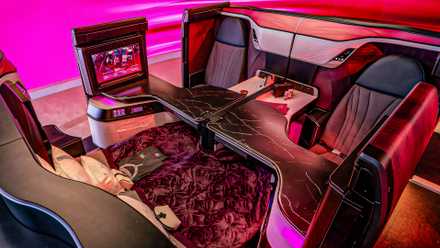
The competitive consequences became increasingly visible through the 2010s as Gulf carriers and Asian airlines systematically raised the bar. Qatar Airways' QSuite, launched in 2017, arrived with sliding privacy doors, customizable suite configurations, and direct aisle access from every seat — effectively establishing a new ceiling for what premium passengers could reasonably expect. For pilots operating long-haul routes on behalf of operators competing for premium corporate accounts, the product gap between British Airways and carriers like Qatar, Singapore, and even Virgin Atlantic became a tangible commercial liability. Corporate travel managers and high-frequency business travelers — the exact passengers who fill the front cabins that underwrite long-haul profitability — began routing around Heathrow on routes where superior alternatives existed.
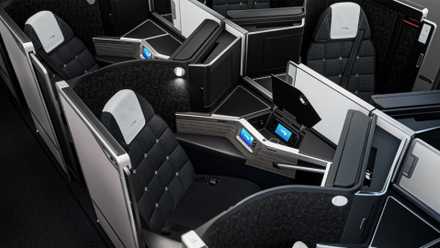
British Airways is now preparing to address the final chapter of this product drought by retrofitting its 12 Airbus A380s with the Club Suite beginning in mid-2026. The Club Suite offers direct aisle access from every seat, a door for genuine privacy, and a contemporary layout that aligns with industry-standard expectations for enclosed business class accommodations. The A380 retrofit is significant because the aircraft operates British Airways' highest-profile flagship routes, meaning the airline's most visible premium product will, for the first time in roughly 25 years, be genuinely competitive with the best in the market rather than merely defensible against it.
The broader lesson embedded in the Club World story is one that resonates across commercial aviation economics and operator strategy alike: the airline that defines a product standard does not automatically retain the leadership position that standard creates. British Airways invented the expectation of flat-bed business class and then, for nearly two decades, allowed competitors to outpace it in meeting that expectation. For operators making fleet and cabin investment decisions — whether at the airline level or in the business aviation context where interior configurations increasingly mirror commercial premium standards — the Club World case illustrates the compounding cost of deferring product refresh decisions when competitors are actively investing. Innovation cycles in premium aviation have accelerated; the window between market-leading and market-lagging has compressed substantially since 2000, and the British Airways trajectory represents one of the most instructive examples of how durable commercial success can mask product stagnation until the gap becomes competitively disqualifying.










 Read original article