Egyptian National Team Blocked From Flying To Seattle Ahead Of Next World Cup Matchup
Egypt's national football team encountered a security-driven flight denial that forced a significant rerouting of its World Cup travel itinerary, illustrating how governmental and local security authorities retain broad discretionary power over charter flight approvals even when the operational request itself is straightforward. Following the team's 3-1 victory over New Zealand at Vancouver International Airport (YVR) on June 22, U.S. security officials rejected Egypt's request to fly directly from YVR to Seattle-Tacoma International Airport (SEA), compelling the delegation to return instead to its training base at Spokane International Airport (GEG), approximately 280 miles inland. The denial carries no publicly stated technical or airspace rationale — it appears rooted in event security protocols surrounding the Iran-Egypt match scheduled for June 26 — which places it squarely in the category of discretionary security clearances that charter operators and their clients must navigate, particularly during large-scale international events where federal, state, and local security stakeholders overlap in jurisdiction.
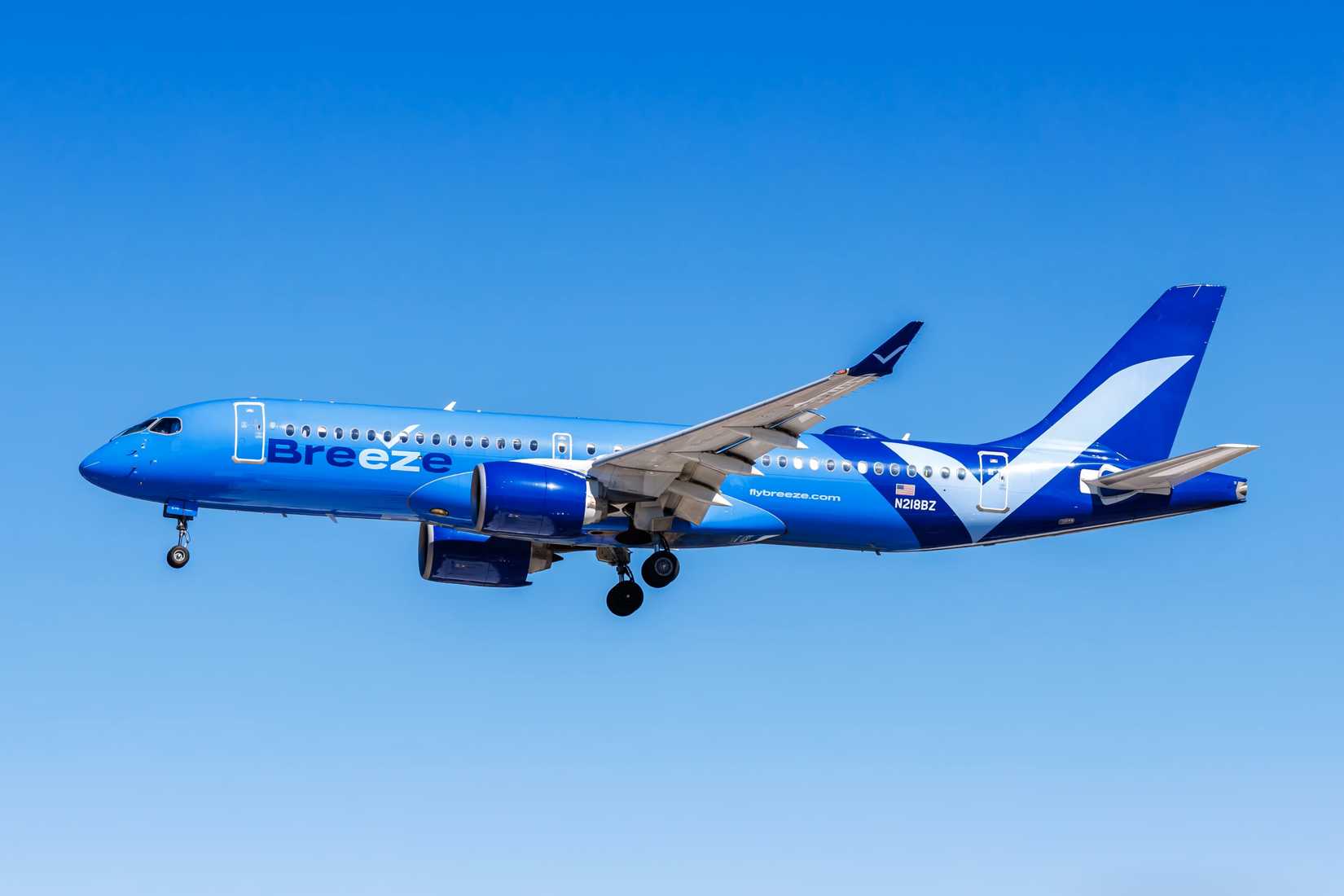
The charter operations themselves are notable for the aircraft pairings involved. The outbound leg from Spokane to Vancouver was operated by Breeze Airways under a wet-lease or charter arrangement, utilizing an Airbus A220-300 — a widebody-comparable narrowbody well suited to the mission given its range, cabin comfort, and ETOPS-capable design, though here used domestically on a sub-400-mile segment. The return leg was assigned to Air Canada operating as AC7005 on an Airbus A320, one of only 20 A320s in Air Canada's current fleet, configured with 14 business class seats and 132 economy seats. For Part 135 charter and ACMI operators, these details underscore the typical mix of carriers and equipment that international sports delegations rely upon — often combining U.S. domestic carriers for domestic legs and foreign air carriers for transborder or Canadian segments, each requiring separate operational approvals, customs coordination, and potentially distinct TSA or CBSA security protocols depending on the direction of travel.
The broader operational context here is particularly relevant to corporate and charter flight departments that support high-profile international clients during major hosted events. The 2026 FIFA World Cup, spanning 16 cities across three countries, represents one of the most complex multi-jurisdiction airspace and ground security environments a charter operator can encounter. Approvals that would be routine in ordinary circumstances — flying a team from one U.S. city to another — become subject to interagency review when geopolitical sensitivities are involved. Egypt's situation was relatively contained; the Iranian team's constraints are substantially more severe, with that delegation training in Tijuana and required to commute internationally to each match city with same-day return requirements, effectively treating every match day as a cross-border same-day turn. For operators flying government or diplomatic-adjacent passengers, this is an instructive example of how security restrictions can cascade unpredictably, affecting flight planning, crew duty time, hotel and slot coordination, and client expectations simultaneously.
Flight departments and charter brokers supporting similar high-profile events should treat security clearance as a variable, not a constant, especially when passengers include nationals of countries with active U.S. diplomatic tensions. The Egypt denial, while less severe than Iran's operational constraints, arrived with minimal notice and forced a replanning of what had been a straightforward YVR-SEA segment. Operators should build contingency routing into trip planning documents, coordinate early with TSA, CBP, and local law enforcement liaisons where applicable, and ensure client agreements account for itinerary changes driven by third-party security decisions outside the operator's control. The Spokane-to-Seattle routing decision itself — whether by air, roughly one hour, or by ground at roughly four hours — is a classic short-haul positioning problem that dispatch and flight operations teams resolve regularly, but doing so on short notice for a high-profile delegation adds logistical pressure that underscores the value of proactive, scenario-based trip planning for major international events.






 Read original article